Entertainment news and discussion on TalkFuse.
AMD’s 256-core Venice processors target 2026 data centres
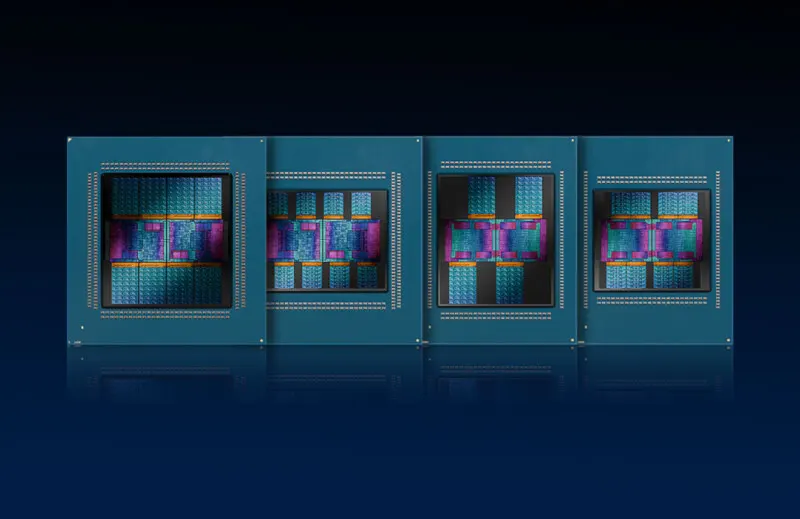
AMD’s upcoming Zen 6-based Epyc “Venice” processors represent the company’s largest CPU architecture shift since 2019’s Rome generation. The range is intended to span general-purpose computing, enterprise workloads, high-performance computing and AI, with the new chips positioning AMD to challenge Nvidia’s growing influence in data-centre processors.
The Epyc 9006 SP7 platform is expected to launch in 2026 with up to 256 cores, 16 DDR5 memory channels and 128 lanes of PCIe 6.0 connectivity compatible with CXL 3.1. Venice will include density-optimised and frequency-optimised variants: the former can reach 256 cores, while the latter is expected to offer up to 96 cores and boost to 5GHz. AMD has doubled compute cores per chiplet to 32 and increased shared L3 cache to 128MB per chiplet, potentially providing up to 1GB of L3 cache; unlike earlier generations, Zen 6 and compact Zen 6C cores appear to share the same architecture and cache allocation, differing mainly in clock speed and density.
In short
- AMD’s Venice Epycs will launch with up to 256 Zen 6 cores.
- The platform adds major memory, cache and connectivity improvements.
- Density and frequency variants target different data-centre workloads.
Steelman: both sides, in good faith
The strongest fair case each way — we don't pick a winner.
The case for
Venice’s higher core counts, memory bandwidth and PCIe connectivity could give data-centre operators more computing capacity per server and a broader choice of chips for different workloads. A stronger AMD offering may also give customers an alternative supplier as AI expands demand for data-centre processors, potentially improving competition and flexibility.
The case against
The specifications are forward-looking, and announced capacity does not by itself show how Venice will perform on real workloads or what it will cost to deploy. A major platform transition may require operators to weigh compatibility, power use and software support, while AMD’s challenge to Nvidia will depend on the wider systems and software available, not CPU specifications alone.
Explained simply
AMD is a US chipmaker whose Epyc processors are used in servers, the computers that run websites, business software and large-scale computing services. Venice is the name for its next Epyc generation, based on a new design called Zen 6; “cores” are the parts of a processor that handle separate tasks.
Data centres need processors that can manage many tasks and work with large amounts of memory and other hardware. AMD’s chips compete with products from companies including Intel, while Nvidia has become influential in data centres through its processors for artificial intelligence.
The Venice range is planned to include versions suited to different workloads, balancing the number of cores against their speed. Its design matters to data-centre operators choosing equipment for computing, AI and other demanding uses, and to the companies competing to supply that equipment.
Read the full article at the source →
Originally published by The Register as “An Epyc trip to Venice: Everything we do and don’t know about AMD’s 256-core monster chip”.