News, events and chat from Sheffield and South Yorkshire.
Thousands respond to huge solar farm consultation
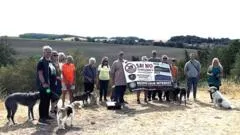
Over 2,750 people have responded to a consultation on the proposed Whitestone solar farm in South Yorkshire, which would be Europe's largest if constructed. The 750MW project faces significant opposition from local councils, parish councils, community groups, MPs, and the South Yorkshire Mayor, with concerns centred on its impact on agricultural land and rural character. This consultation matters as the UK government pursues ambitious renewable energy targets to meet its clean power goals.
The solar farm was originally projected to cover 3,500 acres but applicants Whitestone Net Zero have reduced the area by a quarter following two consultation rounds. The project stretches across multiple villages including Ravenfield, Bramley, and Wickersley, and requires connection to the National Grid at Brinsworth. Key objections focus on the cumulative impact of the integrated development—including battery storage, substations, and cable routes—with critics arguing the proposed £18 million community fund over 60 years is inadequate compensation. The government is targeting 45–47 gigawatts of solar capacity by 2030, up from 21GW in autumn 2025, making large schemes like this central to achieving 95% clean electricity by 2030.
In short
- 2,750 responses to Europe's largest proposed solar farm consultation
- Local opposition over agricultural land loss and inadequate £18m fund
- Project reduced 25% but faces lengthy national infrastructure planning process
Steelman: both sides, in good faith
The strongest fair case each way — we don't pick a winner.
The case for
The UK faces urgent climate and energy security imperatives, requiring rapid scaling of renewable capacity to meet legally binding targets of 95% clean electricity by 2030. Large-scale solar farms are essential infrastructure—distributed smaller schemes cannot deliver the gigawatt-scale capacity needed—and developers have already reduced the footprint by 25%, demonstrating responsiveness. Solar installations are temporary and reversible, compatible with continued agricultural use, unlike permanent developments, and without accepting some local impact, the UK cannot transition away from fossil fuels, leaving communities far more exposed to climate risks and energy cost volatility.
The case against
South Yorkshire's agricultural land is irreplaceable productive capacity, and converting thousands of acres reduces resilience in food production at a time of global uncertainty. Local democracy—represented by councils, the Mayor, and thousands of objectors—should carry weight in planning decisions affecting their communities, and an £18 million fund over 60 years amounts to modest compensation for permanent landscape alteration. The cumulative development footprint, including battery storage and infrastructure, raises legitimate environmental questions beyond land use alone, and accepting such vast schemes sets precedent for further industrial development in rural areas. Climate goals matter, but should not override all other planning considerations, particularly if alternative sites exist.
Explained simply
Whitestone is a proposed 750-megawatt solar farm in South Yorkshire, spread across farmland near villages including Ravenfield, Bramley and Wickersley. It would send power to the National Grid through a connection at Brinsworth, and would include battery storage, substations and cable routes as well as solar panels. Its planned area has been reduced by a quarter since the first consultation.
The proposal has drawn objections from local councils, community groups, MPs and the South Yorkshire Mayor, who have raised concerns about farmland, the rural landscape and the effects of the whole development. Whitestone Net Zero, the company behind the scheme, has proposed an £18 million fund for nearby communities over 60 years.
The debate comes as the UK aims to expand solar power and increase the share of electricity generated from clean sources by 2030. Large projects such as Whitestone could contribute to those targets, while their size and location raise questions about how new energy infrastructure affects rural areas.