World news and discussion on TalkFuse.
Trump rejects Iran ceasefire as US strikes may resume after midterms
Developed over time first seen 2 months ago
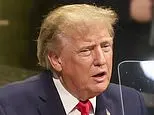
President Donald Trump rejected a proposed seven-day ceasefire with Iran and indicated that US strikes could resume after November’s midterm elections. The decision, alongside his threat to “annihilate” Iran if no agreement is reached, suggests a continuing military confrontation with potential consequences for regional stability and global energy markets.
The proposal reportedly required Iran to reopen the Strait of Hormuz on the sixth day and resume nuclear talks on the seventh, while the US would lift its blockade of Iranian ports. The strait previously carried about a fifth of the world’s traded oil, and disruptions have pushed up crude and petrol prices. Iranian Foreign Minister Abbas Araghchi said a deal would be preferable before the midterms but that Iran was not in a hurry; Trump also posted an image referring to the waterway as the “Trump Strait”.
- Sources
- 3
- Outlets
- 3
- Left · Centre · Right
- 1 · 1 · 1
In short
- Trump rejected Iran’s proposed seven-day ceasefire.
- US strikes may resume after the midterm elections.
- Strait of Hormuz disruption is raising global oil and petrol prices.
How this story developed
- 2 months ago The conflict's origins are clarified as 28 February, when joint US-Israeli strikes killed Iranian Supreme Leader Ayatollah Ali Khamenei, with Trump's social media mockery and private communications to aides confirming his intention to resume bombing campaigns after November's midterm elections.
- 2 months ago Trump posts a mocking image on social media depicting the Strait of Hormuz as the "Trump Strait," escalating his contempt for Iran's ceasefire overture.
- 2 months ago Trump articulates his position at the United Nations General Assembly as a stark choice between allowing Iran's rebuilding or pursuing swift annihilation, whilst the conflict's disruption of the Strait of Hormuz—through which roughly one-fifth of global oil normally trades—contributes to rising crude and petrol prices worldwide.
- 2 months ago President Trump rejects a seven-day ceasefire proposal from Iran that would have reopened the Strait of Hormuz and resumed nuclear talks in exchange for lifting the US blockade of Iranian ports.
Full account
Donald Trump has rejected a proposed seven-day pause in fighting with Iran, according to reports, while indicating that US military action could resume after November’s midterm elections. The proposal, relayed through Qatari mediators, would have required Iran to reopen the Strait of Hormuz, restart negotiations over its nuclear programme and take steps towards ending wider regional hostilities. In return, Washington would have halted its naval blockade of Iranian ports and eased some economic pressure.
Iranian Foreign Minister Abbas Araghchi said the plan could be implemented in stages. Initial measures would take four or five days, the strait would reopen on the sixth day and talks with the United States would begin on the seventh. He said an agreement would preferably be reached before the US election, but added that Tehran was not under pressure to accept a timetable. Iran’s president, Masoud Pezeshkian, likewise said his country was prepared to negotiate but would not agree to coercion.
The reports portray Trump as unconvinced that Iran would fulfil its commitments and as expecting renewed strikes after the midterms. The Wall Street Journal’s account, citing unnamed US officials, places particular emphasis on the possibility of another bombing campaign and on concerns over America’s remaining stock of precision weapons after months of conflict. Trump has also suggested publicly that an agreement could follow the election, while arguing that he is not himself a candidate in that contest.
The outlets differ in emphasis. The Wall Street Journal focuses on Trump’s reported rejection, his doubts about the proposal and the military implications of continuing the war. The Associated Press highlights the practical timetable described by Araghchi, while CNBC stresses his view that an earlier settlement would be preferable. The reports also differ in how prominently they present the maritime blockade, sanctions on Iranian oil and a possible ceasefire extending to Lebanon. All portray the Strait of Hormuz as central to the negotiations: disruption there has affected oil supplies, raised crude prices and added to pressure on consumers, including ahead of the US midterms. Trump’s separate social-media image referring to a “Trump Strait” is presented by one account as a mocking response to the diplomatic initiative.
Where outlets differ
From the full account, which is AI-written from the sources:
The Wall Street Journal report centres on Trump’s reported decision and the likelihood of renewed US strikes after the midterms; the Associated Press concentrates on the proposed seven-day sequence; CNBC highlights Araghchi’s preference for reaching an agreement before the election. Source 1 also gives greater prominence to Trump’s social-media post, the blockade’s economic effects and US ammunition constraints, while Source 2 provides more detail on the proposal’s diplomatic terms, the wider regional ceasefire and Iran’s internal political reservations.
Left-leaning outlets 1
Only here: reportedly, seven, peace, deal, reopen
Centre outlets 1
Only here: plan, expects, bombing, post
Right-leaning outlets 1
Only here: ceasefire, strikes
Every side used: trump, rejects, iran
Headline columns compared word for word; nothing in them is AI-written.
Steelman: both sides, in good faith
The strongest fair case each way — we don't pick a winner.
The case for
A ceasefire would immediately reduce global energy prices and consumer costs whilst reopening a diplomatic channel to address Iran's nuclear programme through negotiation rather than escalation. The humanitarian and economic damage of prolonged conflict—destabilizing energy markets that affect billions of people worldwide—argues for accepting a pragmatic pathway to de-escalation. Diplomacy requires taking calculated risks; dismissing Iran's offer risks an endless cycle of military strikes without achieving lasting resolution or public support.
The case against
Iran has a documented history of violating nuclear agreements and misleading international bodies, making skepticism about their commitment entirely reasonable. The proposed terms are structurally unbalanced: the US would lift its blockade immediately whilst Iran only reopens the Strait on day six and begins negotiations on day seven, granting Tehran leverage without reciprocal trust-building measures. Strategic patience and credible military pressure may actually produce a more durable agreement later, whereas premature negotiations from a weakened position typically reward bad behaviour and encourage further violations.
Explained simply
The United States and Iran have been in escalating military conflict in recent times. Iran has proposed a seven-day ceasefire that would include reopening shipping routes through the Persian Gulf and resuming negotiations about Iran's nuclear programme, with the United States agreeing to lift economic sanctions on Iranian ports in exchange.
The Strait of Hormuz, a narrow waterway between Iran and Oman, is vital to global energy supplies. Roughly one-fifth of the world's traded oil passes through this passage daily, so any disruption pushes up oil prices worldwide and increases petrol costs for consumers. The ongoing conflict has already interfered with shipping through this critical route.
Tensions between the US and Iran over Iran's nuclear activities have shaped the Middle East for decades, with previous attempts at agreement repeatedly breaking down. How this current standoff resolves will affect both global energy prices and international relations more broadly.
Coverage · 3 sources
Bias meters
From 3 rated sources.
Americas Government Middle East Politics World
Read the full article at the source →
Originally published by Daily Mail as “Trump REJECTS Iran’s seven-day ceasefire proposal…and reveals to aides when US bombing will resume”.