Entertainment news and discussion on TalkFuse.
The 10 Best War Movie Opening Scenes, Ranked
Developed over time first seen 2 months ago
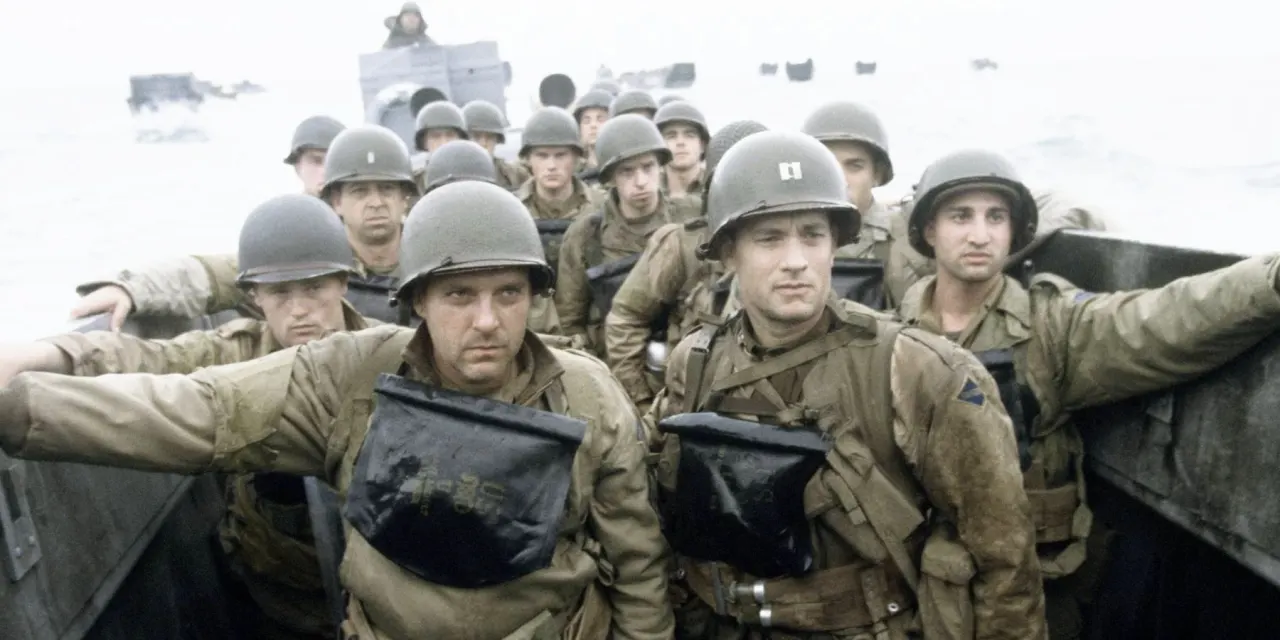
This article ranks outstanding opening scenes from war films, highlighting how effective introductions establish historical context, plot momentum, and emotional investment. Four films featured demonstrate distinct approaches: Beasts of No Nation uses intimate storytelling to show how civil war shatters family life; Dunkirk employs chaos and text overlays to convey the urgency of the 1940 evacuation; Letters from Iwo Jima opens with present-day excavation before transitioning to 1945, using soldier letters and monochrome cinematography to create a respectful, introspective tone; and 300 draws from both historical events and graphic novel source material set during the ancient Greco-Persian Wars.
– Beasts of No Nation: Contrasts peaceful family life with sudden displacement during unspecified West African civil war – Dunkirk: Opens with British soldiers receiving evacuation orders via sky-dropped pamphlets, establishing WWII historical context – Letters from Iwo Jima: Begins with modern archaeologists discovering Japanese soldiers' letters, then flashes back to 1945 combat preparations – 300: Based on graphic novel adaptation of the 2,500-year-old Greco-Persian Wars
- Sources
- 2
- Outlets
- 1
- Left · Centre · Right
- 0 · 0 · 0
In short
- War film openings must balance historical context with emotional impact and character establishment
- Effective openings use varied techniques: intimate storytelling, chaos, documentary framing, and historical grounding
- Strong introductions create viewer investment whilst clarifying plot and setting immediately
How this story developed
- 2 months ago This article ranks outstanding opening scenes from war films, highlighting how effective introductions establish historical context, plot momentum, and emotional investment.
Full account
A feature on memorable war-film openings argues that the first moments of a film must do several jobs at once: establish tone, introduce the setting and people involved, provide enough context, and persuade viewers to keep watching. It presents war cinema as a genre in which beginnings can be especially forceful because they often place audiences directly into upheaval, danger or displacement.
Among the examples discussed is Beasts of No Nation, set during an unnamed civil conflict in West Africa. The account stresses that the film avoids tying its story to one specific war, instead following Agu, a boy whose modest but stable family life is shattered when violence reaches his community. Its opening is described as moving from everyday life and narration into a desperate flight for safety, illustrating the way civil war can dismantle homes and communities.
Dunkirk is presented as a contrasting historical opening, set during the 1940 evacuation of Allied troops from northern France. The report describes British soldiers moving through a French town as leaflets signal the need to leave, before the situation rapidly turns into a scramble to escape. Brief explanatory text is used to situate the action, underlining both the scale of the evacuation and the pressure created by advancing German forces.
The source also identifies Letters from Iwo Jima as an entry notable for telling the Battle of Iwo Jima from the Japanese perspective, rather than the more familiar American one. However, the supplied account cuts off before it describes that film’s opening in detail or provides the rest of the claimed top-ten ranking. On the available material, the central argument is that strong war-film openings combine historical stakes with an immediate human viewpoint.
Where outlets differ
From the full account, which is AI-written from the sources:
The supplied second source does not cover war films or opening scenes; it is an unrelated discussion of recent comedy sequences, so it offers no usable comparison or corroboration for the headline.
The supplied war-film source is incomplete: it discusses Beasts of No Nation and Dunkirk, begins to introduce Letters from Iwo Jima, but does not provide the full ranking, rankings positions, or the remaining titles.
Explained simply
War film opening scenes are crucial storytelling moments that establish historical context, build narrative momentum, and engage audiences emotionally from the start. This article ranks outstanding examples of such openings, examining how different directors approach this important cinematic challenge.
The article discusses four films with particularly distinctive opening sequences. Beasts of No Nation shows how conflict disrupts family life during an African civil war, whilst Dunkirk conveys the chaos of a 1940 evacuation through urgent soldier orders. Letters from Iwo Jima frames soldier testimonies within a modern discovery of letters, and 300 adapts a graphic novel based on the ancient Greco-Persian Wars.
These opening moments carry particular weight because they establish the tone and stakes that shape the entire viewing experience. Directors must balance historical context, the scale of conflict, and human emotion, making these sequences worthy of close examination and ranking.