Entertainment news and discussion on TalkFuse.
Lee Child Names ‘The Midnight Line’ for Next Reacher Adaptation; Reflects on Tom Cruise Casting
Developed over time first seen 2 months ago
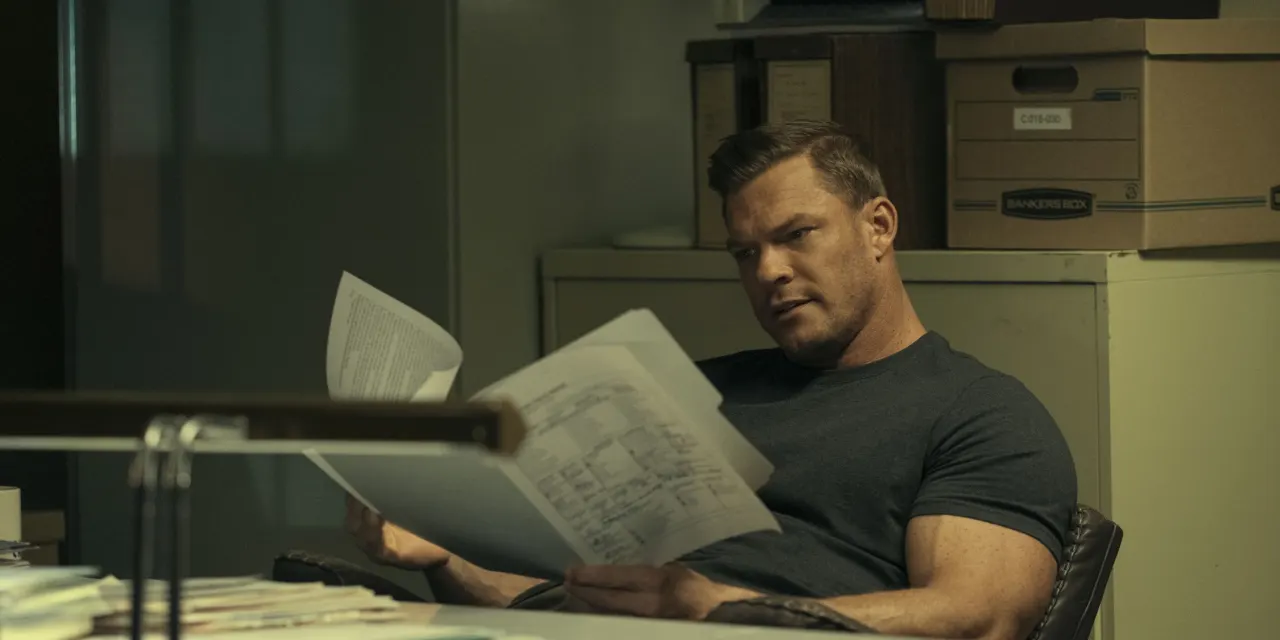
Lee Child has offered a reassessment of Reacher's journey to screen, acknowledging that Tom Cruise's portrayal succeeded in capturing the character's psychological essence—his quiet control, restraint, and subdued intimidation—whilst falling substantially short on physical authenticity. The character's novels describe Reacher as imposing and physically commanding, a quality fundamentally at odds with Cruise's stature, creating a mismatch Child views primarily as a visual rather than performative shortcoming.
Moving forward with Alan Ritchson in the role, Child has identified "The Midnight Line" (2017) as the ideal next novel for adaptation. The author sees its compassionate exploration of opioid addiction through an addict's perspective as material that would resonate with Ritchson's socially aware approach to the character. Rather than emphasising action-driven spectacle, the novel offers an opportunity to explore Reacher's personality through emotionally substantive storytelling that reflects contemporary social challenges.
- Sources
- 2
- Outlets
- 1
- Left · Centre · Right
- 0 · 0 · 0
In short
- Lee Child praised Tom Cruise's interpretation of Reacher's personality and demeanour but deemed the casting physically wrong due to the character's imposing stature in the novels
- Child recommends "The Midnight Line" (2017) as the next novel for adaptation with Alan Ritchson in the lead role
- The chosen novel's nuanced portrayal of opioid addiction appeals to Child as material for deeper emotional storytelling beyond conventional action narratives
How this story developed
- 2 months ago Lee Child has offered a reassessment of Reacher's journey to screen, acknowledging that Tom Cruise's portrayal succeeded in capturing the character's psychological essence—his quiet control, restraint, and subdued intimidation—whilst falling substantially short on physical authenticity.
Full account
Lee Child has identified The Midnight Line as a Jack Reacher novel he would particularly like Prime Video to adapt in a future series of Reacher. Speaking to Collider, the author said the 2017 book’s treatment of opioid addiction gave it an emotional dimension that would suit Alan Ritchson, who plays the former military police officer in the television adaptation.
The novel begins when Reacher notices a West Point class ring in a Wisconsin pawn shop and sets out to establish why its owner parted with it. The search develops into a wider story involving Serena Rose Sanderson and the consequences of opioid dependency. Child said he had wanted to make addiction understandable from the perspective of the person affected, rather than using an addict simply as a device to advance a crime plot.
Child also linked his choice to Ritchson’s public awareness of social issues. He described opioid addiction as a serious problem and suggested that the actor’s social conscience made The Midnight Line a potentially appropriate match. Prime Video has not announced that the novel will be the basis of a forthcoming season; the series has selected books from different points in the Reacher catalogue rather than following their publication order.
In separate remarks, Child revisited Tom Cruise’s casting as Reacher in the 2012 film and its sequel. He said Cruise was physically unsuitable for the role as written, contrasting the character’s unusually large build in the novels with the actor’s appearance. However, Child credited Cruise with capturing Reacher’s restrained, quiet inner manner, drawing a distinction between the performance’s psychological qualities and its visual fit for the character.
Where outlets differ
From the full account, which is AI-written from the sources:
The reports are based on the same Collider interview but foreground different subjects: Source 1 concentrates on Child’s preference for The Midnight Line and its compassionate account of addiction, while Source 2 centres on his mixed assessment of Tom Cruise, stressing the gap between Cruise’s physical presence and the character’s description in the books. Source 1 also emphasises Ritchson’s social awareness; Source 2 places greater weight on Child’s praise for Cruise’s interpretation of Reacher’s internal character.
Steelman: both sides, in good faith
The strongest fair case each way — we don't pick a winner.
The case for
Reacher's imposing physical presence is central to his character and integral to how he operates in the world—it shapes his psychology and how others respond to him, not mere visual detail. Tom Cruise's undeniable acting talent cannot fully compensate for this fundamental misalignment with the source material, and the casting prioritised star power over fidelity. Alan Ritchson's larger frame, combined with his demonstrated commitment to character-driven storytelling, represents a more authentic translation of Child's vision.
The case against
Tom Cruise demonstrated genuine artistic merit in capturing Reacher's psychological essence—his restraint, control, and subtle menace—drawing audiences to the films through accomplished performance. Adaptation inherently involves creative interpretation rather than literal cosplay; casting decisions should privilege an actor's talent and ability to embody character essence over exact physical specifications. Cruise's star power and dramatic gifts created compelling cinema, which is what ultimately matters on screen.
Explained simply
Jack Reacher is a former military policeman who travels around the United States, often becoming involved in crimes and disputes. The character was created by British author Lee Child and is known for his independence, calm manner and imposing physical presence.
Reacher has been played on screen by Tom Cruise in films and by Alan Ritchson in a television series. The books vary between action, investigation and moral dilemmas, with The Midnight Line focusing on opioid addiction and the people affected by it, giving the story a more socially focused angle.