Entertainment news and discussion on TalkFuse.
Minecraft Dungeons 2 Goes from Good Baby Diablo to Great Junior Diablo
Developed over time first seen 2 months ago
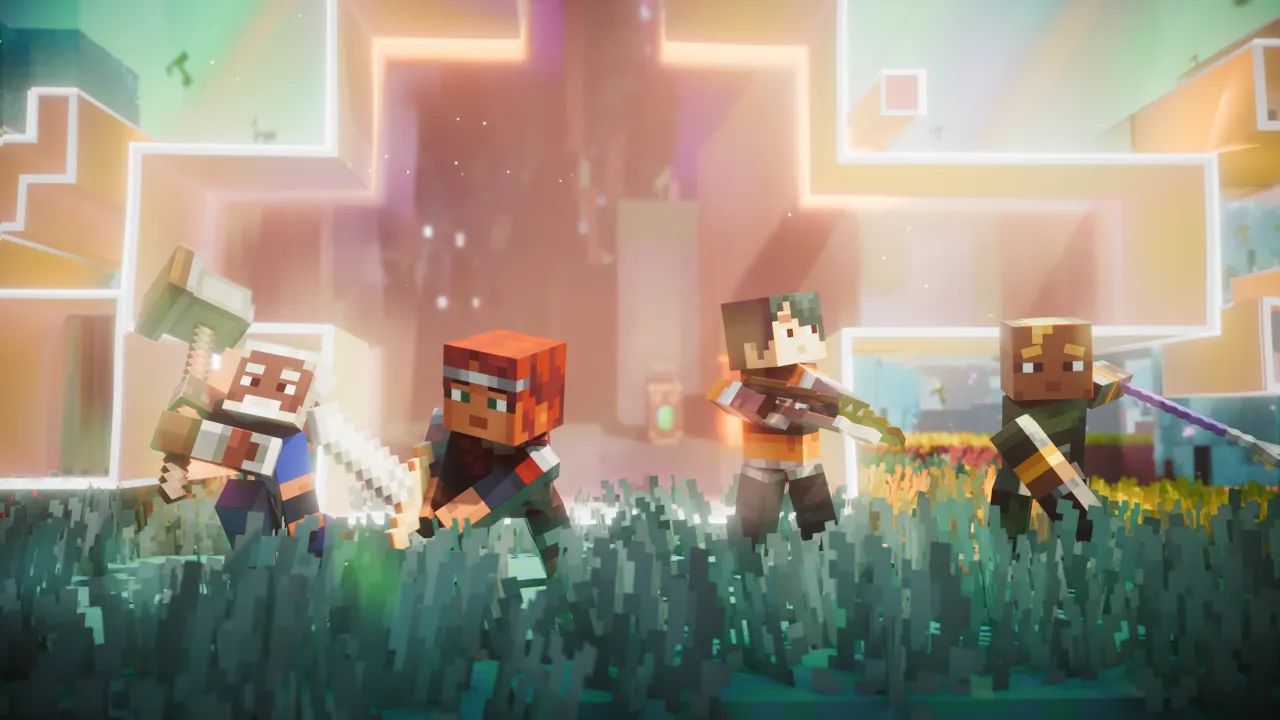
Minecraft Dungeons 2 builds on the original’s approachable, co-operative take on Diablo-style action role-playing, adding more depth while keeping its simple, accessible feel. After five or six hours playing with their children, the reviewer says Mojang and Double Eleven have struck a successful balance: the sequel feels richer and more flexible without losing the straightforward pleasure of fighting enemies together.
Players still have no fixed character classes, but new equipment slots, upgradeable Talismans, more varied random loot and a more flexible enchantment system offer greater scope to shape a character. Combat remains immediate, though tougher “soul-corrupted” enemies encourage co-operation and tactical play. The game also introduces the surreal Sift dimension and replaces the first game’s linear chapters with a sprawling map of main and side quests, dungeons and secrets; navigating it with a party can be challenging.
- Sources
- 3
- Outlets
- 3
- Left · Centre · Right
- 0 · 0 · 0
In short
- The sequel adds depth while keeping its accessible co-op action.
- New gear and randomised loot expand character customisation.
- A sprawling map and tougher enemies encourage exploration and teamwork.
How this story developed
- 2 months ago Minecraft Dungeons 2 adds more equipment choices, varied loot and an open world map while keeping the simple, co-operative combat that made the original accessible.
- 2 months ago Minecraft Dungeons 2 builds on the original’s approachable, co-operative take on Diablo-style action role-playing, adding more depth while keeping its simple, accessible feel.
- 2 months ago Minecraft Dungeons 2 builds on the original’s simple, co-operative take on Diablo-style action role-playing, adding depth while preserving its accessibility.
Full account
Minecraft Dungeons 2 represents the sequel to a 2020 spinoff designed as an accessible entry point into action-RPG gameplay for the Minecraft franchise's broad and predominantly younger audience. The original game distilled the dungeon-crawling mechanics pioneered by titles such as Diablo into their most fundamental form, prioritising local co-operative play and tactile satisfaction over mechanical complexity. The new sequel faces the inherent challenge of expanding upon this foundation whilst preserving the approachability that defined its predecessor.
Mojang and Double Eleven's approach to sequel design appears centred on meaningful expansion without obfuscation. The developers have introduced additional customisation pathways through restructured armour systems that now divide a single slot into four distinct equipment positions for head, chest, legs, and feet. A new Talisman item category provides passive bonuses with scaling potential, and the loot acquisition systems have been refined to offer greater variety in rarity, potency, and special effects. An overhauled enchantment framework further enhances build-crafting possibilities. The campaign itself spans approximately seven hours and introduces a new realm called the Sift, populated with fresh environmental and enemy variety. Players can now utilise a jump mechanic, absent from the original release, which facilitates platforming sections and environmental puzzles.
The experience maintains the core design philosophy that eschews traditional character class systems. Rather than selecting predetermined archetypes, players define their capabilities through discovered and equipped loot, with up to three Artifact slots serving the role of active abilities. This framework simultaneously enables specialisation whilst limiting the cognitive overhead associated with deeper action-RPGs. The campaign pits players against an antagonistic faction called Illagers who have accessed the aforementioned new dimension; narrative elements remain deliberately minimalist, functioning primarily as scaffolding for combat encounters rather than narrative depth. Combat itself has been calibrated to encourage tactical collaboration through new enemy archetypes designated as soul-corrupted variants, which possess substantial health reserves and mechanics demanding coordinated player response rather than unstructured engagement.
Critical appraisal of the sequel diverges substantially on whether these refinements constitute meaningful progression or represent merely modest incremental adjustments. Some observers regard the accumulated changes as successful in deepening the experience without sacrificing the intuitive accessibility that remains the franchise's defining characteristic, noting the enhanced satisfaction from loot acquisition and the emergent possibilities from equipment synergies. Others characterise the sequel as a thin, forgettable experience that continues to privilege simplicity to the point of shallowness, arguing that whilst nothing is objectively problematic, little compels engagement beyond casual sessions. The intended audience—younger players and those seeking uncomplicated cooperative entertainment—appears positioned as the arbiter of whether additional depth genuinely enriches or unnecessarily complicates the formula.
Where outlets differ
From the full account, which is AI-written from the sources:
One reviewer emphasises the sequel's successful balance between expansion and approachability after extended co-operative play; the other characterises it as fundamentally shallow and forgettable despite acknowledging minor improvements.
The first source highlights the enhanced satisfaction from improved loot systems and item synergies; the second views the simplified framework as making the game less interesting despite being more approachable.
Soul-corrupted enemies are presented in the first account as tactically demanding and encouraging collaboration; the second source does not engage substantially with enemy design.
The newcomer's experience after five to six hours is described as revealing richer possibilities; the alternative assessment suggests the game's entire scope becomes apparent within a single afternoon.
Tone differs markedly: the first account conveys enthusiasm for the design balance achieved; the second maintains scepticism regarding whether the refinements warrant attention.
Explained simply
Minecraft Dungeons is a spin-off game that transplants Minecraft's universe into the structure of an action role-playing game—a game in which players battle monsters, collect equipment and grow stronger. The original Dungeons was designed to be accessible and enjoyable for players of all ages, particularly families playing together, in contrast to traditional action RPGs which can be complex and demanding.
Minecraft Dungeons 2 builds on this foundation by expanding the world and player options without abandoning what made the first game work. The sequel adds an open world map to explore, more granular equipment customisation through separate armour pieces and talismans that grant permanent bonuses, and tougher enemies that reward cooperative play. This gives players more depth and challenge whilst preserving the straightforward combat and flexible design philosophy that made the original accessible.
Minecraft Dungeons 2 continues an approach that has become increasingly valued in gaming: making action RPGs accessible to families and players of all ages. The original game demonstrated that the genre need not be complex or punishing to be engaging; the sequel extends this approachability whilst adding more sophisticated options for players who want them.