Entertainment news and discussion on TalkFuse.
EUAN McCOLM: A monster of the SNP’s own creation waits in the wings to make Swinney’s life hell over his failure to break-up UK
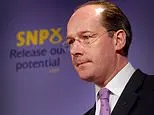
An opinion column argues that John Swinney faces pressure from a new SNP faction, called “Independence”, to put the campaign for Scottish independence ahead of winning elections. The group says the party has spent the past decade neglecting the case for secession and warns it will oppose efforts to sideline that goal, creating a challenge for Swinney ahead of the party’s conference.
The writer compares the dispute with Swinney’s first period as SNP leader, from 2000 to 2004, when gradualists and activists demanding immediate action clashed over strategy. Swinney resigned after a poor result in the 2004 European Parliament election, and Alex Salmond later restored party discipline and prioritised electoral success; the column says that approach helped lead to SNP victories in 2007 and 2011 and the 2014 independence referendum. The supplied article text ends mid-sentence, so it does not include the column’s full account of the new faction’s position.
In short
- A new SNP faction wants independence campaigning prioritised.
- The column warns this could revive old party divisions.
- It contrasts the pressure with Salmond’s election-focused strategy.
Steelman: both sides, in good faith
The strongest fair case each way — we don't pick a winner.
The case for
The SNP's foundational purpose is Scottish independence, yet the party has substantially subordinated this core mission to managing devolved government over the past decade. Without a principled, sustained case for independence at the heart of party messaging and strategy, the SNP loses its distinctive identity and purpose. The faction argues that electoral success divorced from advancing the constitutional goal is ultimately hollow, and that a clear, honest independence campaign is both faithful to the party's founding purpose and entirely compatible with electoral credibility and competent governance.
The case against
Electoral success is the necessary prerequisite for any independence achievement; the SNP cannot deliver constitutional change from opposition benches. The gradualist approach—establishing competent governance whilst building long-term strategic positioning—delivered the 2007 and 2011 election victories and made possible the 2014 referendum. In today's political landscape, Scottish voters require evidence that the SNP can effectively manage the NHS, education, and cost-of-living challenges. Prioritising independence messaging over delivery on these devolved services risks undermining the party's electoral standing, thereby moving independence further away rather than closer.
Explained simply
The Scottish National Party is Scotland's main political party and campaigns for Scottish independence from the United Kingdom. The SNP has governed Scotland since 2007 and has long made independence its ultimate aim, though recent party leadership has focused on winning elections and running Scotland effectively.
Within the SNP, a group calling itself "Independence" has recently emerged to push the party to prioritise the independence campaign over electoral success, arguing the party has spent too long focused on winning votes rather than making the case for separation. This has created friction between the faction and current party leader John Swinney, who must decide how to respond.
The SNP has faced similar internal struggles before, notably when Swinney himself led the party from 2000 to 2004. Back then, members debated whether to pursue independence immediately or build support gradually, and Swinney eventually resigned after poor election results. His successor, Alex Salmond, chose to focus on winning elections, a strategy that proved effective in delivering SNP victories and ultimately the 2014 independence referendum.