Manchester City Guilty of Decade-Long Financial Rule Breaches Using Sham Contracts
Developing story first seen 2 hours ago
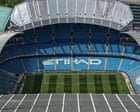
The Premier League has published a redacted independent commission report finding Manchester City guilty of nearly all charges over alleged financial rule breaches from 2009-10 to 2017-18. The report says the club used sham commercial agreements to disguise funding and inflate revenue, and describes conduct intended to circumvent league rules; the club denies wrongdoing and says it will appeal.
The commission put the alleged disguised funding at £830.69 million and found that the arrangements helped City avoid recording what would otherwise have been the Premier League’s largest single-season loss in 2009-10. City were found guilty across the charges except one concerning failure to co-operate with the investigation. Any sanction will be decided at a separate hearing, and the club has until 2 October to appeal.
- A commission found City guilty of nearly all financial-rule charges.
- The report cites £830.69 million in disguised funding.
- City denies wrongdoing and plans to appeal.
New here? Start with this
Manchester City has been accused of breaking Premier League rules that are designed to keep competition fair by limiting how much money clubs can lose in a season and requiring them to prove their income is genuine. An independent investigation found the club used fake business agreements to make it appear that funding was coming from legitimate sponsors when it actually came from the club's owners, allowing them to artificially boost their declared income. The report says these arrangements helped City avoid recording what would have been the Premier League's biggest single-season loss in 2009-10.
These alleged breaches matter because they would mean Manchester City gained an unfair advantage by circumventing rules that other clubs were required to follow honestly. The arrangements covered nearly a decade when City won multiple Premier League titles and a Champions League trophy, raising questions about whether those achievements were earned on a level playing field. The rules exist partly to protect the integrity of competition and ensure no club gets a structural financial advantage over others.
Manchester City denies any wrongdoing and has the right to appeal the independent commission's findings. The club's owners have spent heavily to make City successful, but the question at hand is whether they also circumvented the rules meant to regulate that spending. The Premier League will now decide what punishment, if any, Manchester City should face for the alleged breaches.
Both sides, in good faith
The strongest fair case each way — we don't pick a winner.
The case for
An independent commission has thoroughly reviewed evidence and found Manchester City guilty of nearly all charges involving sham contracts and disguised funding spanning a decade. This systematic circumvention of financial rules, allegedly totalling £830.69 million, created an enormous competitive advantage and fundamentally undermines league integrity. Without consistent enforcement of financial regulations, the Premier League's rules become meaningless and faith in fair competition is eroded.
The case against
Manchester City contests these findings and maintains it acted lawfully, with the redacted report limiting transparency about the actual evidence and reasoning. Complex commercial arrangements can legitimately serve multiple purposes, and distinguishing between proper business practices and violations requires careful analysis that may be contested on appeal. Fair process demands allowing the club full opportunity to mount its defence before treating allegations as settled fact.
Full account
An independent commission has determined that Manchester City systematically breached Premier League financial regulations over a nine-year period spanning the 2009-10 to 2017-18 seasons. The verdict, announced on Tuesday, found the club culpable of deliberately circumventing league rules through the creation of spurious commercial agreements designed to conceal the true origins of funding. The inquiry, initiated in December 2018, examined evidence encompassing hundreds of thousands of pages of documentation, establishing what regulators characterised as deliberate conduct intended to evade financial oversight mechanisms.
At the scheme's core lay a network of commercial contracts that bore little resemblance to genuine commercial transactions. Under these arrangements, external companies would ostensibly agree to sponsorship fees, yet would pay only a fraction of the stated amount. The Abu Dhabi United Group, which acquired the club in 2008 under Sheikh Mansour bin Zayed Al Nahyan's ownership, would supply the shortfall in funding whilst disguising the true source of capital. This mechanism enabled Manchester City to present inflated revenue figures and artificially suppressed cost structures across multiple financial reporting periods.
The financial impact of this arrangement proved substantial, though sources diverge on precise quantification. The manipulated commercial dealings are calculated to have affected club finances by somewhere between £830 million and £900 million over the period in question. One particularly consequential aspect involved sponsor fees recorded during three seasons in which the club won domestic titles—2011-12, 2013-14, and 2017-18—where the reported arrangement totalled £360 million, though the vast majority lacked legitimate commercial substance. The commission determined that without this scheme, Manchester City would have recorded the most significant single-season financial loss in Premier League history during the 2009-10 campaign.
Manchester City's leadership categorically denies any impropriety, with chief executive Ferran Soriano characterising the commission's findings as rooted in conspiracy theory rather than substantiated fact. The club has signalled its intention to lodge a formal appeal, with varying reports indicating deadlines ranging from Friday to 2 October. Beyond the verdict itself, the Premier League must now determine appropriate sanctions, which could include title stripping, financial penalties, or deductions of league points. Officials have described this case as the most consequential in Premier League history, establishing precedent for the investigation and prosecution of systematic regulatory non-compliance.
Where outlets differ
Financial scale: Source 1 cites 'more than £900m' whilst Source 2 specifies '£830.69m'
Cooperation charges: Source 1 states guilt on 'all charges' related to breaches; Source 2 clarifies the club was found guilty of 'all charges except one' concerning non-cooperation
Appeal deadline: Source 1 references 'Friday's deadline' whilst Source 2 specifies '2 October'
Specificity: Source 2 provides granular breakdown (£360m sponsor fees across three seasons, only £43m legitimate) absent from Source 1
Emphasis: Source 1 highlights Soriano's public denial and conspiracy allegations; Source 2 focuses more on documentary scale and technical findings
Coverage
- The Guardian — Manchester City found guilty on all Premier League charges over rule breaches
- BBC Sport — Man City guilty of ‘sham’ contracts and misleading accounts
Americas Business Cybersecurity Football Sport Technology World