Entertainment news and discussion on TalkFuse.
Greta Thunberg Makes Surprise Appearance at Zurich Premiere of ‘My Home of Wind and Sand,’ Denounces Occupation of Western Sahara
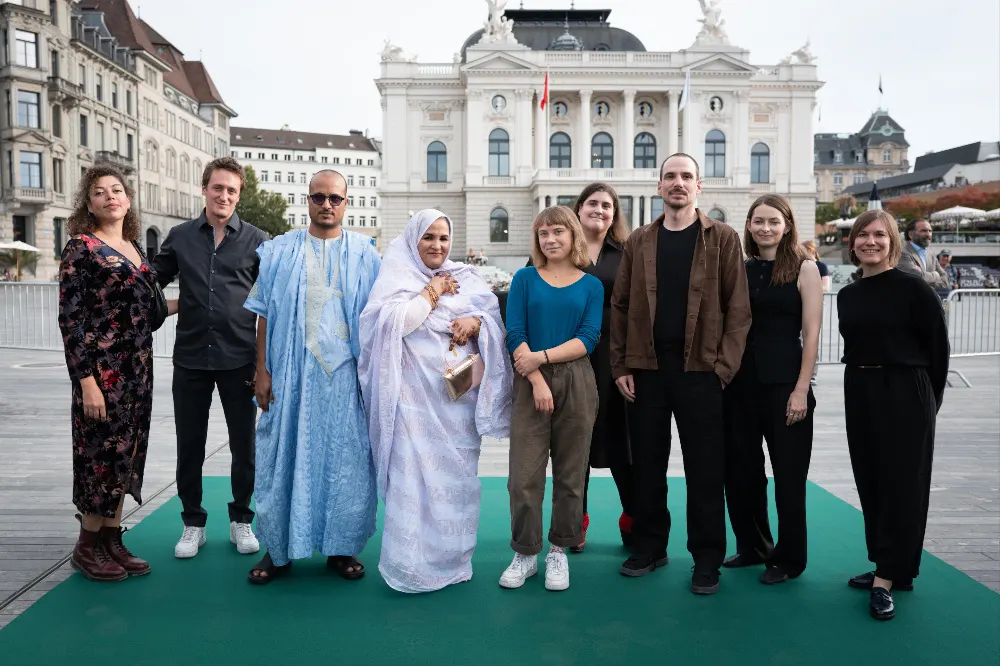
Climate activist Greta Thunberg made a surprise appearance at the Zurich Film Festival on Tuesday to support the premiere of documentary "My Home of Wind and Sand," which examines Morocco's occupation of Western Sahara. Speaking alongside Sahrawi human rights activist Najla Mohamed-Lamin, Thunberg criticised what she termed "extreme hypocrisy" surrounding the international response to the conflict, highlighting multiple layers of betrayal—from the occupation itself to inadequate media attention and failure of solidarity movements. She called on privileged individuals with platforms to take moral action, declaring that without such commitment, "we are nothing more than hypocrites."
Western Sahara has been under Moroccan occupation since 1975 and is widely regarded as Africa's last colonial conflict. The documentary, directed by Patrick Wally and distributed by Lightbox, centres on Mohamed-Lamin's ten-year struggle for independence. Mohamed-Lamin, speaking at the event, emphasised her commitment to carrying "the message of my people" across all forums, from documentaries to chance encounters. The appearance comes amid growing scrutiny of the occupation; in 2025 the United States reaffirmed its recognition of Moroccan sovereignty, whilst Christopher Nolan's film "The Odyssey" recently faced backlash for filming scenes in the occupied territory.
In short
- Thunberg criticised hypocrisy over Western Sahara occupation at film festival premiere
- Documentary about Sahrawi activist Najla Mohamed-Lamin highlights 50-year-old conflict
- Thunberg urged those with platforms to take action for independence struggle
Steelman: both sides, in good faith
The strongest fair case each way — we don't pick a winner.
The case for
Western Sahara's occupation represents a continuing colonial injustice where an indigenous population has been denied the self-determination promised by international law and UN resolutions. The failure of the international community to act decisively, particularly wealthy nations and influential figures who claim to champion human rights, constitutes profound hypocrisy that deserves public condemnation. Those with platforms have a moral obligation to amplify this neglected cause rather than remain complicit through silence.
The case against
Morocco views Western Sahara as historically integral to its territory, with deep cultural and administrative ties, and argues that stability and development through integration serve the region's inhabitants better than prolonged conflict. Several nations, including the United States, have recognised Moroccan sovereignty, reflecting a pragmatic view that some disputes are better resolved through negotiation and economic cooperation rather than external activism. This perspective contends that framing the situation as straightforward occupation oversimplifies competing territorial claims and questions whether outside activists' interventions genuinely serve local populations or advance particular narratives.
Explained simply
Western Sahara is a territory in north-west Africa occupied by Morocco since 1975. The international community remains divided on its status; whilst Morocco claims sovereignty, many countries and the United Nations do not formally recognise this claim, regarding it as Africa's last remaining colonial conflict.
The Sahrawi people are the indigenous inhabitants of Western Sahara and have long sought independence. Najla Mohamed-Lamin is a prominent Sahrawi human rights activist whose ten-year struggle for independence is now the focus of the documentary "My Home of Wind and Sand."
The Western Sahara conflict has increasingly drawn international attention, with various governments and international organisations facing questions about their stances on Moroccan sovereignty. The prominence now given to the territory's status reflects broader global interest in independence movements and unresolved territorial disputes.