Verity Review: Hathaway and Johnson Have Fun. The Movie Doesn’t
Developing story first seen 2 hours ago
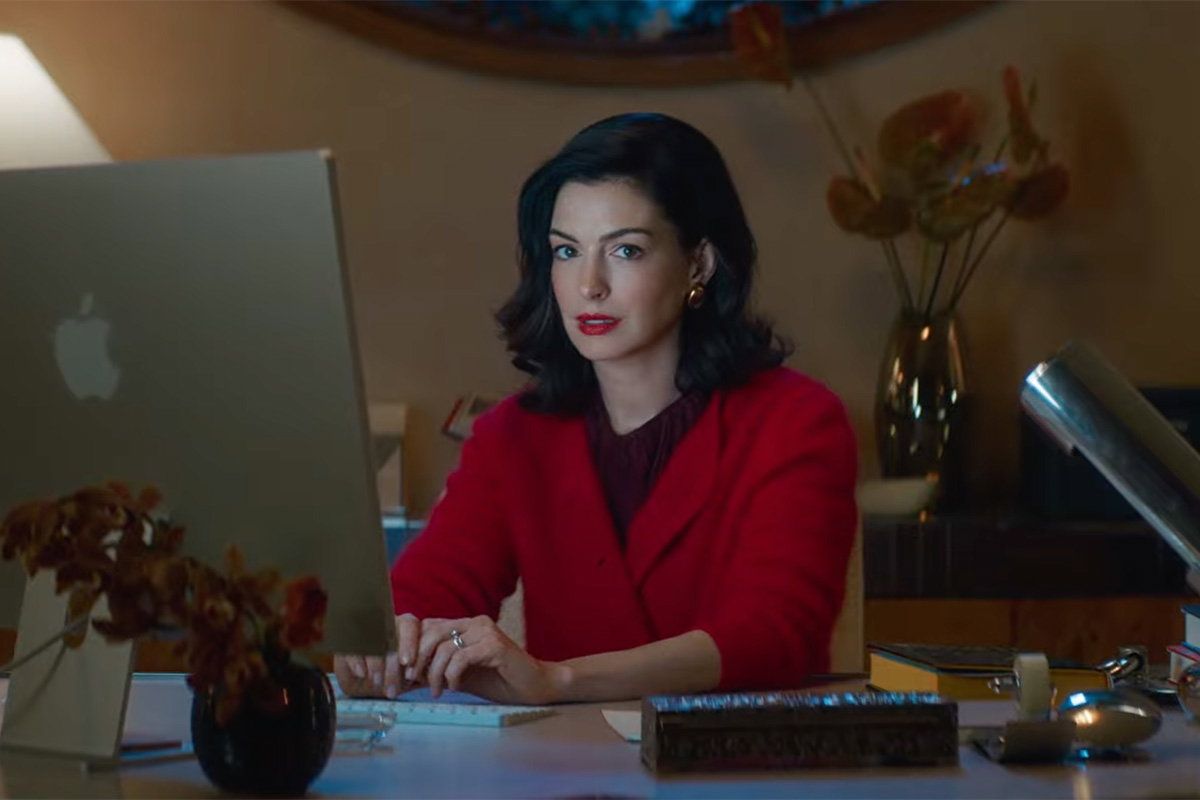
Michael Showalter's film adaptation of the bestselling erotic thriller "Verity" features committed performances from Anne Hathaway and Dakota Johnson, yet the director's cautious approach fundamentally undermines the film's considerable potential. Whilst Hathaway delivers a particularly compelling dual performance as both the polished public author and the darker woman revealed in her secret manuscript, and Johnson brings deadpan humour to a character with her own dark secrets, Showalter's unwillingness to embrace the trashy boldness required by the genre prevents the film from becoming the dark, sexy, tortured masterpiece its premise promises.
The plot follows struggling ghostwriter Lowen (Johnson) as she's hired for millions to complete the manuscript of celebrated author Verity Crawford (Hathaway), who lies paralysed after a car accident in her Vermont mansion. Whilst ghostwriting, Lowen grows increasingly attracted to Jeremy Crawford (Josh Hartnett), Verity's husband, whom she meets in a charged encounter following a bike accident, even as she discovers Verity's secret manuscript revealing darker truths including resentment of motherhood. Drawing inspiration from Hitchcock's Rebecca with its Gothic atmosphere and "madwoman in the attic" tropes, the film has all the ingredients for a compelling erotic thriller, yet Showalter's restrained direction fails to deliver the emotional excess and dark thrills the genre demands.
- Hathaway and Johnson commit; Showalter's caution undercuts their performances.
- Adaptation has all right ingredients but plays it dangerously safe.
- Competent film fails to embrace the trashy boldness genre needs.
Full account
Verity marks an adaptation of bestselling novelist Colleen Hoover's work, brought to screen by director Michael Showalter. The film centres on a peculiar arrangement between Lowen Ashleigh, a fledgling writer portrayed by Dakota Johnson, and a prestigious author of the same name played by Anne Hathaway. Lowen is approached to secretly complete Hathaway's character's literary series following a catastrophic accident that has rendered her paralysed and nonverbal. Josh Hartnett appears as Jeremy Crawford, Verity's seemingly devoted husband, whose presence introduces romantic complications as Lowen settles into the couple's isolated Vermont estate. The narrative architecture borrows from Gothic and psychological traditions, positioning itself as a contemporary exploration of forbidden attraction and domestic mystery.
A considerable distinction emerges between what the cast delivers and the directorial approach governing their material. Both Hathaway and Johnson demonstrate considerable commitment to their roles, with Johnson channelling a knowing sophistication in her portrayal of the vulnerable but resourceful newcomer. The performances embrace the melodramatic and transgressive dimensions inherent in the source material. Conversely, Showalter's stewardship appears markedly restrained, maintaining a carefully controlled distance from the material's more provocative and sensational elements. This fundamental misalignment—whereby the actors pursue heightened emotional and narrative territory whilst direction resists such ambition—creates an internal tension that colours the entire viewing experience.
Critical assessments diverge meaningfully regarding the film's structural integrity. One perspective identifies third-act disintegration as the principal failing, with narrative threads left dangling and plot mechanics unravelling under scrutiny. A significant supporting character—a sinister household employee—inexplicably withdraws from the narrative without trace or consequence. The screenplay asks audiences to accept multiple competing revelations and an explicitly unresolved conclusion, positions framed as deliberately ambiguous yet perceived as narratively evasive. These cumulative weaknesses compound rather than compound tension, leaving the central mystery feeling contrived rather than compelling.
Verity arrives amid demonstrable audience appetite for sophisticated erotic mystery narratives, as shown by recent comparable successes. Yet the film appears unable to capitalise on this cultural momentum. Critical commentary splits between two interpretations of its failure: one diagnosis emphasises the director's excessive caution and reluctance to embrace the material's inherent audacity, whilst the other targets mechanical flaws in the screenplay itself—exposition that fails to clarify, mysteries that fail to captivate. Both readings suggest the film languishes between respectability and entertainment, satisfying neither impulse sufficiently. The release is scheduled for 1 October in Australia and 2 October in the United Kingdom and United States.
Where outlets differ
Source 1 attributes primary failure to directorial timidity and caution; Source 2 emphasises third-act structural collapse and plot mechanics
Source 1 emphasises the actors' strong commitment to material; Source 2 treats performances as unable to compensate for narrative deficiency
Source 1 positions influences as Gothic and Hitchcockian; Source 2 specifically invokes du Maurier and De Palma
Only Source 2 provides theatrical release dates
Source 1 characterises the film as acceptable if unambitious; Source 2 is more decidedly negative about its execution and structure
More coverage