Technology news and discussion on TalkFuse.
The AI telling farmers when to harvest
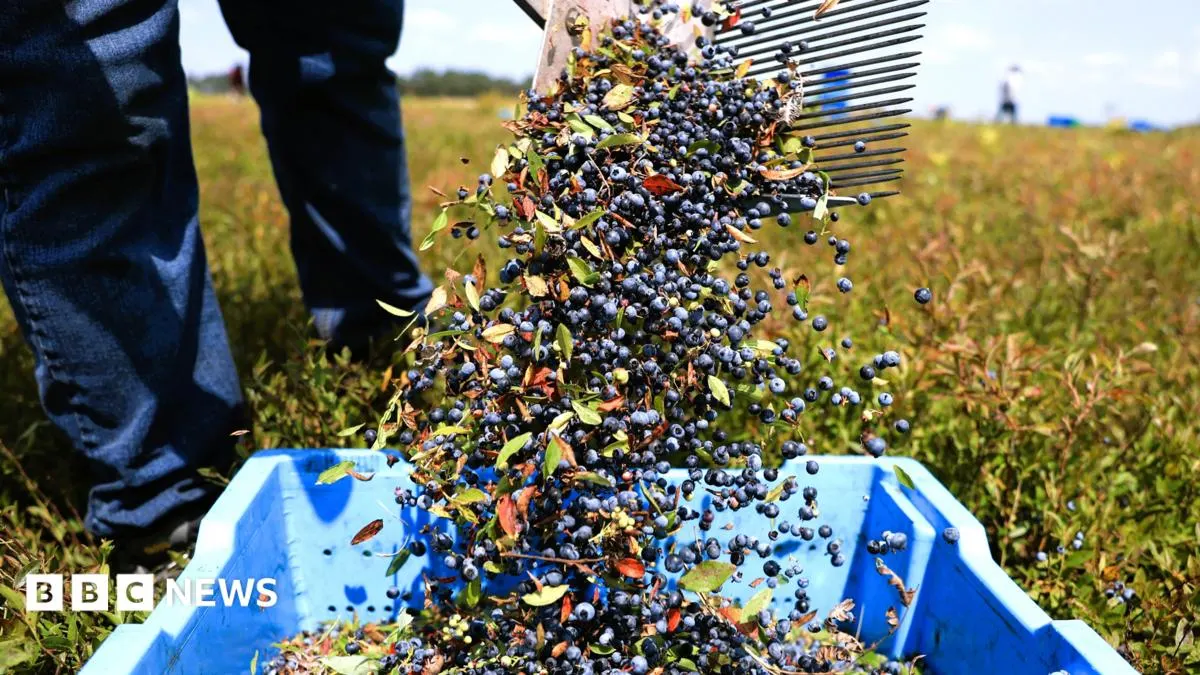
Artificial intelligence tools are being deployed by fruit growers to forecast optimal harvest dates by analysing crop imagery and accounting for weather conditions, ripeness, and worker availability. Companies such as Vivid Machines and FruitCast are developing systems that help farmers like Joel Carter at Okanagan Specialty Fruits determine when to harvest, which is critical because poor timing results in costly scheduling errors, missed profits, and crop spoilage. The technology addresses a genuine problem: when Carter's apple harvest was delayed due to extreme heat, it demonstrated how weather complications can disrupt operations.
The systems work by using cameras mounted on tractors or drones to capture fruit imagery, which AI then analyses to count fruit and predict ripeness. Different crops require different precision—apples offer a three-week harvest window, whilst berries can only be harvested within a few days before disease sets in. FruitCast claims 90% accuracy one week in advance and 83% accuracy three weeks out, though the company emphasises that forecasts are most effective when trained on farm-specific historical data rather than generalised averages. This year has tested the technology in the UK, where heat stress and drought have complicated growing conditions.
In short
- AI systems help farmers forecast optimal harvest dates by analysing crop imagery and weather
- Precise timing is crucial: strawberries rot within days if unharvested; prices fluctuate wildly
- Technology scales what experienced farmers know manually but extends it across entire farms
Steelman: both sides, in good faith
The strongest fair case each way — we don't pick a winner.
The case for
These systems address genuine operational problems that cost farmers substantial sums—poor harvest timing leads to crop spoilage, scheduling errors, and lost profits. The AI significantly reduces waste by optimising labour allocation and predicting ripeness with impressive accuracy, particularly important for crops with narrow harvest windows where timing is critical. In an era of climate volatility, the technology helps farms adapt to unpredictable conditions and operate more efficiently, potentially sustaining livelihoods that would otherwise be threatened by increasingly difficult growing seasons.
The case against
Agricultural automation raises legitimate concerns about labour displacement and economic consolidation, as farms lacking capital for expensive AI systems cannot compete with better-equipped neighbours. There is also a risk of excessive dependence on proprietary technology and data, where farmers surrender autonomy to tech companies and lose traditional expertise accumulated over generations. Smaller operations may find themselves priced out of farming, and the broader shift towards tech-dependent agriculture concentrates control in fewer hands rather than supporting diverse, independent farming communities.
Explained simply
Fruit growers face a critical timing challenge: harvest too early and the crop is not ripe, harvest too late and it spoils or becomes unsaleable. Getting this decision wrong costs farmers significantly through scheduling mistakes, missed sales, and wasted produce. The problem is particularly acute because different fruits have vastly different harvest windows, with apples allowing several weeks for picking whilst berries may only have days before disease ruins them.
Artificial intelligence companies are now offering systems to help solve this problem by analysing photographs of crops to forecast the optimal harvest date. Companies including Vivid Machines and FruitCast use cameras mounted on tractors or drones to capture images of fruit, which their AI then analyses to count produce and predict when it will reach peak ripeness. Farmers like Joel Carter at Okanagan Specialty Fruits are using these systems to improve their harvest decisions, with the technology currently being tested in the UK amid challenging growing conditions.