Hawaii’s famed Hōlei Sea Arch landmark collapses into ocean after 500 years
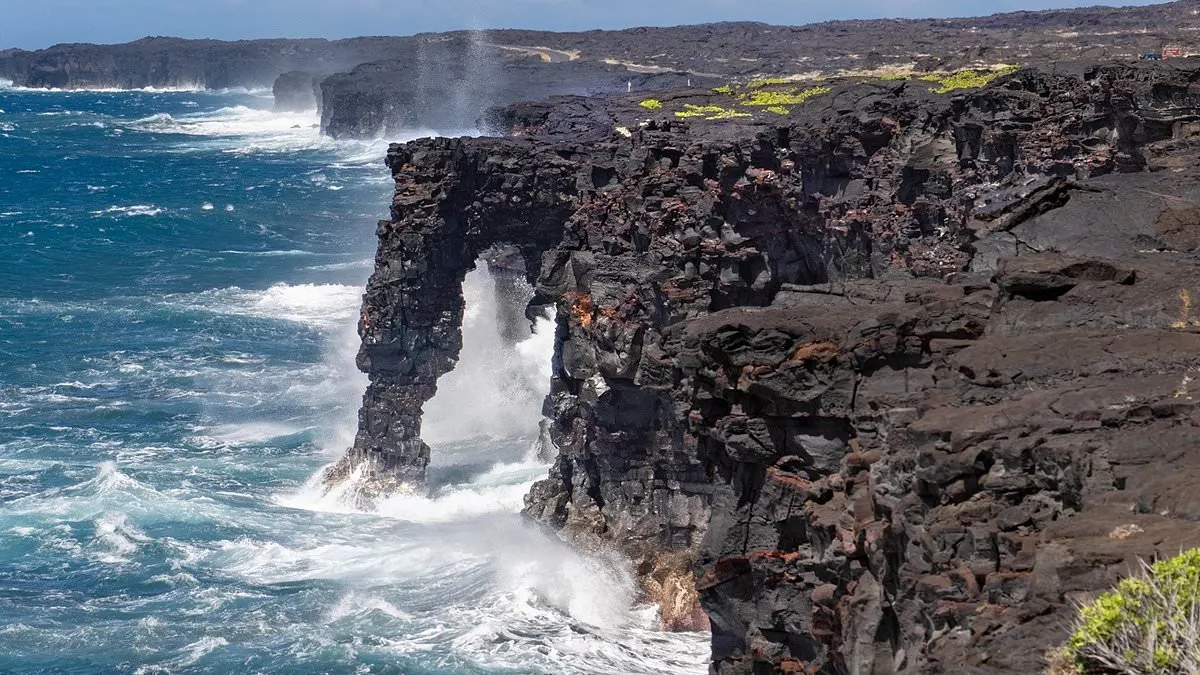
Hawaii’s Hōlei Sea Arch, a popular natural landmark in Hawaiʻi Volcanoes National Park, collapsed into the Pacific Ocean in late September. Its loss marks the end of a feature shaped by the sea over centuries, while the unstable cliffs at the site remain dangerous.
The 90-foot basalt arch was formed around 550 years ago by waves eroding ancient lava. Park officials believe it fell between 23 and 27 September, while the park was temporarily closed during Tropical Storm Nolo; years of erosion, earthquake vibrations and cracks had weakened it, and the 2018 Kīlauea eruption and later storms caused further damage. Visitors are being warned to stay away from the restricted area because of the risk of sudden cliff collapses.
- Hōlei Sea Arch collapsed into the Pacific in late September.
- The basalt landmark formed about 550 years ago.
- Park officials warn visitors to avoid the unstable cliffs.
New here? Start with this
Hōlei Sea Arch was a distinctive natural formation on Hawaii's Big Island, located within Hawaiʻi Volcanoes National Park. The 90-foot basalt arch had been shaped by ocean waves and erosion over roughly five centuries, becoming a recognizable landmark that drew visitors to the Hawaiian coastline.
Natural coastal features like sea arches are inherently temporary, as waves and weather continuously erode the rock beneath them. The Hōlei arch had been weakened over time by the relentless action of the Pacific Ocean, compounded by earthquakes, volcanic activity from the nearby Kīlauea volcano, and tropical storms that battered the cliffs.
The arch's loss highlights how dynamic volcanic coastlines remain in constant flux, with natural landmarks gradually shaped and eventually destroyed by geological forces. The collapse also underscores safety concerns, as officials warn that other parts of the unstable cliff remain at risk of sudden failure, making the area dangerous for visitors.