Amazon Pledges $1 Billion to Ease Community Friction Over Datacenter Expansion
Developing story first seen 1 hour ago
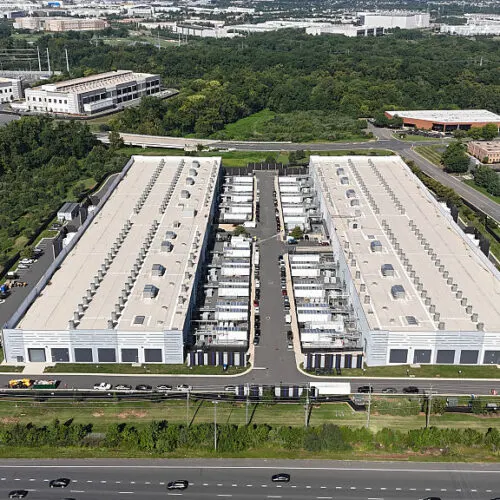
Amazon has announced a $1 billion, five-year investment programme aimed at addressing community concerns about its datacenter expansion, committing funds to education, workforce development, infrastructure improvements, and sustainability initiatives in host regions. The pledge represents the company's response to escalating public opposition and over 100 datacenter moratoriums being considered across the US, which Amazon argues could undermine American technological competitiveness on a geopolitical level.
The initiative includes Amazon's attempt to counter what it frames as myths about datacenters' environmental impact, particularly regarding water consumption. The company claims its facilities use only 13,000 gallons of water daily (equivalent to 42 households' usage) and argues concerns are overblown compared to other industries like golf courses. However, critics note this characterisation glosses over indirect water usage tied to power generation and point to documented cases where non-Amazon datacenters have depleted local water supplies, with some consuming nearly 30 million gallons before residents noticed unusually low water pressure.
- Amazon pledges $1bn over five years to address community concerns over datacenter expansion.
- Company downplays environmental impacts, claiming water use is minimal compared to other industries.
- Over 100 datacenter moratoriums are being considered across the US amid opposition.
New here? Start with this
Amazon operates large computer facilities called data centres that power internet services used by millions of businesses and consumers worldwide. The company is expanding its data centre network, but communities in areas where these facilities are planned are raising concerns about what this means for their regions.
Communities worry about environmental impacts, particularly water usage, and broader changes to their localities. These concerns have led to over 100 proposed restrictions on data centre development across the United States, creating significant opposition to Amazon's expansion.
Amazon has announced a $1 billion investment programme over five years to address these concerns, directing money to local education, job training, infrastructure, and environmental projects. The company argues that limiting data centre growth could harm America's technological standing globally, and it disputes the severity of environmental concerns, particularly claims about water consumption.
Both sides, in good faith
The strongest fair case each way — we don't pick a winner.
The case for
Amazon is demonstrating concrete responsibility by committing $1 billion to address documented community concerns about power costs and water depletion caused by datacenter operations. The investment in education, workforce development, and infrastructure reflects genuine engagement with legitimate local needs rather than mere public relations, and represents appropriate acknowledgement that major technological infrastructure should provide reciprocal benefits to host regions. This commitment demonstrates responsiveness to community pressure and represents the kind of stakeholder engagement necessary for large-scale infrastructure projects.
The case against
Whilst $1 billion is notable, it amounts to only roughly $200 million annually for a corporation of Amazon's scale and appears primarily designed to build political goodwill enabling continued expansion. The pledge addresses only narrow aspects of datacenter impact—power and water—whilst environmental advocates emphasise it minimises broader ecological costs and lacks binding accountability mechanisms to ensure environmental protection. This follows a familiar pattern where corporate pledges allow expansion to proceed whilst underlying environmental concerns remain fundamentally unresolved.
Full account
Amazon has announced a five-year, $1 billion commitment to communities adjacent to its data centre facilities, seeking to address escalating public opposition to infrastructure expansion projects across North America. The initiative, disclosed by AWS Chief Executive Matt Garman, represents the company's most substantial attempt to date to address mounting friction between its expansion plans and local residents increasingly concerned about environmental and social impacts.
The pledge encompasses funding for education programmes, vocational training schemes, energy affordability initiatives, water management projects, and community-determined priorities. Alongside financial contributions, Amazon has made several commitments including ensuring data centres will not raise electricity charges for neighbouring residents or deplete local water supplies. The company aims to achieve 'water positive' operations by 2030, claiming three-quarters of its current projects have already attained this status. Notably, Amazon stated it would cease using non-disclosure agreements with communities, a previously controversial practice.
Amazon's leadership has framed the investment within a geopolitical context, contending that foreign governments are deliberately spreading misinformation about data centres to impede American technological advancement. Garman suggested that proposed moratoriums on facility construction—over 100 are under consideration nationally—threaten to undermine the nation's competitive position against rival powers. This framing mirrors recent political rhetoric about international interference in American infrastructure debates.
Environmental advocates, particularly Stand.Earth, have heavily criticised the initiative as insufficient and misleading. They highlight Amazon's construction of a power facility in Pecos, Texas, which experts predict will become America's largest single source of industrial emissions, generating approximately 33 million tonnes of annual air pollution equivalent to powering nearly two million homes. Stand.Earth argues that Amazon's commitments conspicuously omit meaningful discussion of this major polluting installation. The organisation has additionally challenged Amazon's assertion that backup generators operate minimally, citing documented instances where data centre diesel systems ran continuously for multiple days. Environmental analysts have emphasised the technical trade-off between water-intensive cooling systems and alternative power-consuming approaches, suggesting Amazon's water efficiency claims may obscure broader energy consumption problems.
Where outlets differ
Source 1 emphasises Stand.Earth's specific criticisms regarding the Pecos power plant and pollution figures, whilst Source 2 focuses on myth-debunking framing and explores water-versus-power technical trade-offs in greater depth
Source 1 adopts neutral journalism conventions whilst Source 2 employs heavy satirical language throughout
Source 1 identifies the ending of NDAs as a positive development, whereas Source 2 does not mention this element
Source 1 prioritises environmental advocacy perspectives, whilst Source 2 devotes more attention to Amazon's competitive framing and geopolitical arguments
Coverage
- Ars Technica — Amazon pledges $1bn for data centre neighbours amid environmental concerns
- The Register — Amazon pledges $1bn to support communities hosting datacentres
Business Elections Environment Markets Politics Science Software