Keeping up with the Collinses: Why are people so angry about two graves in Shiregreen?
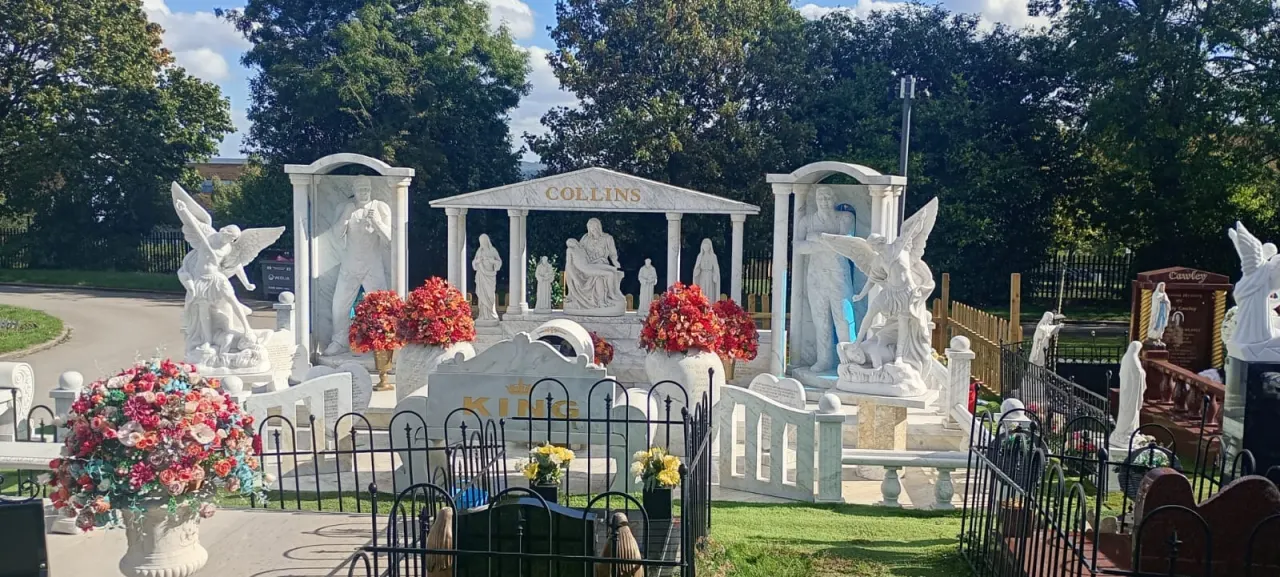
Two oversized headstones at Shiregreen Cemetery in Sheffield have drawn extensive press coverage and public attention, prompting claims that they are taking over the cemetery. The article argues those claims are exaggerated: the cemetery has large empty areas, and the graves are difficult to find.
The headstones for William “Willy” Collins and his brother Michael exceed council rules for a single memorial, which limit it to 1.35 metres high, 90 centimetres wide and 45 centimetres thick. Willy’s marble memorial features life-size statues, boxing gloves and a jukebox; his daughter says other large and extravagant headstones are also present in the cemetery, including a nearby joint memorial.
- Collins brothers’ headstones exceed Sheffield council size rules.
- Claims they are taking over the cemetery are described as exaggerated.
- Other large memorials can also be found nearby.
New here? Start with this
Shiregreen Cemetery in Sheffield applies rules limiting memorial headstones to 1.35 metres high, 90 centimetres wide and 45 centimetres thick. Two memorials for brothers William "Willy" Collins and Michael Collins exceed these limits, with Willy's featuring life-size marble statues, boxing gloves and a jukebox.
This has prompted concern amongst some that the graves are too large for a shared burial ground, where standards should be applied consistently. Those defending the memorials point to other large gravestones in the cemetery, suggesting the rules are not uniformly enforced, and note that the Collins graves are not prominently positioned within considerable empty space.
The situation reflects different perspectives on how cemeteries should balance individual expression with shared standards and aesthetic consistency. Some believe the headstones breach the cemetery's intended rules, whilst others argue they represent an appropriate memorial and point to similar monuments elsewhere in the grounds.
Both sides, in good faith
The strongest fair case each way — we don't pick a winner.
The case for
Supporters of the Collins family argue that cemeteries, as spaces of personal remembrance, should permit families to honour their dead according to their own values and means. The cemetery has demonstrable empty space, the headstones are reportedly difficult to locate, and other substantial memorials already exist there, suggesting the rigid rules are either outdated or inconsistently enforced. Families deserve meaningful autonomy in commemorating loved ones, particularly when their choices cause no practical harm.
The case against
Critics contend that cemeteries require consistent standards to maintain dignity and prevent them becoming monuments primarily to wealth. Rules serve an important purpose: ensuring fairness and preventing a precedent where affluent families can essentially purchase memorial prominence. Rather than abandoning standards because enforcement is sometimes uneven, the answer is consistent application—otherwise all families should expect equal treatment regardless of financial resources.