Ghana bans preaching on moving public service vehicles
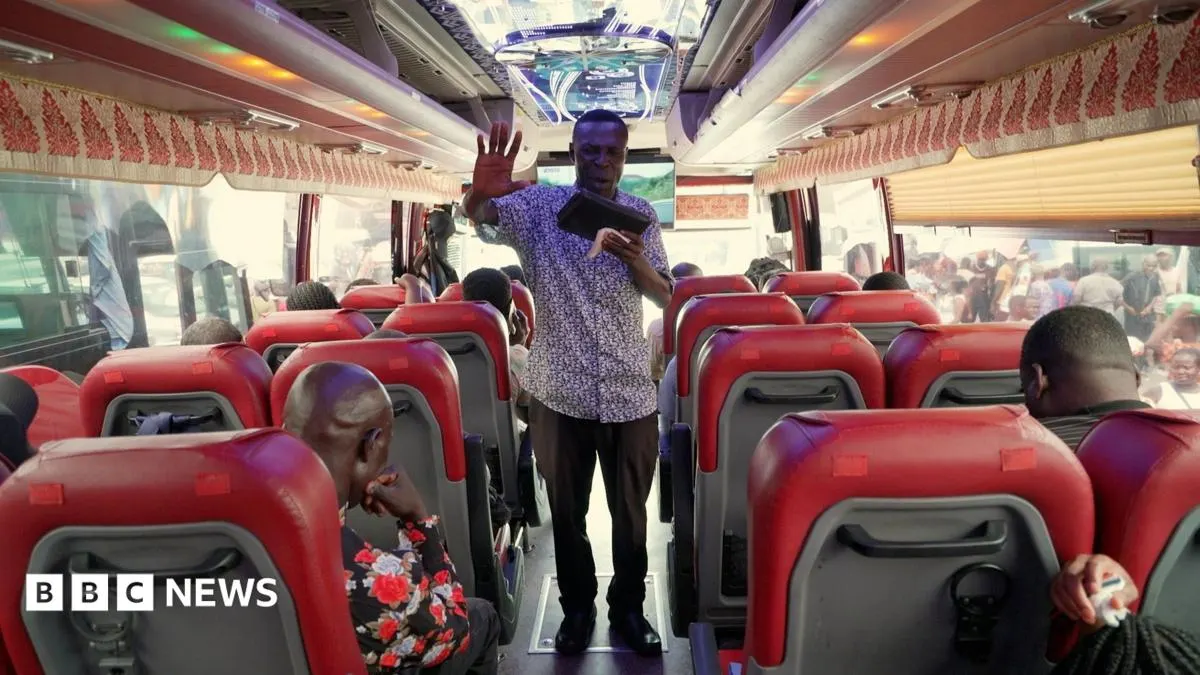
Ghana has introduced a new law that bans preaching on public service vehicles whilst in motion, with penalties of up to eight months in prison and fines of up to £39. The regulation, passed in May and now being enforced, classifies preaching and hawking as nuisances affecting passenger safety and comfort. This threatens a long-standing religious practice in the predominantly Christian country where pastors have traditionally evangelised to captive audiences on long-distance buses.
Pastor Boateng Bismark James, 61, has been preaching on buses since 2023 and leads a group of worshippers who evangelise at Accra's Neoplan station. Critics argue that preaching on moving vehicles distracts drivers and creates discomfort through noise and involuntary spitting, whilst supporters contend that evangelism is a religious duty and an important way of reaching people who may not attend church services. Many pastors depend on monetary gifts from passengers for their livelihood, and some fear the law will devastate their income and restrict their religious freedom.
- Ghana's new law bans bus preaching, punishable by up to eight months jail
- Pastors say evangelism reaches non-churchgoers; passengers cite safety and nuisance
- Many preachers depend on passenger donations for income and livelihood
New here? Start with this
Ghana has recently enforced a law banning religious preaching on public service vehicles in motion. The regulation, which was passed in May, carries penalties of up to eight months in prison and fines up to £39 for those who break it. Officials argue that such preaching creates a distraction and nuisance affecting passenger safety and comfort.
In Ghana, a predominantly Christian country, evangelising on long-distance buses has been a long-established religious practice. Pastors have traditionally used these journeys as an opportunity to spread their faith to passengers who might not otherwise attend church services, and many rely on voluntary contributions from passengers for their income. The new law therefore threatens a deeply rooted practice within the religious community.
The rule has created tension between two competing concerns. Critics argue that preaching on moving vehicles distracts drivers and creates noise and discomfort for passengers. Pastors and evangelists, by contrast, contend that the law restricts their religious freedom and will damage their livelihoods, viewing evangelism as a spiritual calling and an important way of reaching people outside traditional church settings.
Both sides, in good faith
The strongest fair case each way — we don't pick a winner.
The case for
The ban addresses legitimate public safety and welfare concerns on moving vehicles where passengers cannot escape involuntary religious messaging. Preaching on buses in motion poses real risks to driver concentration and passenger comfort, whilst confined passengers have no choice but to remain exposed to noise, spitting, and disruptive behaviour. Public service vehicles serve essential transport functions and should maintain standards that protect all passengers' dignity and safety, regardless of religious tradition. The regulation applies equally to all forms of preaching and hawking, focusing on conduct in shared public spaces rather than restricting anyone's right to worship or evangelise in appropriate venues.
The case against
The ban restricts genuine religious freedom and freedom of expression by criminalising a cherished evangelical practice central to Christian faith and Ghana's religious culture. Many pastors undertake this ministry precisely to reach people who would never attend church, fulfilling what they see as a sacred duty; denying them this outlet constrains their ability to practise their religion meaningfully. Beyond the spiritual dimension, numerous pastors depend on voluntary contributions from engaged listeners for their livelihood, making this law economically devastating to vulnerable religious workers. The characterisation of preaching as a nuisance on par with hawking may underestimate how deeply embedded this practice is in Ghanaian society and risks disproportionately burdening religious minorities or those with less mainstream evangelical practices.
Read the full article at the source →
Originally published by BBC World as “Why pastors may not be seen – or heard – preaching on Ghana’s buses for much longer”.