Brits to be able to use their face as their passport as new technology means they won’t have to scan documents flying back into the UK
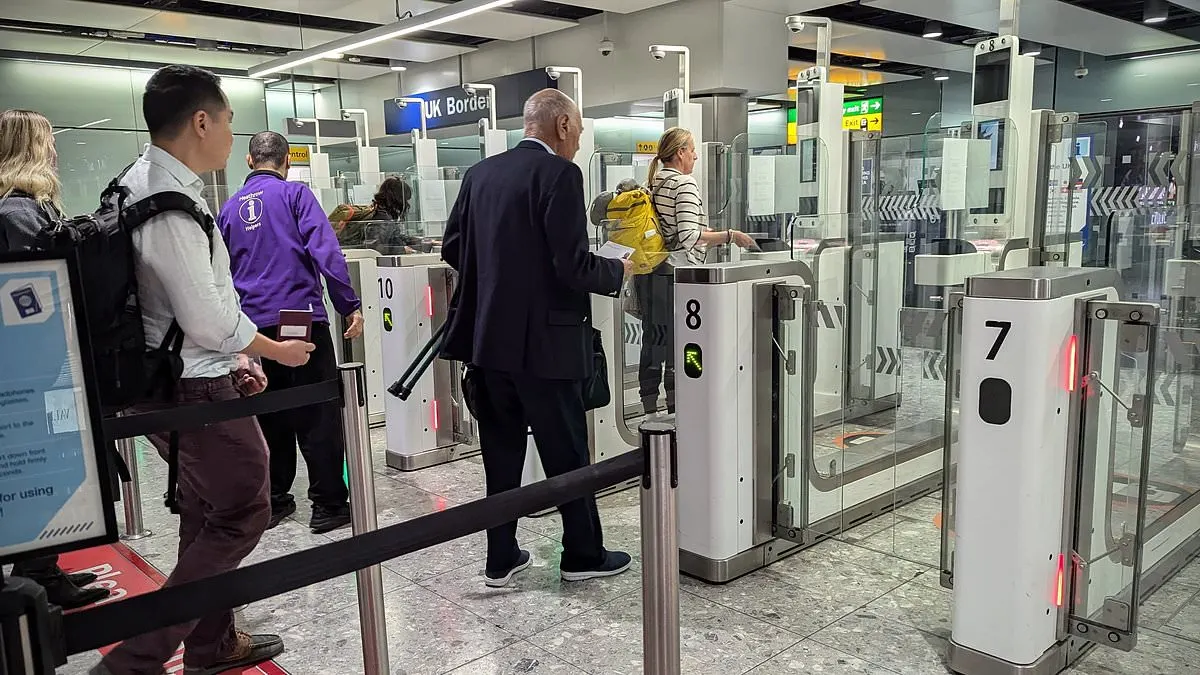
The UK plans to upgrade airport e-gates so British passport holders returning home can be identified by facial recognition, without scanning their passports at the gate. The change is intended to reduce queues and free Border Force staff to focus more on security and other duties.
The system is due to start at Birmingham and East Midlands airports, with all UK airports that use e-gates expected to have it by early next year. Officials expect it to cut waiting time at the gates by about a quarter; a typical check currently takes 20 to 25 seconds. Passengers must still carry a passport for check-in, boarding and travel abroad, and anyone the system cannot recognise can be asked to scan their passport or go to a staffed desk.
- Facial recognition will let British travellers pass UK e-gates without scanning passports.
- Birmingham and East Midlands are first, with wider rollout by early next year.
- Officials expect e-gate waits to fall by about a quarter.
New here? Start with this
E-gates are automated passport control booths at UK airports that allow British citizens to clear border control without joining queues at staffed desks. Currently, passengers must physically scan their passport at the gate, a process that takes around 20 to 25 seconds per person. Despite their efficiency compared to fully staffed controls, e-gates still experience significant queuing during busy travel periods.
Airports and border authorities constantly seek ways to speed up passenger processing without compromising security. Staff time spent processing routine identity checks at the gates means fewer resources available for other border security work. The core challenge is balancing quick passage for legitimate travellers with maintaining proper security screening and detection of suspicious travel.
Facial recognition technology can now reliably identify people by comparing their face against existing photographs and records. Rather than requiring passengers to scan a document, a camera can verify identity much more quickly. This technology offers airports a potential solution to reduce processing times at border control whilst maintaining security functions.
Both sides, in good faith
The strongest fair case each way — we don't pick a winner.
The case for
The technology delivers substantial practical benefits—reducing gate waiting times by roughly a quarter and freeing Border Force staff to focus on genuine security rather than routine document scanning. The system includes safeguards: those it cannot identify can still scan their passport or approach a staffed desk, preserving choice. British citizens already have their biometric data on file, making this a sensible upgrade that leverages existing technology to improve traveller experience without compromising security.
The case against
Whilst efficiency gains are welcome, the expansion of facial recognition surveillance infrastructure raises significant privacy and data security concerns that deserve careful examination. Facial recognition systems are well-documented as having accuracy problems, particularly across different demographic groups, and once this technology is embedded across all airports, there is genuine risk of mission creep—a gradual expansion of scope beyond initial intentions. The fundamental trade-off is whether modest time savings justify normalising mass biometric surveillance, and that question deserves more public deliberation than this rollout has received.