Yemen government launches operations to retake Houthi-held territory
Developing story first seen 2 hours ago
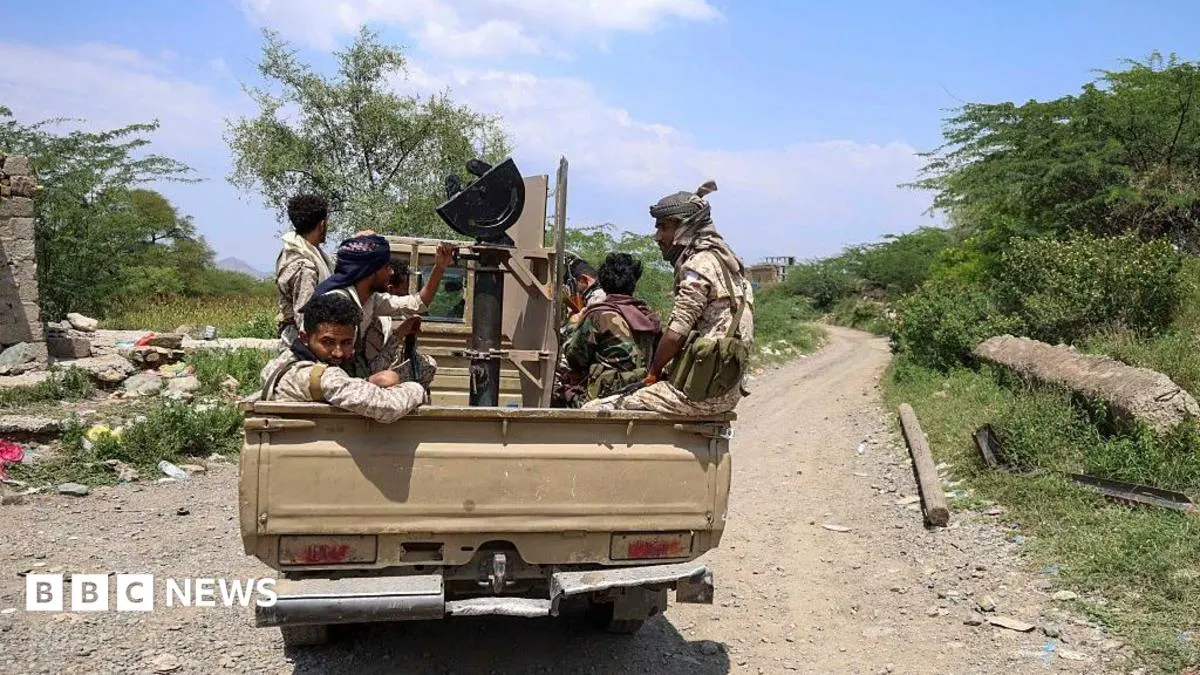
Yemen’s internationally recognised government has announced military operations to retake territory held by the Houthis, amid renewed strikes between the group and the Saudi-led coalition. The announcement comes as fighting threatens to widen a conflict that has disrupted shipping and oil supplies, while raising the prospect of further regional escalation.
The Houthis said they attacked Saudi Aramco sites with a missile and drones, claiming the strikes were in response to 50 coalition attacks in 12 hours; Saudi Arabia has not commented on the reported attack. The Houthis have reportedly cut the supply route between Taiz and Aden, potentially encircling Taiz, while government and coalition strikes have hit targets in Sanaa, Saada and near Taiz. The conflict began in 2014, when the Houthis seized the capital, and Yemen remains in a severe humanitarian crisis.
- Yemen’s government says it is launching operations to retake Houthi-held territory.
- The Houthis claim they attacked Aramco sites after coalition strikes.
- Fighting around Taiz risks further disrupting supply routes and shipping.
New here? Start with this
Yemen has been torn by conflict since 2014, when the Houthis, a rebel group from the country's north, seized the capital city of Sanaa and took control of much of Yemen's most populated areas. An internationally recognised government, backed by a military coalition led by Saudi Arabia, has been fighting to counter their rule. The conflict has left Yemen in a severe humanitarian crisis, with millions facing food shortages and limited access to essential services.
The Houthis have launched attacks on shipping routes through regional waters and on oil and energy infrastructure, disrupting global trade and fuel supplies. Saudi Arabia and its coalition partners have responded with extensive military operations, with both sides continuing to exchange fire regularly. The conflict has raised international concerns about stability and a potential widening of the crisis beyond Yemen's borders.
Control of territory across Yemen remains contested, with neither the Houthis nor the government coalition having achieved decisive military victory. Multiple peace negotiations have failed to produce a lasting settlement, leaving the country locked in a prolonged struggle. Ordinary Yemenis continue to bear the worst consequences of the fighting.
Both sides, in good faith
The strongest fair case each way — we don't pick a winner.
The case for
The Yemen government, as the internationally recognised authority, possesses a legitimate right to restore sovereignty and territorial control. Supporters argue that the Houthis, reportedly backed by Iran, represent a destabilising threat to regional security, as evidenced by their attacks on shipping lanes and Saudi petroleum infrastructure; military operations aim to resolve a prolonged conflict, establish order, and facilitate humanitarian relief. From this perspective, restoring governmental authority is essential for enabling security, reconstruction, and preventing further regional escalation.
The case against
Critics maintain that years of military campaigns have failed to resolve the underlying conflict and have instead deepened Yemen's humanitarian emergency through civilian casualties and blockades. They argue that the Houthis represent a significant segment of Yemen's population with legitimate grievances regarding foreign military intervention, and that military force has proved ineffectual; meaningful resolution requires political dialogue and negotiation rather than renewed escalation. From this perspective, continued operations perpetuate a destructive cycle whilst deferring the political settlement necessary to address Yemen's severe humanitarian crisis.
Full account
Yemen's government has initiated a comprehensive military campaign to recapture territories currently held by Houthi forces, according to an announcement delivered on Sunday. President Rashad al-Alimi declared the commencement of operations aimed at reasserting state control throughout the nation. The declaration arrived amid escalating military tensions, characterised by reciprocal strikes between the rival factions and their respective international backers.
The Iran-aligned Houthi movement responded by attacking Saudi Arabian energy facilities. The group's military spokesperson claimed to have successfully deployed ballistic missiles and unmanned aircraft against Aramco installations in Riyadh and the Khurais region, asserting that the strikes had triggered substantial fires at the targeted locations. The militia justified these attacks as retaliation for what it characterised as an intensive bombardment campaign, claiming the Saudi-led coalition had launched approximately 50 aerial and missile operations within a 12-hour timeframe.
Simultaneously, Houthi forces severed a vital supply route linking the government-held city of Taiz with Aden, where Yemen's interim administration operates. Military and security personnel confirmed that the Iran-backed faction now controls this critical corridor, effectively encircling Taiz. The development followed intense fighting in the area, with regional analysts observing that the Houthis have achieved a significant strategic advantage through their encirclement, despite not yet securing complete control of the city.
The military announcement reflects the government's resolve to reverse territorial losses sustained in September, when Houthis seized Yemen's entire Red Sea coastline and the strategically vital Bab al-Mandab Strait. Nevertheless, the feasibility of such expansive objectives appears questionable given that the internationally recognised government, notwithstanding Saudi military assistance, has proven unable to halt Houthi advances. The intensifying conflict threatens to disrupt international shipping and fuel concerns about energy market instability.
Where outlets differ
SOURCE 1 emphasises the cyclical nature of escalating strikes and retaliation, whilst SOURCE 2 prioritises the government's ambitious strategic objectives and structural vulnerabilities
SOURCE 1 describes the government as 'Saudi-backed' whereas SOURCE 2 uses the characterisation 'Western-backed'
SOURCE 2 provides specific ground-level tactical details about the Taiz encirclement, including the al-Safiya area and police station, that SOURCE 1 omits
SOURCE 2 explicitly includes the 'terrorist militia' designation in its quotation of the presidential statement; SOURCE 1 does not employ this language
SOURCE 2 devotes substantially more attention to prospective consequences for global energy prices
More coverage
Elections Government Middle East Politics World
Read the full article at the source →
Originally published by BBC World as “Yemen announces military campaign to reclaim land from Iran-backed Houthis”.