Ireland staff member claims Israel player ‘SPAT’ at him during half-time melee – as Israeli government make ‘Nazi Germany’ comparison after Irish players bow their heads during rivals’ national anthem and refuse to shake hands
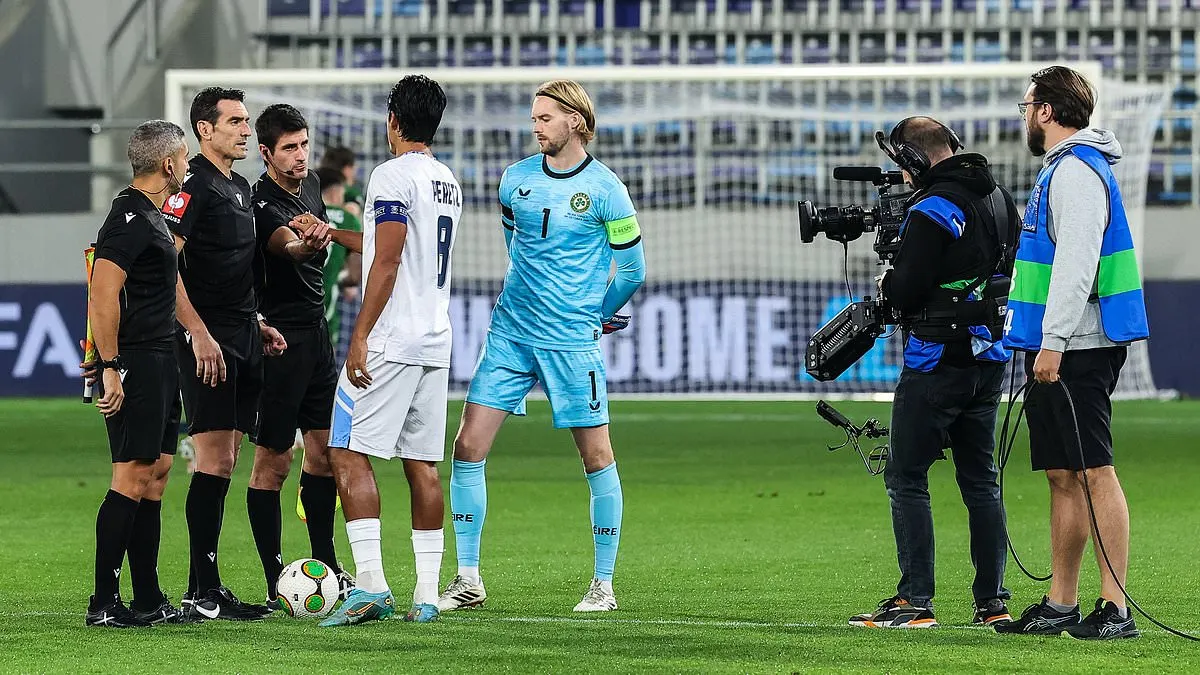
Ireland's fitness coach Damien Doyle alleged an Israeli player spat at him during a half-time tunnel incident in a UEFA Nations League match that ended 1-1 in Serbia. Head coach Heimir Hallgrimsson suggested the incident was designed to provoke his team but credited his players for maintaining discipline and avoiding escalation.
The confrontation occurred amid significant pre-match political tensions, with Ireland captain Caoimhin Kelleher and his Israeli counterpart declining to shake hands before kick-off—a stance repeated from their previous 3-0 victory. Ireland players bowed their heads during Israel's national anthem and wore black armbands in recognition of lives lost in Gaza, prompting Israel's government to issue a social media response drawing parallels to Ireland's 1939 match against Nazi Germany.
- Ireland's fitness coach alleged spitting by an Israeli player during 1-1 Nations League match
- Ireland captains refused handshake; players bowed during anthem in political protest
- Israel's government accused Irish team of moral blindness in response to anthem gesture
New here? Start with this
Ireland and Israel played a UEFA Nations League football match in Serbia that finished 1-1. A half-time incident involving allegations of spitting by an Israeli player at an Ireland staff member was subsequently reported. However, the match became notable first because of events and gestures before the players even took the field.
Before kick-off, Ireland's captain and players refused to shake hands with their Israeli counterparts. During Israel's national anthem, the Irish players bowed their heads, and they wore black armbands throughout the match. These gestures represented a political stance on the Gaza conflict, with the armbands used in recognition of casualties there.
The match illustrates how football fixtures can become a space for expressing positions related to the Israeli-Palestinian conflict. Israel's government commented publicly on Ireland's actions, showing the political significance placed on the match. Such fixtures have become occasions where political statements are made alongside sporting competition.
Both sides, in good faith
The strongest fair case each way — we don't pick a winner.
The case for
Ireland's players exercised legitimate political expression through peaceful, dignified gestures. Bowing their heads during the anthem and declining handshakes are non-violent forms of protest regarding humanitarian concerns in Gaza. Such symbolic dissent does not disrupt the match and reflects athletes' right to use their platform to highlight human rights issues they believe are important.
The case against
International sport functions best when it transcends political disputes, with national anthems honouring a nation's people regardless of government policy. By refusing standard courtesies and making political gestures, Ireland inappropriately politicised a sporting event and showed disrespect to Israeli athletes. The selective focus on particular conflicts raises concerns about whether principled human rights advocacy or other considerations genuinely drive such demonstrations.
Cricket Europe Football Government Middle East Politics Sport World