Russian drone strike sinks Turkish-owned corn ship, killing two crewmen
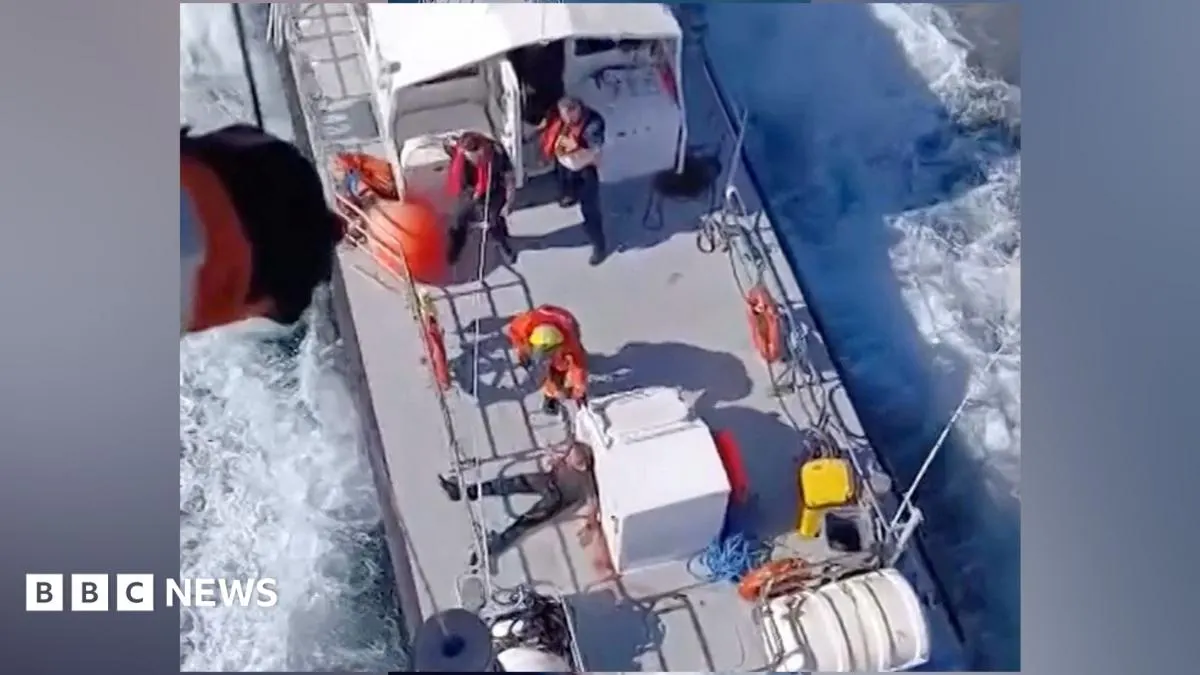
Russia launched a drone strike on a Turkish-owned civilian cargo vessel carrying corn in the Black Sea on Monday, killing the ship's captain and leaving another crew member unaccounted for. President Volodymyr Zelensky condemned the "horrific" attack as part of Russia's ongoing pattern of targeting civilian vessels rather than seeking peaceful resolution to the conflict. The incident marks another escalation in the Black Sea, where Russia claims it is retaliating for Ukrainian attacks on Russian oil refineries.
The vessel, Royad Mammadov, sank approximately 30 nautical miles south of Romania's port of Sfantu Gheorghe after the strike. Romanian authorities rescued 11 crew members, who were nationals of Azerbaijan and India, though two people died in the attack. Russia's defence ministry said it had struck two cargo vessels as retaliation, whilst Ukraine maintains it is targeting Russian oil infrastructure to disrupt Moscow's financing of the war that began with Russia's invasion in February 2022.
- Russia's drone strike killed cargo ship captain in Black Sea; 11 crew rescued
- Turkish vessel carrying corn sank south of Romania; two people died
- Attack part of escalating retaliation cycle between Russia and Ukraine
New here? Start with this
Russia invaded Ukraine in February 2022, starting a war that has extended into the Black Sea. This waterway is crucial for exporting grain and other goods to global markets, but both sides of the conflict have targeted vessels and infrastructure there, putting civilian ships and their crews at serious risk.
Russia and Ukraine accuse each other of escalating attacks in the Black Sea. Ukraine has struck Russian oil refineries to disrupt Moscow's ability to finance the war, whilst Russia claims it is retaliating by targeting cargo ships carrying international trade goods. This cycle of attacks has made the sea increasingly dangerous for commercial vessels.
The incidents illustrate how the conflict affects far more than Ukraine and Russia themselves. Attacks on shipping disrupt global grain supplies, endanger crews from around the world, and destabilise one of the world's most vital trade routes.
Both sides, in good faith
The strongest fair case each way — we don't pick a winner.
The case for
Russia contends this was justified retaliation against Ukraine's deliberate strikes on Russian civilian energy infrastructure that funds the war effort. Both sides conduct economic warfare to disrupt the other's capacity to wage war; Ukraine strikes Russian refineries whilst Russia targets Ukrainian supply lines and cargo vessels. From Russia's perspective, this represents proportionate reciprocal action against efforts to damage its war-making capacity.
The case against
International humanitarian law strictly prohibits attacks on civilian vessels regardless of context or claims of retaliation. The crew were innocent civilians, merchant ships are protected civilian objects, and fundamental legal principles recognise no exception for reciprocal action. Attacking civilians violates universal humanitarian standards that all states have committed to upholding, and such escalation places food security and civilian safety at heightened risk.
Read the full article at the source →
Originally published by BBC World as “Zelensky condemns ‘horrific’ Russian strike on boat carrying corn in Black Sea”.