Russian drone strikes disrupt Ukrainian rail travel and prompt mass evacuations
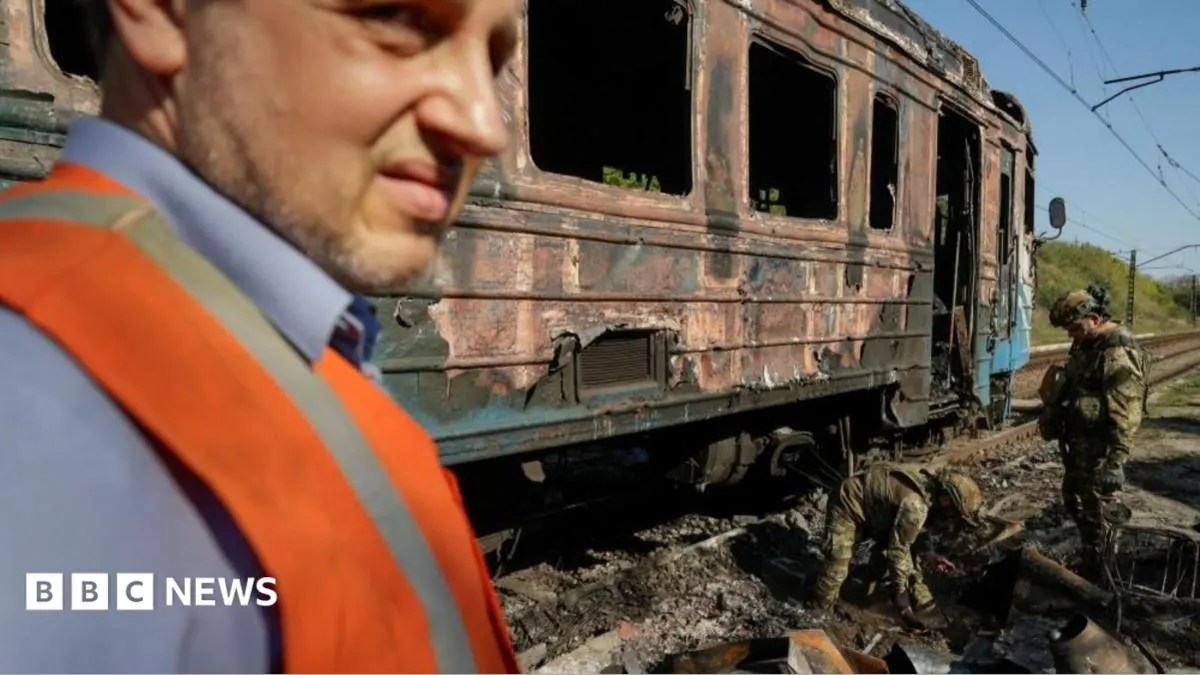
Russian drone attacks on Ukraine’s railways are causing growing danger and disruption for passengers, with evacuations and delays now common well beyond the eastern front. The escalation matters because trains have helped keep the country running since Russia’s 2022 invasion, while the railway operator says protecting passengers and staff has become its priority.
Ukrzaliznytsia said 5,831 trains were evacuated in September, an average of 205 a day. Nearly 60% of the 521 locomotives hit since the full-scale invasion were struck this year; the operator says more than half of all such strikes have occurred in 2026. Passengers described waiting for hours after attacks, and one teenager said she would stop travelling by train after a drone struck nearby.
- Drone attacks are forcing frequent evacuations of Ukrainian trains.
- 5,831 trains were evacuated in September.
- Nearly 60% of locomotives hit since 2022 were struck this year.
New here? Start with this
Russia's invasion of Ukraine in 2022 devastated the country's infrastructure, forcing reliance on the railway network to move people and goods. Trains became one of the few functioning transport systems after roads, airports and other networks were damaged in the conflict.
Russian forces have increasingly targeted Ukraine's railway network with drone strikes as part of their military strategy. The state railway operator, Ukrzaliznytsia, now faces attacks extending far beyond the front lines, requiring it to prioritise passenger and staff safety above normal operations.
This matters because railways had become a lifeline for ordinary Ukrainians. People rely on trains to travel between cities and reach safety, making attacks on the network disruptive for civilians living far from the main conflict.
Both sides, in good faith
The strongest fair case each way — we don't pick a winner.
The case for
Railways transport military supplies and personnel essential to Ukraine's war effort, making them legitimate military targets under international humanitarian law. Disrupting enemy logistics is a recognised military objective that provides substantial tactical advantage, and civilian impacts from attacks on dual-use infrastructure are an accepted consequence of warfare.
The case against
Although railways may carry military traffic, they predominantly serve civilians for essential travel, evacuation, and humanitarian aid access. International humanitarian law requires proportionality—the civilian suffering inflicted, measured in displacement, fear, and service disruption, must not be excessive relative to anticipated military advantage, and targeting infrastructure used primarily by ordinary people raises serious questions about whether any such advantage justifies the harm.
Read the full article at the source →
Originally published by BBC World as “Fear and disruption for Ukraine’s rail passengers as Russia escalates drone attacks”.