Drax datacentre could create nearly twice the yearly emissions of all Gatwick flights
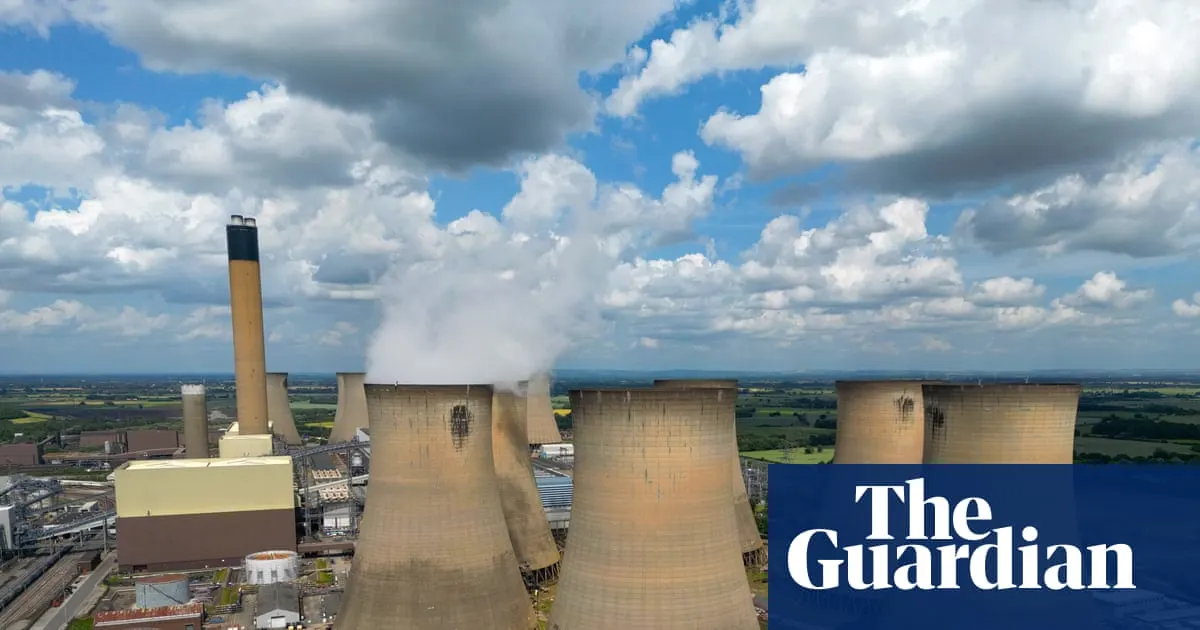
Drax’s proposed North Yorkshire datacentre could emit 8.6 million tonnes of carbon dioxide a year if powered as planned, according to an analysis by the Natural Resources Defense Council. That would be nearly twice the annual emissions attributed to flights from Gatwick, raising concerns about the project’s impact on the UK’s climate targets.
The estimate assumes the 1.2GW facility runs continuously and uses 4.9 million tonnes of wood annually, with most of its power supplied by Drax’s biomass plant and 100MW from the grid. Drax says the datacentre could open in 2031 if it receives the necessary consents; it has not yet entered formal planning. Campaigners are calling for stronger government standards, while ministers have rejected a moratorium on datacentres and Scotland has voted to pause new applications for up to a year.
- Drax datacentre could emit 8.6 million tonnes of CO₂ yearly.
- Its estimated emissions are nearly twice Gatwick’s flight total.
- The proposal depends on burning 4.9 million tonnes of wood a year.
New here? Start with this
Drax is an energy company that operates a biomass power plant in North Yorkshire, burning wood to generate electricity. The company is now proposing to build a large datacentre nearby to house computer servers and infrastructure supporting online services.
The concern centres on carbon emissions: environmental analysis suggests the datacentre would generate 8.6 million tonnes of carbon dioxide annually if powered as planned, using 4.9 million tonnes of wood each year. This is nearly twice the annual emissions from all flights departing Gatwick Airport, raising questions about whether the project can be reconciled with the UK's climate commitments.
The proposal has not yet entered formal planning, with Drax targeting a 2031 opening if it receives necessary consents. The project has prompted calls from environmental campaigners for stronger government standards on datacentres, whilst the government has rejected proposals for a moratorium on new facilities.
Both sides, in good faith
The strongest fair case each way — we don't pick a winner.
The case for
The datacentre represents critical infrastructure for the UK's digital economy and AI capability. Data centres power essential services—cloud computing, AI development, financial systems—and the UK risks falling behind economically if it blocks such projects whilst competitors build elsewhere with lower environmental standards. Drax's use of biomass power is designed as a carbon-neutral solution, with sustainable forestry practices claimed by the operator. Blocking this facility risks pushing datacentre investment to jurisdictions with worse environmental oversight, ultimately harming global emissions whilst damaging British technological competitiveness and regional employment.
The case against
The projected emissions of 8.6 million tonnes of CO2 annually are incompatible with the UK's climate commitments, exceeding the annual impact of all Gatwick flights. The biomass sustainability claims warrant serious scrutiny—in practice, biomass sourcing often drives deforestation and transportation emissions that undermine carbon-neutral claims. A pause on new datacentres, as Scotland has implemented, provides time for proper environmental standards rather than approving projects retroactively. The facility won't open until 2031; establishing robust climate safeguards now is preferable to permitting large-scale emissions infrastructure and hoping regulation catches up later.
Climate Culture Elections Politics Science Technology Travel