Cornell Fraternity Sexual Assault Investigation Reopened Amid Prosecutor Impartiality Dispute
Developing story first seen 2 hours ago
Umar Matthew Ingalls, one of seven Cornell University fraternity members accused of sexually assaulting a fellow student, is believed to have relocated to Dubai, according to new reporting. Ingalls, who was expelled from Cornell following the allegations, has reportedly returned to the Middle East where he spent his formative years attending an elite private school in the wealthy Emirates Hills enclave. The case has been complicated by conflicting accounts of the October 2024 incident: whilst audio recordings capture Ingalls describing events differently than the accuser, police records show he subsequently claimed he was too intoxicated to consent and alleged the woman had sexually assaulted him instead.
Jane Doe, a former Cornell student, filed a civil lawsuit against Ingalls and six other Chi Phi fraternity brothers, alleging they drugged her with ketamine and gang-raped her at their fraternity house on the night of 19 October 2024. The accusations prompted authorities to reopen their investigation and appoint a special prosecutor, reversing an earlier decision to decline criminal charges. Ingalls comes from a privileged background; his Yale-educated father teaches at the American University in Dubai, and before his expulsion he had received multiple college offers from top universities including Tufts and the University of Alabama.
- One of the accused has apparently fled to Dubai
- Audio recordings and police records show conflicting accounts of the incident
- Criminal investigation reopened after civil lawsuit was filed
New here? Start with this
A woman is pursuing a civil lawsuit against seven Cornell University fraternity members, alleging they sexually assaulted her at an off-campus house in 2024. The accused men deny the allegations. This civil action has prompted local authorities to reopen their criminal investigation into the incident, reversing a previous decision to decline charges due to insufficient evidence.
Prosecutors have appointed New York Attorney General Letitia James as a special prosecutor to oversee the case. However, the appointment has become contested. One of the defendants' lawyers has questioned whether she can approach the case impartially, citing her previous public statements of support for the woman alleging the assault.
Further complications have emerged from audio recordings of a telephone conversation between one of the accused men and the woman, which have been interpreted differently regarding what took place. Additionally, one defendant, Umar Matthew Ingalls, is reported to have travelled to Dubai.
Both sides, in good faith
The strongest fair case each way — we don't pick a winner.
The case for
Prosecutors must be, and must appear to be, genuinely impartial judges of evidence to ensure fair process. When an Attorney General has publicly committed to believing or supporting accusers as a matter of principle, this raises legitimate concerns about whether a particular defendant will receive fair, evidence-based judgment rather than predetermined conclusions. The criminal standard of proof—beyond a reasonable doubt—demands that a prosecutor approach evidence with genuine openness rather than having already signalled the direction of judgment. A recused prosecutor would better serve justice by ensuring actual impartiality.
The case against
Supporting survivors as a matter of policy is compatible with fair investigation of individual cases, and prosecutors routinely compartmentalise their values from case-specific judgments through professional ethics standards designed for exactly this purpose. The prior declination of charges followed by reopening in light of new evidence demonstrates the system working appropriately, and forcing recusal would cause unjustified delay for the accuser and set a troubling precedent allowing defendants to engineer removal of any prosecutor perceived as unsympathetic. Prosecutors must be trusted to follow evidence impartially regardless of their expressed principles.
Full account
Cornell University finds itself embroiled in controversy following accusations of sexual misconduct by seven fraternity members against a female former student. The woman, identified through court documents solely as Jane Doe, has initiated legal proceedings asserting that she was subjected to sexual assault by members of Chi Phi fraternity during an event at an off-campus location in October 2024. Her allegations include claims that she was pressurised into consuming drugs, resulting in substantial intoxication and disorientation, during which the assault allegedly occurred. The incident has generated considerable campus upheaval in recent times, with numerous students and academic staff organising demonstrations to express their disapproval. The controversy has expanded beyond campus to attract national scrutiny, prompting questions about the adequacy of institutional protection frameworks.
When the incident was initially investigated by prosecutorial authorities, no criminal charges were filed. Officials determined that the available evidence did not meet the threshold required for criminal prosecution, and characterised the complainant as having been a voluntary and cognisant participant in sexual activity throughout the evening. This decision was effectively revisited when the civil lawsuit emerged, leading to the appointment of a specialist investigator to examine not only the underlying allegations but also the initial handling of the matter by both law enforcement officials and the university authorities. The seven individuals named in the action have collectively denied the allegations. Notably, accounts of events have diverged significantly: whilst certain recorded exchanges appear to convey regret about the situation and the level of intoxication involved, one accused individual subsequently provided authorities with a markedly different recollection, claiming his own incapacity to consent and asserting that the complainant was the one who acted abusively toward him.
The newly-appointed special prosecutor is Letitia James, New York's Attorney General, delegated to the investigation by Governor Kathy Hochul. However, the appointment has proven contentious, with defence counsel for one of the accused requesting that James step aside from the investigation. The basis for this request centres on previous remarks James made through social media, issued before her formal appointment to the case, wherein she expressed concern for the alleged victim and assured survivors of assault of the state's support. Defence representatives characterise these statements as potentially compromising the investigation's objectivity, despite maintaining that they harbour no suggestion of corruption or professional incompetence on James's part. The dispute underscores the challenge of balancing victim advocacy with investigative neutrality.
In response to the crisis, Cornell University has recruited Sally Yates, a former deputy attorney general, to undertake an external assessment of the institution's approaches to handling sexual assault allegations and complaints of related conduct. The examination will specifically address whether the university complied with its own established protocols when responding to Jane Doe's allegations. Within the university's academic community, a significant move is underway to express institutional dissatisfaction through a faculty confidence vote, which is expected to take place imminently. Separately, one of the seven individuals named in the lawsuit, a 21-year-old undergraduate named Matthew Ingalls who commenced his studies in 2023, was removed from the university following an internal investigation. According to reports, Ingalls is believed to have departed for the United Arab Emirates, where he spent his adolescence and schooling before arriving at Cornell. His family background is marked by considerable privilege, his father being an established academic at an American University in Dubai and his mother working as a language educator and wellbeing professional. Documentation and recordings have revealed complications in Ingalls's own accounts of the evening: whilst earlier communications acknowledge the heavy drinking and suggest remorse about permitting circumstances to escalate, he later informed campus investigative authorities that his own consumption of substances had rendered him incapable of meaningful consent, and that the complainant had been the aggressor.
Where outlets differ
Source 1 emphasises specific communications and explicit messages between the accused and the complainant; Source 2 focuses on investigative procedures and the impartiality controversy; Source 3 provides biographical detail and reports claims about one accused's apparent relocation to Dubai
Only Source 2 substantially addresses the special prosecutor's impartiality dispute, detailing Attorney General James's prior social media comments and defence requests for her recusal
Only Source 3 reports information about Matthew Ingalls' background, family circumstances, and alleged departure to the United Arab Emirates
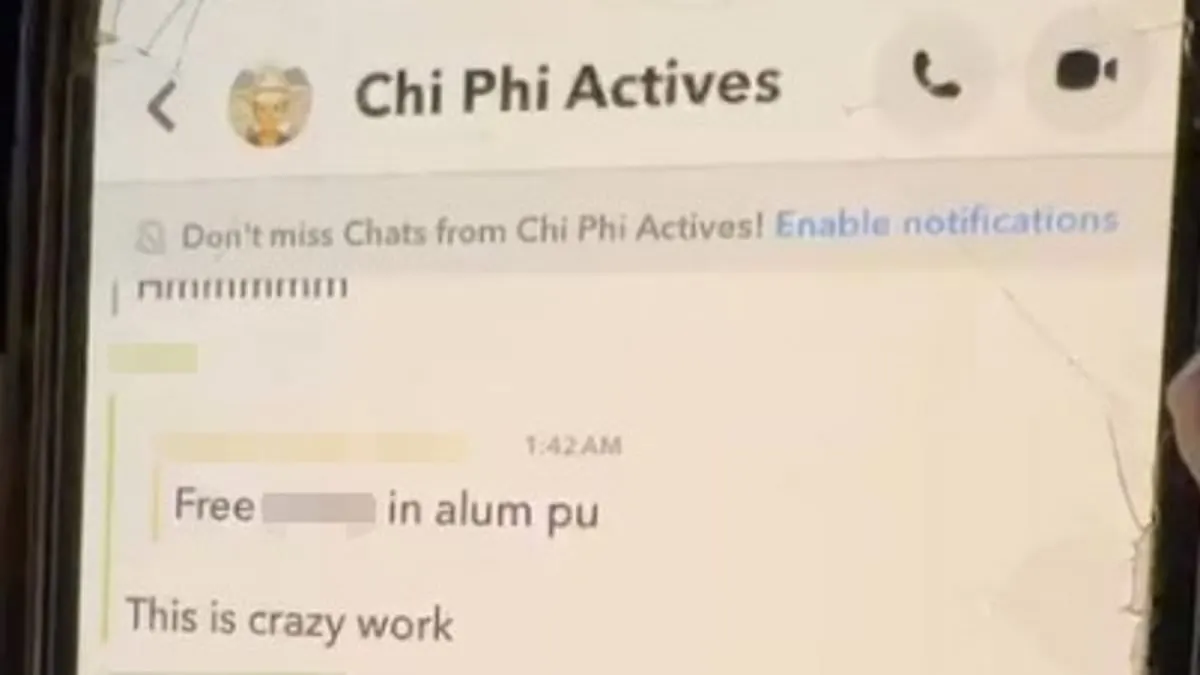
Sources present conflicting accounts attributed to Ingalls: Source 1 indicates text messages suggesting acknowledgment of excessive intoxication and regret, whilst Source 3 reports he subsequently told campus authorities he could not consent and claimed the complainant was the aggressor
Source 1 provides extensive detail of Snapchat group messages and specific text exchanges; Source 2 concentrates on institutional processes and faculty response; Source 3 references audio recordings of conversations between Ingalls and the complainant