Google Launches Playground: AI-Powered Browser Platform Lets Anyone Create Games Without Coding
Developing story first seen 1 hour ago
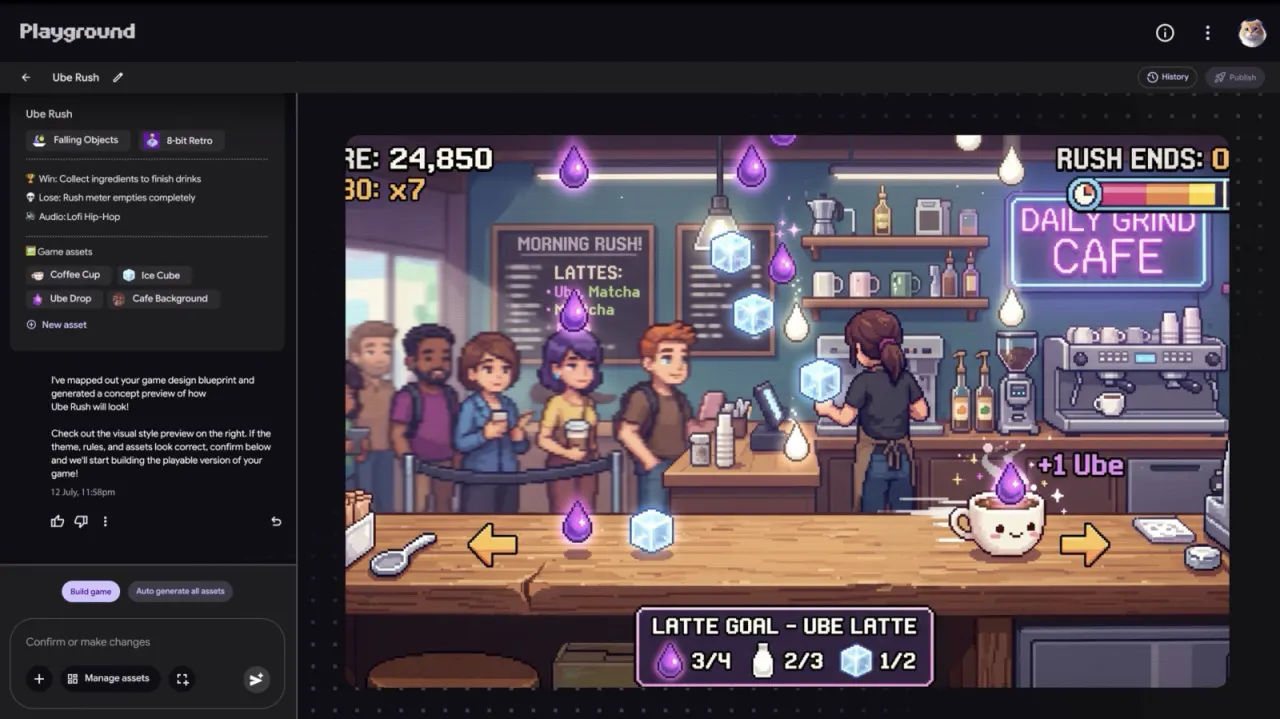
Google has launched Playground, a browser-based platform that lets US users aged 18 and over create games by describing them to AI, without coding. The launch adds to a growing push by technology companies to make game creation accessible through conversational tools.
Users can start from a blank canvas or prompts, then request changes to a game’s rules, physics, characters or setting. They can share games by link or publish them to a gallery, where ratings and play activity help surface titles; some genres will support leaderboards and multiplayer. Playground is free, with higher weekly token limits for Google One subscribers, and uses Google’s Gemini, Nano Banana and Lyria models. Google and Unity also announced Unity Spark, a collaborative game-making experience set for closed beta later this year.
- Google’s Playground lets adults in the US create games from AI prompts.
- Games can be shared, with some supporting multiplayer and leaderboards.
- Unity Spark is due to begin closed beta later this year.
New here? Start with this
Game development has traditionally required specialist skills in programming, visual design and art creation. These technical demands have meant only those with formal training could create interactive games, limiting participation to a relatively small group.
Artificial intelligence is beginning to change this landscape by generating game elements, code and creative assets based on text descriptions alone. This potentially opens game creation to people without technical expertise. Major technology companies, including Google, are investing in tools that make creative work more accessible.
Playground represents an attempt to test whether mainstream audiences can use AI to create games without learning to code. By removing technical barriers that have historically prevented casual creators from entering the field, such platforms could allow more people to experiment with game ideas and develop their own creative work in an industry that has been difficult to access.
Both sides, in good faith
The strongest fair case each way — we don't pick a winner.
The case for
Democratising game development removes genuine barriers that have historically excluded talented creators from participating in the industry. Tools that lower entry barriers to creative work—much as digital photography democratised visual creation—expand opportunity without devaluing expertise. People with compelling game ideas should not require years of technical training or expensive teams to attempt realising their visions, and access to creative tools has always driven broader cultural participation.
The case against
Meaningful game development requires understanding design principles, user experience, and iterative refinement—skills that take time to develop through practice. Tools that abstract away complexity risk producing novelties rather than substantive creative works, potentially saturating markets with low-quality content whilst training fewer genuinely skilled designers. Unresolved questions about how AI models are trained, whether they incorporate copyrighted works, and the potential labour impacts on junior developers also warrant serious consideration before celebrating unrestricted democratisation.
Coverage
- Engadget — Google’s experimental Playground platform uses AI to create games for you
- The Verge — Google launches browser platform for creating games with prompts
AI Americas Business Companies Entertainment Gaming Research Science Technology World