Badenoch Charts Conservative Path: Rejects Reform Alliance, Announces Inheritance Tax Abolition
Developing story first seen 47 minutes ago
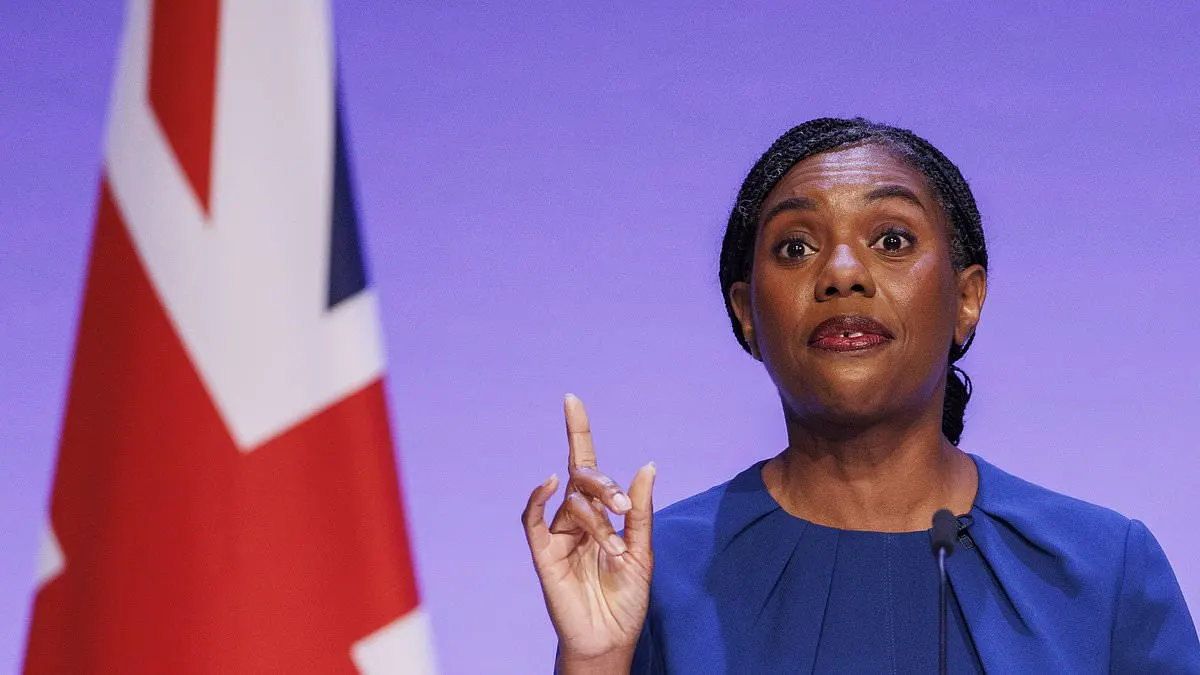
Kemi Badenoch has pledged that a Conservative government would abolish inheritance tax on family homes, a new policy aimed at winning back affluent middle-class voters. She also rejected calls for the Conservatives to unite with Reform UK, while acknowledging that her party faces a long recovery after its 2024 election defeat.
The proposal would let couples pass an additional £1m to their families tax-free, and Badenoch said it would cut by more than half the number of families paying inheritance tax, which currently affects fewer than 5% of estates. The party says it would fund the plan from £70bn in identified savings. Critics argue the tax cut would favour wealthy households and reduce money for public services; some also warn it could discourage older homeowners from downsizing. Badenoch said economic growth would be the central principle of a future Conservative government.
- Badenoch pledged to abolish inheritance tax on family homes.
- The party says £70bn in savings would fund the plan.
- Critics say the change would favour wealthy families.
New here? Start with this
Kemi Badenoch became Conservative Party leader earlier this year, taking over a party in opposition following Labour's 2024 general election victory. During the election campaign and since, Reform UK, led by Nigel Farage, emerged as a significant political force on the right, and there had been speculation about whether the two parties might eventually form some kind of alliance or arrangement.
In her speech, Badenoch rejected the possibility of working with Reform UK, establishing clear political distance between the Conservatives and Farage's party. She also discussed national identity and diversity, using examples including her own mixed-race family background to argue that Britishness is not determined by race or ethnicity.
The Conservatives announced they would abolish inheritance tax on family homes if returned to power. Supporters say this would reward people who save and build assets over their lifetimes, whilst critics question whether it would mainly benefit wealthy property owners and raise concerns about what it would cost the government.
Both sides, in good faith
The strongest fair case each way — we don't pick a winner.
The case for
The case rests on respecting earned wealth and family autonomy. People who work hard deserve the right to pass on what they've built to their children without substantial state confiscation, and inheritance tax represents double taxation since the wealth was already taxed when earned. Beyond principle, such a tax discourages capital accumulation and productive investment, whilst the policy particularly helps middle-class families who've saved throughout their lives to provide for their heirs.
The case against
The case centres on fairness and public funding. Inheritance tax falls predominantly on the wealthiest households, making it among the most progressive taxes; abolishing it would gift a windfall to the richest whilst the general tax burden remains on working people. The policy would significantly reduce public revenue during a period when public services face chronic underfunding, and allowing unlimited wealth transfer without taxation risks entrenching privilege across generations rather than enabling genuine meritocratic opportunity.
Full account
Kemi Badenoch's address to the Conservative conference in Birmingham encompassed both a firm rebuke of Reform and the announcement of sweeping tax proposals aimed at property holders. The twin pronouncements sought to establish clear blue water between her party and Nigel Farage's movement whilst simultaneously signalling a fiscal direction intended to appeal to middle-class voters in the south-east who had drifted away from the Conservatives in recent elections.
The rejection of Reform carried considerable personal weight. Badenoch indicated that she had previously resisted suggestions that the Tories should pursue a rightward tactical reposition to compete on Reform's terrain. Rather than mirroring the rival party's approach, she championed an ideological framework grounded in established Conservative thought. Her language grew notably pointed when addressing recent attempts by Reform figures to suggest that her background rendered her unsuitable for the premiership. Drawing upon contemporary examples and historical memory, she articulated a vision of British identity encompassing diverse heritage and argued that such questioning represented a departure from the inclusive norm that had characterised earlier eras of popular culture and sport.
The party's tax proposals targeted the property-owning classes. Badenoch committed to eliminating stamp duty on house purchases, removing the mansion tax, and eventually abolishing inheritance tax on residential property transferred to successors. Couples could additionally transfer £1 million free from tax to beneficiaries. According to Conservative calculations, the measures would cut the taxpayer base subject to inheritance tax by more than half, though fewer than five per cent of households currently faced the levy. The package reflected an attempt to rebuild support amongst prosperous southern constituencies and included separate childcare provision for households with earnings surpassing £100,000. The party identified £70 billion in savings to fund the proposals.
Response to the announcements proved critical across several movements. Charities and campaign groups asserted the policy disproportionately aided the wealthiest sections of society whilst leaving ordinary families confronting social care costs and other pressures. Opposition politicians questioned whether the measures might distort the housing market by discouraging downsizing amongst older residents. Reform UK characterised the policy as geographically narrow in its benefit, claiming the majority of affected properties lay in London. Labour and union representatives portrayed the measures as emblematic of Conservative priorities: wealth preservation for the privileged over support for working people and their families.
Where outlets differ
Source 1 frames the story around Badenoch's ideological positioning and personal confrontation with Reform; Source 2 emphasises the inheritance tax policy and its economic implications
Source 1 discusses welfare policy announcements including a benefits card scheme; Source 2 does not address welfare measures
Source 1 compares Badenoch's speech favourably to Andy Burnham's Labour address; Source 2 uses no comparative framing
Source 1 foregrounds the ethnic and cultural dimension of Reform's strategy; Source 2 focuses on class-based criticisms of tax policy
Source 2 provides extensive documented responses from campaign groups, opposition parties and unions; Source 1 does not include this critical reaction
Coverage
- Daily Mail — Badenoch rejects Reform alliance and sets out Conservative policy contrasts in speech
- The Guardian — Badenoch pledges inheritance tax abolition for family homes amid criticism of Tory priorities
Art Business Culture Elections Government Politics Software Technology UK World