Josh Hartnett Stars in Netflix’s ‘Below,’ Where Creature Horror Meets Deep Character Drama
Developing story first seen 2 hours ago
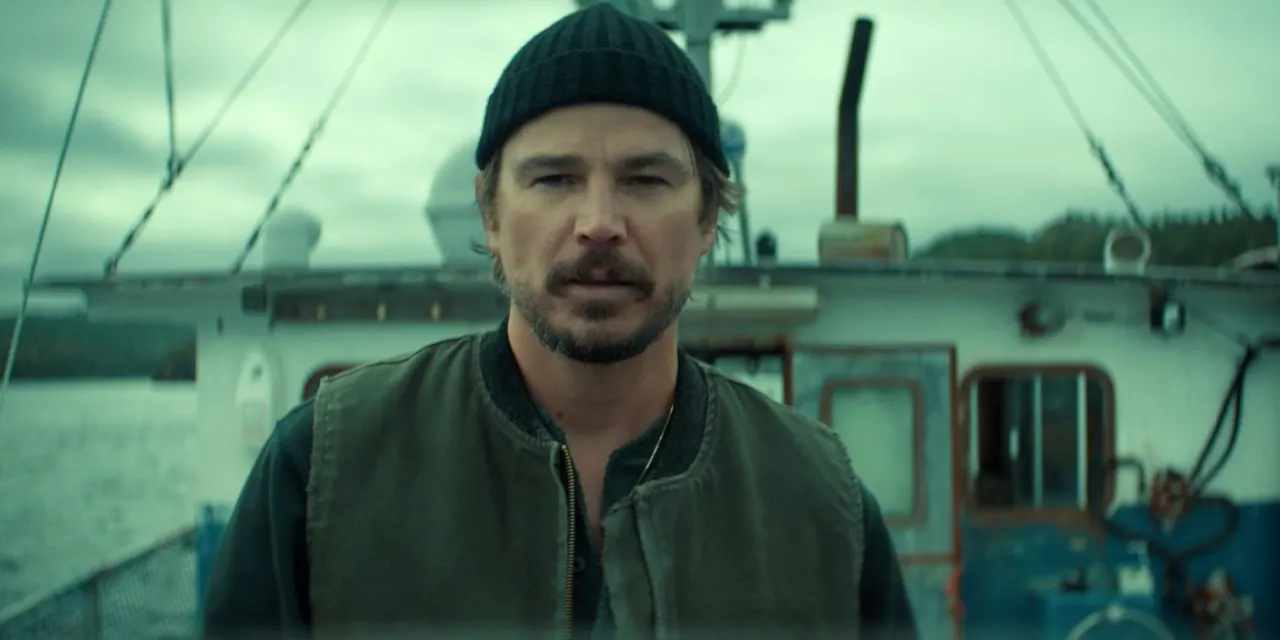
Netflix’s six-episode thriller *Below*, starring Josh Hartnett, opens with a family’s house being moved by barge across a Newfoundland bay in 1986, until something beneath the water sinks it. The striking scene draws on the region’s history of government-sponsored resettlement and gives the creature story a grounded start, though the series does not fully match its opening’s promise.
Forty years later, Hartnett plays fisherman Calvin Penney in Snook’s Arm, a town debating whether to accept government money and relocate as its fishing industry declines. After a Portuguese vessel disappears, an oily iceberg arrives and people vanish, Calvin and marine zoologist Fonda Howander investigate what may be lurking offshore. The review describes the six episodes, which run about 40 minutes each, as a brisk and sometimes suspenseful creature feature with uneven characterisation and accents.
- Josh Hartnett stars in Netflix’s six-part Newfoundland creature thriller.
- A town’s relocation debate unfolds alongside disappearances at sea.
- The series is entertaining, though it falls short of its opening scene.
New here? Start with this
Below is a new Netflix thriller series starring Josh Hartnett, combining creature horror with a story grounded in real historical events. The series opens in 1986 with a scene showing a family's house being transported by barge across a Newfoundland bay before something beneath the water sinks it. This opening draws on the region's actual history of government-sponsored resettlement programmes that displaced communities.
The story then shifts to the present day, following fisherman Calvin Penney in the fictional town of Snook's Arm as the local fishing industry declines. When a Portuguese fishing vessel disappears and an oily iceberg appears offshore, people in the community begin to vanish. Penney and a marine zoologist named Fonda Howander investigate what may be causing the disappearances.
At its heart, the series explores pressures facing real coastal communities struggling with economic decline and the decision of whether to accept government relocation money. The six episodes, each running approximately 40 minutes, blend creature-based thriller elements with character-driven storytelling rooted in these broader social themes.
Full account
Jesse McKeown's latest venture for Netflix presents a six-episode limited series that endeavours to synthesise elements of creature-driven horror with character-focused drama. The programme, titled 'Below,' unfolds across roughly forty to forty-five minutes per episode and attempts to ground its fantastical premise within the authentic context of Newfoundland, Canada—a region with documented experience of government-orchestrated population transfers in contemporary history. This geographical specificity provides an unusual foundation for what might otherwise be dismissed as straightforward genre entertainment.
The narrative traces backward initially to 1986, presenting a family's relocation via houseboat across Newfoundland waters. An unseen aquatic presence destroys the vessel; young Calvin must sever the towline, inadvertently condemning his father. Forty years hence, the adult Calvin (Josh Hartnett) inhabits Snook's Arm, a settlement teetering on extinction. Having shifted from commercial fishing to harvesting glacial ice for a vodka manufacturer, the community faces an imminent government-mandated relocation vote. Calvin's three adult children return for a ceremonial homecoming period, coinciding with an unprecedented iceberg's arrival and the onset of alarming local incidents. His sister Ruth serves as harbourmaster, and various family members—including a son whose relationship with alcohol and pharmaceutical self-medication proves consequential—become entangled in escalating peculiarities.
The series inhabits an uncertain territory between credible specificity and genre contrivance. Its opening genuinely reflects historical precedent, lending gravitas to subsequent supernatural developments. Yet critical assessments have noted the juxtaposition of authentically filmed Newfoundland locations alongside unconvincing vocal performances and digital creatures. Thematically, the programme concerns itself with how communities respond to economic collapse and demographic decline, exploring generational trauma, inherited obligation, and the psychological mechanisms by which individuals rationalise untenable situations. Environmental degradation and climate implications feature prominently within certain critical frameworks examining the narrative's deeper preoccupations.
Reviewers have articulated divergent interpretations regarding the series' aspirations and achievements. Whilst some find merit in its efficiency and thematic seriousness—perceiving an earnest examination of contemporary anxieties—others adopt a more sardonic perspective, categorising it as an entertainingly unambitious creature feature that occasionally exceeds its natural ceiling. Ensemble performances receive mixed assessment, with particular notice accorded to how individual actors navigate the region's linguistic particularities. The programme ultimately occupies an ambiguous critical space: technically competent entertainment that simultaneously reaches toward examination of contemporary societal fractures, without consistently achieving either objective with complete conviction.
Where outlets differ
Source 2 uniquely emphasises climate crisis implications and isolates Episode 4 for particular praise; provides character specifics regarding Wade's ADHD self-medication and introduces Dr. Fonda Howander, absent from other sources
Source 3 extensively contextualises the narrative within documented Newfoundland resettlement history and explicitly references McKeown's prior work on The Umbrella Academy; neither detail appears in Sources 1-2
Critical tone diverges: Source 3 adopts sardonic, playful scepticism describing it as 'silly creature feature'; Sources 1-2 present more earnest critical appreciation
The 1986 opening and father's death receive varying levels of detail: Sources 2-3 extensively describe the mechanics of the tragedy during house relocation; Source 1 mentions the death's occurrence and emotional weight without detailing the specific incident
Government relocation vote and its procedural mechanics receive fuller treatment in Source 3; Sources 1-2 reference it more peripherally
Coverage
- Collider — Josh Hartnett’s Netflix Thriller ‘Below’ Subverts Its ‘Jaws’-Style Horror With Deeper Themes | Review
- Variety — Josh Hartnett Leads Netflix’s Exhilarating Sea Monster Thriller ‘Below’: TV Review
- The Hollywood Reporter — ‘Below’ Review: Josh Hartnett Battles a Sea Creature in Netflix’s Likably Silly Newfoundland-Set Thriller
Americas Art Business Celebrity Culture Entertainment Fashion Horror Markets Paranormal Research Science TV Weird & Viral World