Lourdes gets a Vegas glow-up at Dublin theatre festival, where canvases are slashed
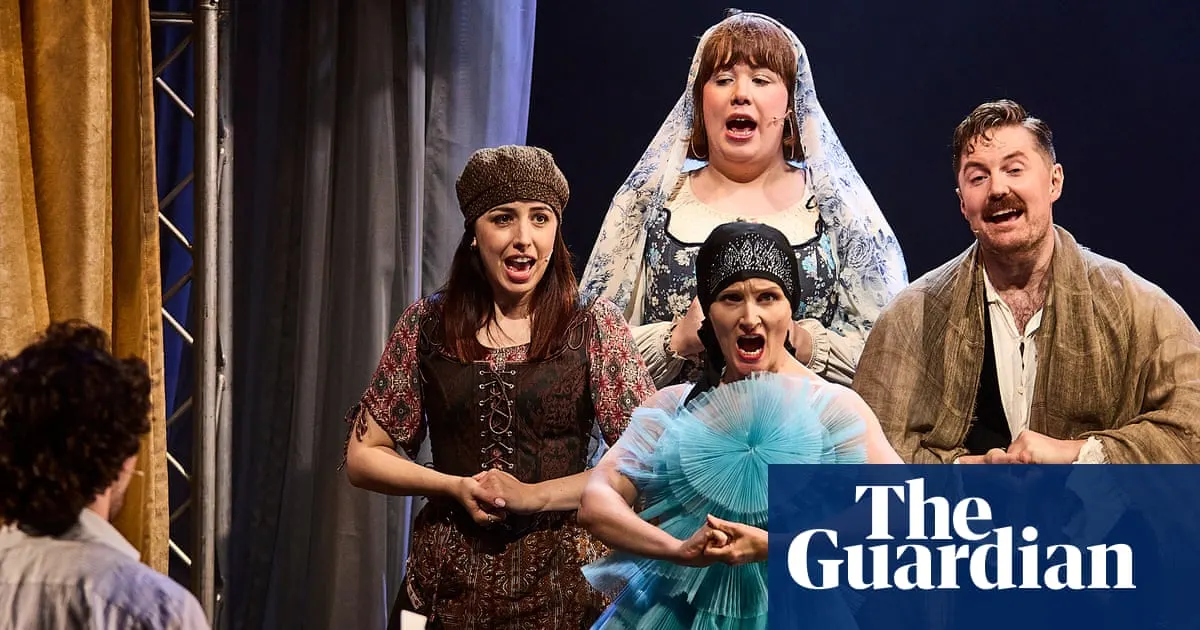
Three productions at the Dublin Theatre Festival explore faith, grief, activism and national identity. Lourdes! The Musical uses pop, club beats and ballads to follow five people on a pilgrimage, while Heroes of Tomorrow examines whether activist art can remain independent of corporate funding; Zinc revisits a forgotten European mini-state.
In Lourdes!, singer Matthew joins a parish drama group’s show about Saint Bernadette after an HIV diagnosis disrupts his plans, and the story gives space to fear, regret and grief. Heroes of Tomorrow centres on a fictional artist whose work is commissioned by three global technology companies, as performers slash canvases and leave handprints on a gallery wall. Zinc draws on the history of Neutral Moresnet, a zinc-mining territory whose residents’ nationality shifted as borders changed; the article text ends before its review is complete.
- Lourdes! blends musical comedy with grief and faith.
- Heroes of Tomorrow questions corporate influence on activist art.
- Zinc revisits a zinc-mining mini-state caught between borders.
New here? Start with this
The Dublin Theatre Festival is an annual showcase of theatre in Ireland's capital. This year, three new productions are exploring questions of faith, grief, activism and national identity through different theatrical approaches.
Lourdes! The Musical tells the story of five people on a pilgrimage, using pop, club beats and ballads; one narrative follows a singer who joins a parish drama group after an HIV diagnosis, bringing themes of fear and grief to the stage. Heroes of Tomorrow examines whether artists can stay independent when their work is funded by major corporations, with performers physically interacting with artworks, slashing canvases and making handprints during performances. Zinc revisits the history of Neutral Moresnet, a small European territory once important for zinc mining, where residents' nationality changed as international borders shifted.
Together, the three shows use theatre to explore what belonging means and how people make sense of identity when circumstances beyond their control fundamentally alter their world. They represent an attempt to engage audiences with complex contemporary and historical questions through music, performance and visual art.