STEPHEN DAISLEY SKETCH: A salvo of mutters and rebukes came his way but they bounced punily off his silver bouffant, the Iron Dome of Scottish politics
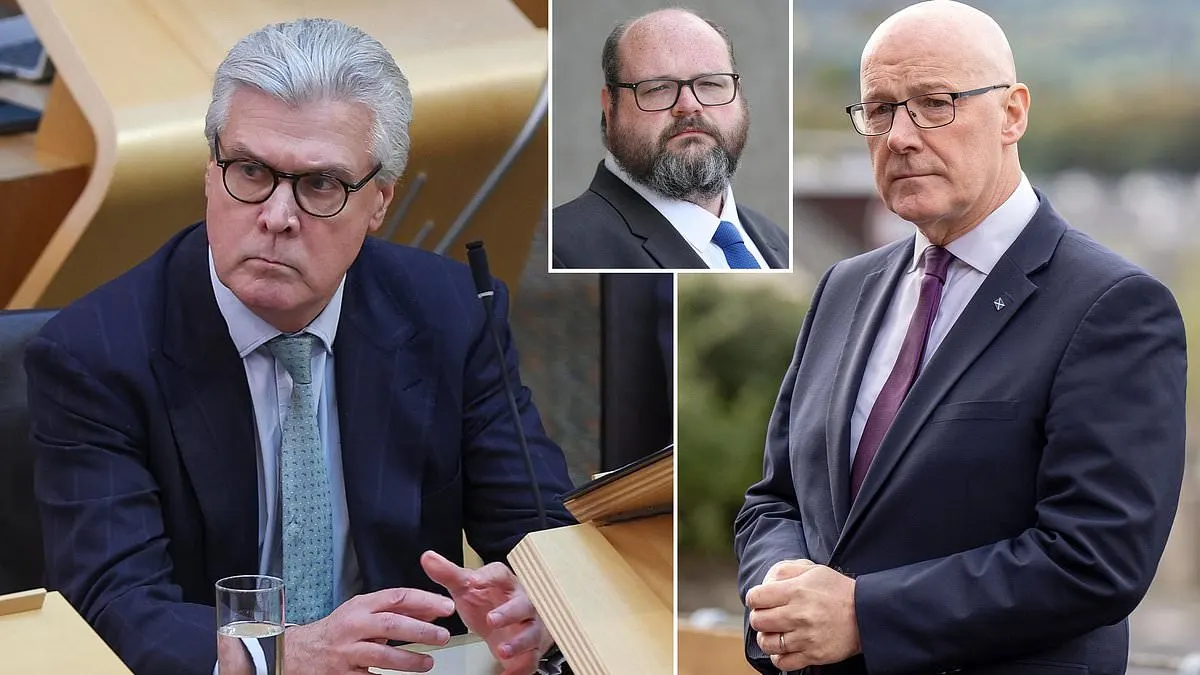
Malcolm Offord, Reform's Scottish leader, pressed First Minister John Swinney at Holyrood to condemn antisemitism and specifically to disavow Scottish Green MSP Ross Greer's characterization of Zionism as founded on genocide. The exchange took place on the third anniversary of Hamas's attack on Israel, which killed approximately 1,200 people. Jewish community leaders have raised concerns about increasing antisemitism in Scotland, including fears among some community members about wearing religious symbols or attending synagogues.
Swinney stopped short of clearly condemning the Scottish Greens, stating only that he "did not agree" with their party conference motion on Zionism. When pressed multiple times to take a stronger stance, he instead pivoted to criticizing a separate Reform debate scheduled for later that day. The Presiding Officer initially ruled the matter outside Holyrood's remit as a reserved issue.
- Malcolm Offord challenged Swinney to condemn antisemitism and anti-Zionism
- First Minister sidestepped clear condemnation of the Scottish Greens
- Jewish communities report rising antisemitism and harassment in Scotland
New here? Start with this
A debate at Holyrood has brought into focus concerns about antisemitism in Scotland. Malcolm Offord, the Scottish leader of Reform UK, and John Swinney, Scotland's First Minister, exchanged views on the matter, with the discussion centring on comments about Zionism made by Ross Greer, a Scottish Green MSP.
Zionism is a political movement historically associated with establishing a Jewish state in the Middle East; the term relates today to support for Israel and Israeli policy. Greer had characterised Zionism as founded on genocide.
Jewish community leaders in Scotland have reported increasing concerns about antisemitism. Some members of the community have expressed fears about publicly wearing religious symbols or attending synagogues, particularly around significant dates connected to the Israeli-Palestinian conflict.
Both sides, in good faith
The strongest fair case each way — we don't pick a winner.
The case for
Jewish community leaders in Scotland have raised genuine concerns about rising antisemitism and increased fear among community members about wearing religious symbols or attending synagogues. When the First Minister is directly asked to condemn a characterization of Zionism as founded on genocide—particularly on the anniversary of a tragedy—the expected response is clear and unequivocal condemnation of such tropes, not a qualified 'I did not agree.' Swinney's evasion when pressed repeatedly, followed by a pivot to attacking the questioner, risks appearing to deprioritise the safety and dignity concerns of a vulnerable minority community facing real threats.
The case against
The Scottish First Minister cannot be held responsible for the positions of the Scottish Greens, a separate political party whose conference motions he did not vote for. He made his disagreement clear, which represents a form of condemnation. The distinction between criticising Israeli government policies and opposing Zionism as a political ideology is a substantive one made by many political voices and even some Jewish organisations, indicating this is contested political territory rather than unambiguous antisemitism. Maintaining governmental independence and declining to be coerced through procedural pressure into issuing formulations dictated by opposition parties—particularly on matters initially ruled outside the Scottish Parliament's remit—reflects legitimate principles of governance.