Pentagon to Livestream Execution of Fort Hood Gunman in First Public US Military Firing Squad in Nearly a Century
Developing story first seen 2 hours ago
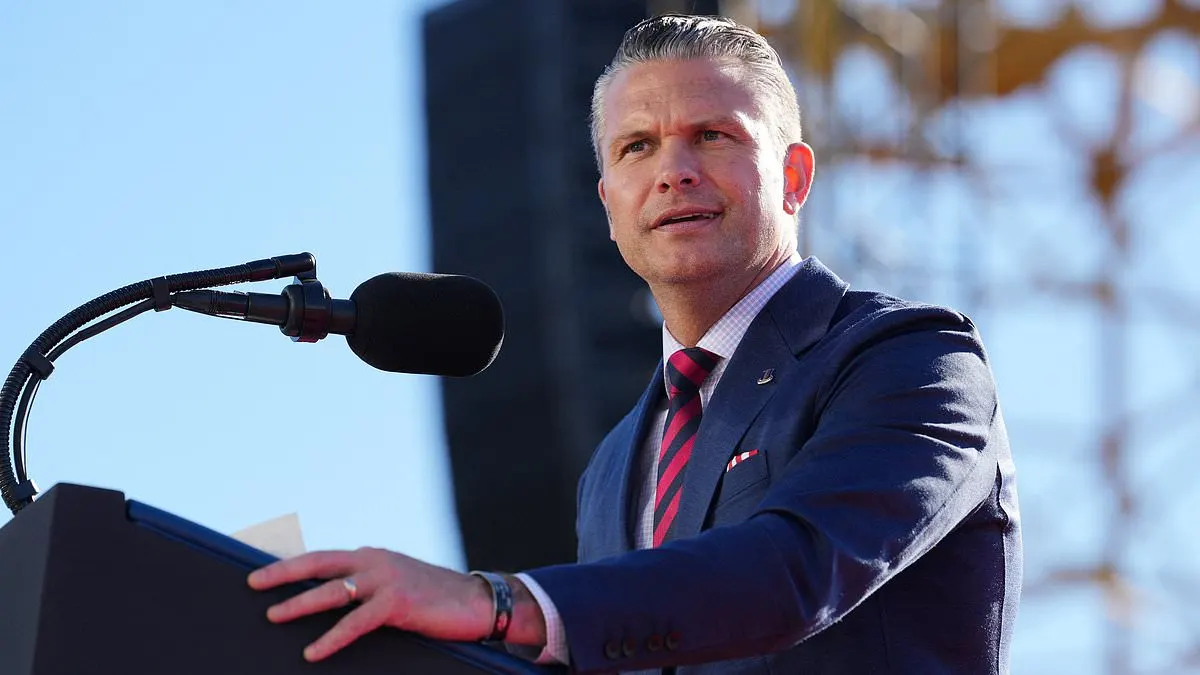
The US Defence Secretary Pete Hegseth has announced that the execution of Nidal Hasan, a former Army major convicted of killing 13 soldiers at Fort Hood in 2009, will be made public. The execution is scheduled to take place by firing squad, with the Pentagon indicating the event will be livestreamed rather than restricted to in-person attendance.
If carried out as planned, the execution would mark the first public execution in the United States in nearly 100 years and the first military firing squad execution since the Second World War. Hegseth's statement emphasises the government's intention to publicly demonstrate the consequences of attacks on service members, signalling a significant departure from the closed nature of modern US executions.
- Nidal Hasan, Fort Hood shooter who killed 13 soldiers in 2009, is scheduled for execution by firing squad
- Pentagon will livestream the execution, making it the first public US execution in nearly a century
- First military firing squad execution since WWII; Pentagon cites public accountability for attacks on service members
New here? Start with this
Nidal Hasan is a former Army major who was convicted of a mass shooting that killed 13 soldiers at Fort Hood, a major US military installation in Texas, in 2009. He was sentenced to death for the killings. The attack was one of the most deadly incidents on a US military base.
The scheduled execution is significant because the Pentagon plans to livestream it, making it publicly viewable rather than restricted to in-person witnesses. If carried out as planned, this would be the first public execution in the United States in nearly 100 years and the first military firing squad execution since the Second World War. The move represents a departure from modern practice, which has typically kept executions private.
Both sides, in good faith
The strongest fair case each way — we don't pick a winner.
The case for
Proponents of public execution argue that democratic accountability requires transparency in how the state exercises ultimate punishment, particularly in a high-profile case involving attacks on military personnel. Livestreaming demonstrates that justice is carried out lawfully and provides deterrence against similar attacks, whilst allowing the public and families of victims to witness justice served rather than having it occur behind closed doors.
The case against
Opponents contend that public executions violate fundamental principles of human dignity and align poorly with modern human rights standards embraced by most developed democracies. They argue that livestreaming transforms state punishment into spectacle, risks psychological harm to viewers, and normalises public violence—concerns that are ethically distinct from questions about whether execution itself is justified.
Full account
The Pentagon has announced plans to broadcast publicly the execution of a former US Army major by firing squad, marking the first public execution in the United States in almost a century. Defence Secretary Pete Hegseth confirmed on Thursday that the event will be livestreamed, with the execution of Nidal Hasan scheduled for 3 December at Fort Hood military base in Texas. President Donald Trump approved the decision earlier this week.
Hasan was convicted following a mass shooting in November 2009 at Fort Hood's medical facility, where soldiers were undergoing routine health checks and vaccinations. Thirteen service members were killed and more than 30 others wounded in an incident that remains the deadliest non-combat attack on a US military installation. At his court martial in 2013, Hasan admitted to the attack and claimed he sought to prevent American military deployment that would harm Islamic forces in Afghanistan. He was subsequently sentenced to death.
Officials stated that military personnel would carry out the firing squad execution. The defence secretary described the method as fitting given Hasan's crimes against armed soldiers. The execution has been deliberately scheduled to mirror the original attack—1pm on 3 December, matching both the time and day of the week when the shooting occurred. Officials justified the livestreaming as necessary to demonstrate serious consequences for such attacks.
Legal experts have raised concerns about the unprecedented nature of the public livestreaming. Death penalty attorney John Mills has described the decision as 'unprecedented in the modern era' and operating on 'uncertain legal terrain.' Notably, Hasan's appellate review process remains incomplete, and legal observers suggest federal court challenges could potentially delay or prevent the execution. Globally, public executions remain rare—Amnesty International documented 11 public executions in Iran during 2025 and six in Afghanistan.
Where outlets differ
SOURCE 1 specifies the last US public execution as 1937 (Roscoe Jackson hanged in Missouri); SOURCE 2 refers only to 'almost a century' without specific reference
SOURCE 2 includes detailed legal expert analysis questioning unprecedented nature and uncertain legal terrain; SOURCE 1 does not provide legal commentary
SOURCE 1 notes execution scheduled for same time (1pm) as original attack; SOURCE 2 does not specify execution time
SOURCE 2 discusses incomplete appellate review process and federal court intervention risks; SOURCE 1 does not address ongoing legal proceedings
SOURCE 2 provides international context on global public executions; SOURCE 1 focuses on American context only
SOURCE 1 emphasises Hegseth's extensive justification for firing squad decision; SOURCE 2 prioritises legal expert scepticism
Coverage
- Daily Mail — Hegseth says Hasan’s scheduled execution will be made public
- BBC World — Fort Hood shooter’s execution by firing squad will be livestreamed, Pentagon says