Anti-immigrant protests turn violent, with shops looted and 24 cars torched
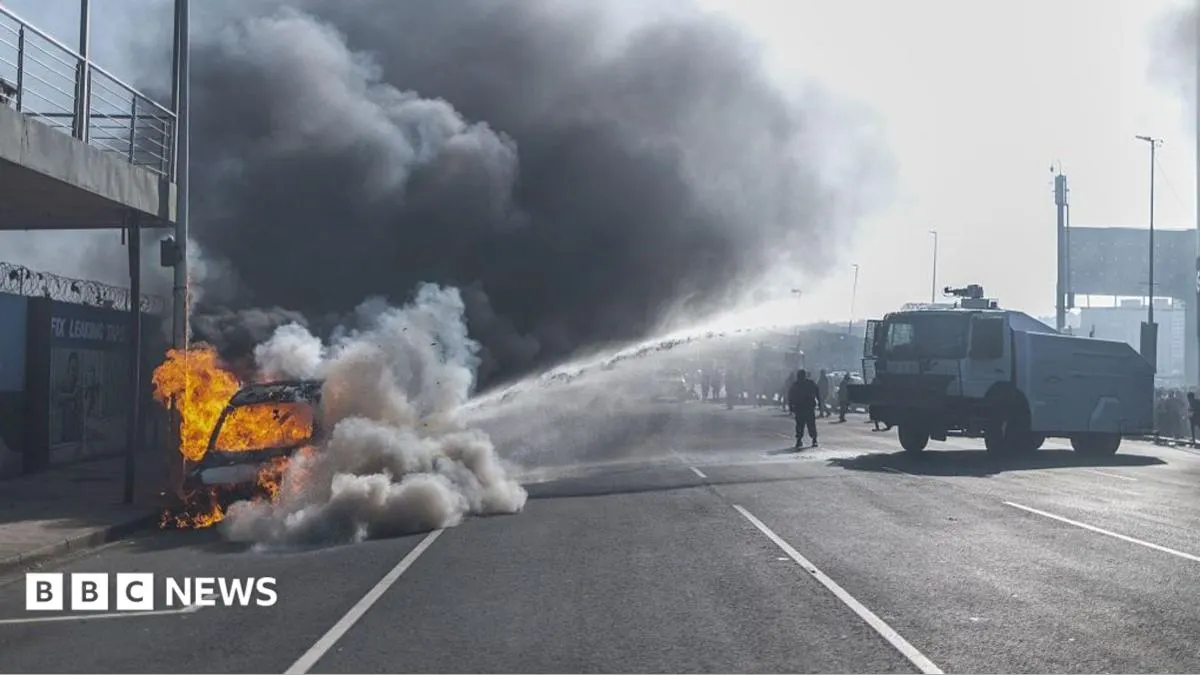
Anti-immigration protests in South Africa descended into violence on Thursday, with at least 24 vehicles set ablaze and foreign-owned shops looted in Soweto and Durban. The unrest reflects growing anger over a July Constitutional Court ruling that allows migrants who entered the country illegally to apply for asylum, a decision that has sparked long queues at immigration centres and fuelled xenophobic tension among anti-migration campaigners.
Violence erupted following allegations that a foreign national assaulted a protester in Durban, prompting police to deploy rubber bullets to disperse crowds. Fourteen vehicles were torched in Durban and 10 in Soweto, where gunshots were also reported during clashes between residents and foreign shopkeepers. The Department of Home Affairs stated that its staff had been "overwhelmed" by the court ruling's impact and said it would adjust its policy compliance approach, though the government maintains that asylum seekers do not automatically gain legal status. South Africa has a long history of xenophobic violence targeting migrants from neighbouring countries.
- 24 vehicles burned as anti-migrant violence erupts in South Africa's major cities.
- Court ruling allowing illegal migrants to apply for asylum sparked the unrest.
- Police used rubber bullets; government says policy changes are needed.
New here? Start with this
South Africa has faced renewed anti-immigration tensions following a July Constitutional Court ruling that allows migrants who entered the country illegally to apply for asylum. This decision significantly increased applications to the Department of Home Affairs, creating long queues at immigration centres and straining government resources.
Anti-immigration campaigners have expressed growing anger over the ruling, viewing it as too permissive towards foreign nationals. South Africa has a long history of xenophobic violence targeting migrants from neighbouring countries, creating existing tensions between some local residents and foreign-owned businesses.
The situation reflects deeper concerns about economic competition and resources in a country with high unemployment, though the actual economic impact of immigration remains debated. These tensions highlight the friction between legal protections for asylum seekers and public sentiment in certain communities.
Both sides, in good faith
The strongest fair case each way — we don't pick a winner.
The case for
Those supporting South Africa's asylum policy argue that the country has constitutional and international humanitarian obligations to provide asylum. They contend that migration contributes economically and socially, and that high unemployment stems from inadequate investment and opportunity rather than competition from migrants. From this perspective, the constitutional court ruling properly upheld fundamental rights protections, and xenophobic violence reflects prejudice rather than legitimate policy concerns.
The case against
Those opposing the current asylum policy maintain that South Africa must manage immigration according to its economic capacity and the welfare of its own citizens. They argue that high unemployment and inadequate public services—housing, healthcare, education—create genuine resource constraints that rapid, unmanaged migration exacerbates. From this perspective, citizens' concerns about social cohesion, job availability, and community stability represent legitimate policy considerations that government should weigh alongside humanitarian obligations.
Read the full article at the source →
Originally published by BBC World as “Cars torched and shops looted as anti-migrant violence erupts in South Africa”.