World news and discussion on TalkFuse.
US imposes sanctions on International Criminal Court
Developed over time first seen 2 months ago
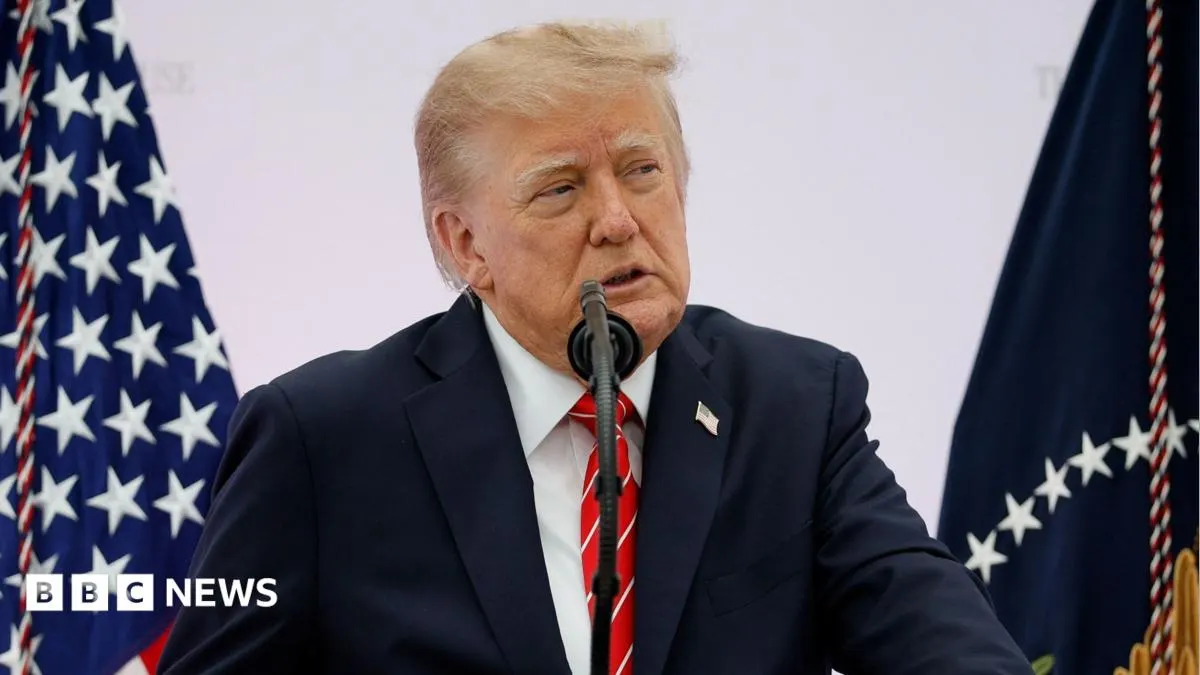
The Trump administration has imposed sanctions on the International Criminal Court (ICC) as an institution, escalating its campaign against a court it says threatens US sovereignty by seeking to prosecute Americans. The move has drawn condemnation from the ICC, the UN Secretary General and eight US allies, and is described as the gravest crisis in the court’s 24-year history.
The sanctions prohibit US entities from making transactions with the court and prevent US companies from supplying services such as banking and software. Some measures have a six-month grace period, during which member states can continue funding the ICC while seeking a negotiated solution. Founded in 2002, the court has 125 member countries; the US objects to its past Afghanistan investigation and arrest warrants for Israeli officials, while the ICC says it will not be deterred.
- Sources
- 3
- Outlets
- 3
- Left · Centre · Right
- 0 · 2 · 1
In short
- The US has sanctioned the ICC as an institution.
- The measures restrict US transactions and services to the court.
- The ICC and eight US allies have condemned the move.
How this story developed
- 2 months ago The Trump administration has announced sweeping sanctions on the International Criminal Court itself—a dramatic escalation from its previous efforts to punish individual judges and officials.
- 2 months ago The Trump administration has imposed sanctions on the International Criminal Court (ICC) as an institution, escalating its campaign against a court it says threatens US sovereignty by seeking to prosecute Americans.
- 2 months ago The Trump administration has escalated its campaign against the International Criminal Court by imposing sweeping sanctions on the institution itself, significantly expanding beyond previous targeted measures against individual judges.
- 2 months ago The Trump administration has imposed broad sanctions on the International Criminal Court (ICC), saying they will restrict its resources and ability to operate.
Full account
The Trump administration has imposed comprehensive sanctions targeting the International Criminal Court itself—marking an escalation in its efforts to undermine what it views as an unaccountable global institution. Secretary of State Marco Rubio announced the measure on Friday, characterising it as necessary to defend American sovereignty and prevent the Netherlands-based tribunal from prosecuting US citizens. The administration had previously targeted 17 individuals serving as judges and prosecutors at the court, but this represents the first time it has sanctioned the institution as a whole.
The ICC's official response characterised the sanctions as damaging to judicial independence and international law frameworks, with the tribunal warning that the measures would compromise its ability to investigate serious crimes including genocide and crimes against humanity. The decision has prompted significant diplomatic pushback from established US allies. The United Kingdom, Canada, Denmark, Germany, France, Italy, Japan and the Netherlands have collectively reaffirmed their commitment to the court, expressing regret at Washington's actions. UN Secretary-General António Guterres described the sanctions as a setback for international criminal justice efforts. The announcement coincided with the awarding of the Nobel Peace Prize to Navi Pillay, a former ICC judge, drawing attention to contrasting international assessments of the institution.
The Trump administration's antagonism towards the court stems from several specific grievances. Prosecutors have conducted investigations into alleged war crimes committed by American military personnel in Afghanistan—an investigation that commenced in 2017 but which the court subsequently deprioritised in favour of examining alleged crimes by militant organisations. More immediately, the administration objects to arrest warrants issued by the ICC for Israeli officials, including Prime Minister Benjamin Netanyahu, which Washington views as inappropriate interference regarding American allies. Administration officials have suggested the ICC is dominated by what they characterise as globalist elements that disregard American interests, though the court remains an independent institution established by treaty and comprises 125 member states.
Under the sanctions regime, American companies and financial institutions would be forbidden from conducting transactions with the ICC, effectively freezing its access to US banking and technological services. The Treasury Department granted the court a grace period of six months before enforcement takes effect, providing member states time to seek diplomatic remedies. Rubio signalled that Washington's tolerance for ICC activities targeting American personnel had expired, implying that further pressure would be applied if the tribunal did not curtail such efforts. The sanctions framework notably does not require the ICC to rescind its arrest warrants for Israeli leaders as a precondition for lifting the measures, indicating a fundamental disagreement unlikely to be resolved imminently.
Where outlets differ
From the full account, which is AI-written from the sources:
Source 2 provides detailed information about the Afghanistan investigation timeline (2017 request, initial judicial rejection, 2020 appellate reversal, and subsequent deprioritisation), whereas Source 1 simply notes the investigation has been closed
Source 2 explicitly fact-checks Rubio's claims about Border Patrol investigations, stating no evidence supports such investigations, a distinction absent from Source 1
Source 1 emphasises allied nations' responses by naming eight specific countries, whilst Source 2 does not detail international diplomatic reactions
Source 2 identifies ICC President Tomoko Akane and mentions her personal sanctioning in August, information absent from Source 1
Source 2 adopts a more critical, fact-checking tone regarding administration claims, whereas Source 1 presents statements more straightforwardly
Source 1 emphasises the Trump administration's characterisation of the ICC as controlled by globalists, a detail omitted from Source 2
Centre outlets 2
- US imposes sanctions on International Criminal CourtBBC World
- International Criminal Court 'firmly rejects' new US sanctionsThe Hill
Only here: imposes, firmly, rejects
Right-leaning outlets 1
Only here: marco, rubio, announces, sweeping, financial
Every side used: sanctions, international, criminal, court
Headline columns compared word for word; nothing in them is AI-written.
Steelman: both sides, in good faith
The strongest fair case each way — we don't pick a winner.
The case for
The United States contends that it cannot be bound by a treaty it did not ratify and has no obligation to submit its citizens to an unelected international court. Defenders of the sanctions argue that protecting American sovereignty and citizens from potential prosecution by an institution with questionable impartiality is entirely reasonable, especially when the court investigates countries that have not consented to its jurisdiction.
The case against
Advocates for the ICC argue that international justice depends on its independence from powerful nations, and that economic coercion sets a dangerous precedent where states can pressure international courts that displease them. They maintain that the court's role in holding perpetrators of mass atrocities accountable is essential, and that undermining it because major powers wish to avoid scrutiny fundamentally weakens the rule of law at a global level.
Explained simply
The International Criminal Court is a permanent international tribunal established in 2002 to prosecute individuals for genocide, crimes against humanity, and war crimes. It was created by an international treaty and operates independently from any single country, with over 120 member states.
The United States is not a member of the ICC, having never ratified the treaty that established it. American officials have long objected to the court's jurisdiction, concerned that it might prosecute US citizens or officials without sufficient safeguards for American interests.
The tension between the US and ICC reflects deeper disagreement about international justice and the limits of the court's authority. The conflict has grown more serious as the court has taken actions the US views as inappropriate, including investigations and warrants affecting American interests or allies.
Coverage · 3 sources
Bias meters
From 3 rated sources.
Americas Geopolitics Politics World