Technology news and discussion on TalkFuse.
Nikon disqualifies microscopy video winner over AI rule breach
Developed over time first seen 2 months ago
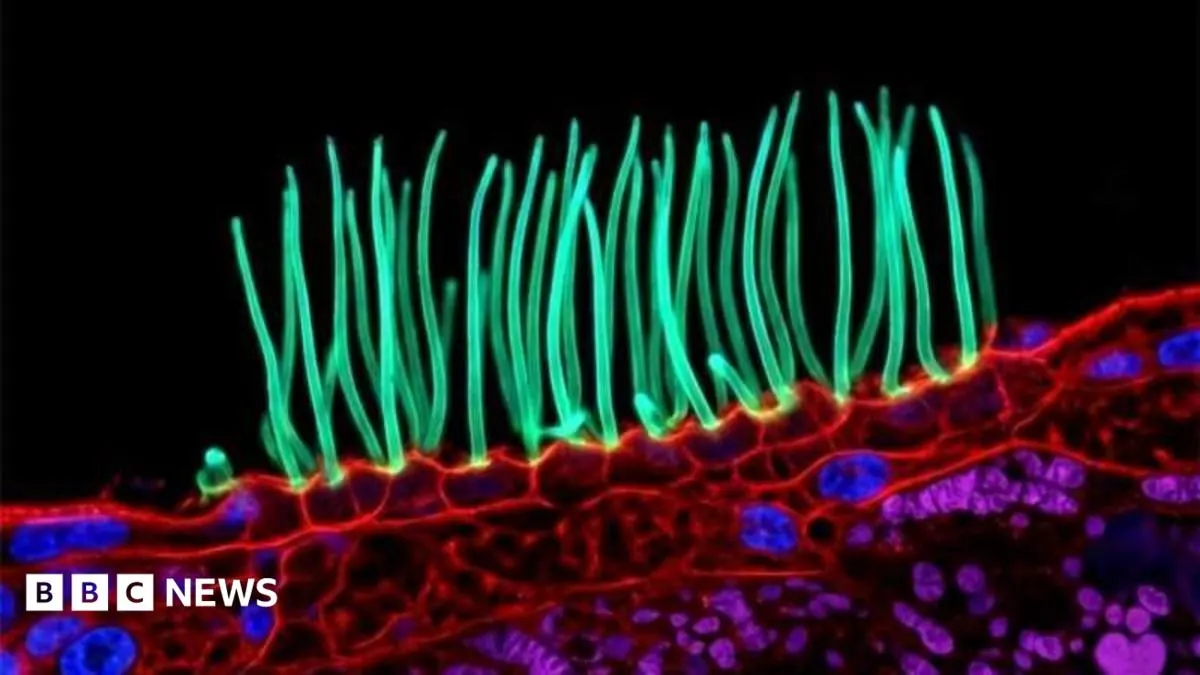
Nikon has disqualified the winner of its Small World in Motion video competition after determining that artificial intelligence was used in violation of the contest rules. The original winner, Ning Xu of Tsinghua University in China, created a video showcasing cilia beating in the airways of a child with a rare respiratory disorder, but investigations revealed structural abnormalities and suspected AI watermarks that prompted the decision. This disqualification highlights the growing challenge posed by rapid advances in generative AI for scientific competitions and has prompted Nikon to commit to revisiting the competition's rules and evaluation procedures.
Researchers had flagged concerns that cell features in Xu's video appeared and disappeared in ways inconsistent with actual cellular biology, and some identified what appeared to be AI watermarks in the source files. Xu acknowledged using AI to distinguish and visualise features in reconstructed grayscale images, though he denied that AI was used to generate the experimental footage or cell motion. Vietnamese scientist Nguyen Nam Nhat, whose video captured a roundworm and a single-celled organism, has been promoted to first place, with four other entrants moving up in the rankings. The Small World in Motion competition, founded in 2011, is a spinoff of Nikon's Small World Photomicrography Competition, established in 1974 to celebrate excellence in microscopy imaging.
- Sources
- 2
- Outlets
- 2
- Left · Centre · Right
- 0 · 1 · 0
In short
- Nikon disqualified its Small World in Motion competition winner for violating AI rules
- Vietnamese researcher Nguyen Nam Nhat now takes first place instead of Ning Xu
- The decision highlights the need to update competition rules as AI technology advances
How this story developed
- 2 months ago Technical analysis has confirmed structural abnormalities and suspected AI watermarks in Xu's submission, substantiating researchers' earlier concerns and prompting Nikon to pledge a comprehensive review of the competition's evaluation standards.
- 2 months ago Following a formal investigation and consultation with its judging panel, Nikon has confirmed the disqualification, elevating Vietnamese researcher Nguyen Nam Nhat to first place.
- 2 months ago Nikon has disqualified Ning Xu of Tsinghua University, winner of its Small World in Motion microscopy video competition, after discovering that artificial intelligence was used in the submission despite explicit competition rules against generative AI.
Full account
Nikon has rescinded the winning entry from its prestigious Small World In Motion microscopy video competition, citing violation of rules governing the use of generative artificial intelligence. The withdrawal followed mounting pressure from the scientific community, who questioned the authenticity of the submission through public commentary and direct communication with the company.
The disqualified entry was submitted by Dr Ning Xu from Tsinghua University in China and depicted cilia—microscopic hair-like structures—moving within the airways of a child with primary ciliary dyskinesia (PCD), a rare respiratory disorder. Multiple specialists, including former members of the competition's judging panel, expressed doubts about the footage's legitimacy, citing anomalies in cellular structure and inconsistencies in how biological features appeared throughout the sequence. Dr Robert Hirst, director of Leicester University's NHS diagnostic centre for PCD, was among the first to voice concerns, drawing on his two decades of experience examining actual patient samples. He stated that the depicted cells and cilia bore no resemblance to those from genuine PCD cases. Whilst Xu had previously stated his belief that his use of artificial intelligence complied with competition parameters, Nikon's subsequent investigation concluded otherwise, determining that the submission breached established guidelines. The company clarified that this determination concerned only the technical eligibility of the entry and reflected no judgment on the contestant's professional integrity or scientific credentials.
Following the disqualification, the competition's placings have been adjusted, with Nguyen Nam Nhat of Vietnam now named as victor for his video of a roundworm and single-celled organism. The previous runners-up have all advanced by one position, with Benedikt Pleyer of Germany claiming second place for jellyfish larvae footage, Andrew Moore of the United States in third for synchronized cellular division, Patrick Hickey of Scotland in fourth for mitochondrial dynamics, and Igor Adameyko in fifth for his recording of a sea slug species.
The Small World In Motion initiative, launched in 2011 to complement Nikon's Small World photomicrography competition that began in 1974, celebrates scientific visualisation through optical microscopy. Nikon has announced intentions to review and strengthen the competition's rules and adjudication processes in response to this incident, acknowledging that rapid developments in artificial intelligence present ongoing challenges for organisations seeking to maintain the authenticity of scientific documentation competitions.
Where outlets differ
From the full account, which is AI-written from the sources:
Source 1 emphasises the controversy's impact on patients and the PCD medical community; Source 2 does not address this dimension
Source 2 provides specific technical anomalies such as apparent AI watermarks in source files; Source 1 describes the concerns more generally without technical specifics
Source 2 directly quotes Xu's specific claim about AI being used only to 'distinguish and visualize features'; Source 1 notes only that Xu 'acknowledged using AI' without detailing the precise nature of his work
Source 2 identifies the new winner and all adjusted placings comprehensively; Source 1 does not mention the replacement victor
Source 2 contextualises Small World In Motion within the 1974 photomicrography competition's history; Source 1 refers only to the 15-year history of Small World In Motion itself
Explained simply
Nikon's Small World In Motion is an annual microscopy photography competition held for several decades and highly regarded in the scientific community. Participants submit videos filmed through powerful microscopes that reveal tiny organisms, individual cells and other structures invisible to the naked eye.
The competition enforces strict rules to maintain integrity, including an explicit ban on using generative artificial intelligence in submissions. These restrictions reflect concerns shared across many institutions and competitions about how to maintain authenticity and credibility when AI tools can produce convincing results.
As artificial intelligence becomes increasingly sophisticated and accessible, scientific competitions, journals and other organisations are grappling with how to address it. The microscopy field is now at the centre of these broader debates about the role of AI in science and what standards competitions should enforce.