Trump secures Russian diesel supply with Putin as fuel costs threaten Republican midterms
Developing story first seen 2 hours ago
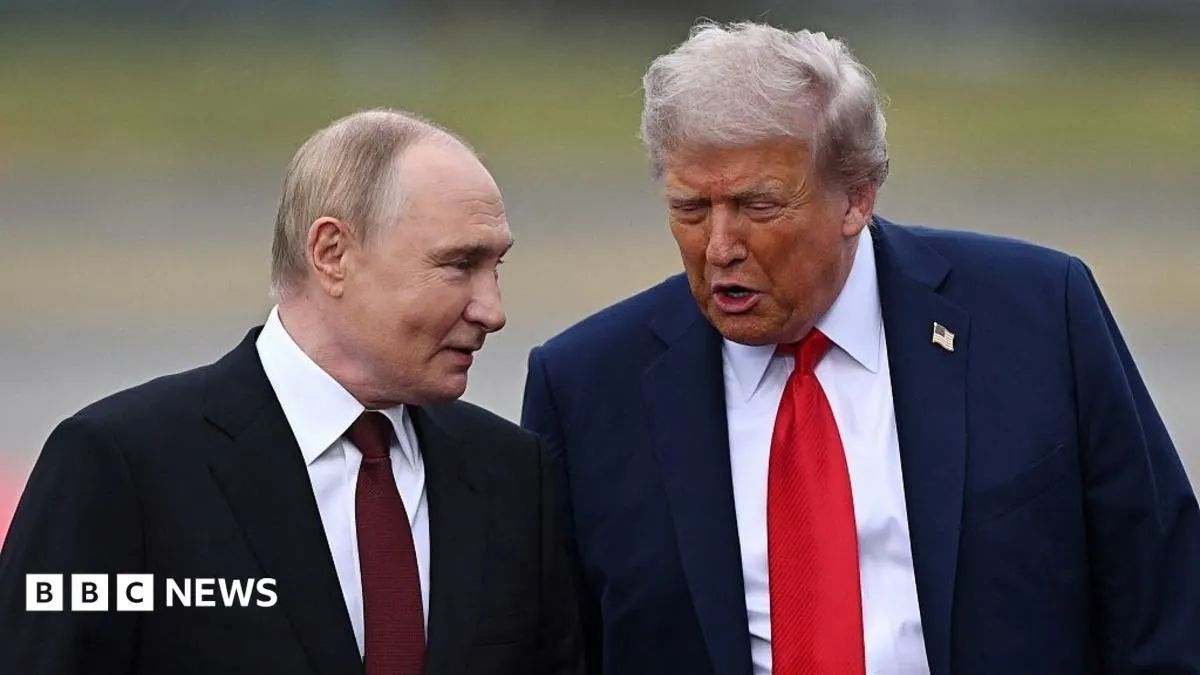
The latest development is that the US Treasury has issued a temporary licence allowing Russian diesel imports until 7 April, while sanctions on Russian assets in US banks remain in place. President Donald Trump says Vladimir Putin agreed to release 300,000 tonnes immediately, followed by 500,000 tonnes in November and further supplies, as Trump faces pressure over fuel costs before the midterms.
Ukrainian President Volodymyr Zelensky condemned the deal, saying it would help fund Russia’s war, while the UK said it would maintain sanctions and support Ukraine. Analysts questioned whether Russia can supply the promised volumes or whether they would significantly lower US prices: the first tranche is about 2.25 million barrels, against US daily consumption of roughly 3.8 million barrels. US diesel averaged $6.28 a gallon, below its late-September record of $6.53, amid energy price rises linked to the Iran war.
- US grants a temporary licence for Russian diesel imports until 7 April.
- Trump cites phased supplies, but analysts doubt their effect on prices.
- Zelensky says the deal benefits Russia as its war with Ukraine continues.
New here? Start with this
Diesel fuel prices in the United States have doubled following military escalation with Iran, and rising fuel costs are affecting Trump's public approval ahead of midterm elections. The Trump administration has negotiated a supply agreement with Russian President Vladimir Putin to deliver diesel to American and global markets, framing it as a response to these economic pressures.
To enable Russian fuel deliveries, the US administration is temporarily easing sanctions that had previously restricted countries from importing Russian energy. These sanctions were imposed to limit Russia's revenue streams.
Ukraine has condemned the agreement, arguing that lifting restrictions on Russian energy sales effectively finances Russia's military operations. The arrangement represents a notable shift from Trump's recent support for maintaining sanctions on Russian energy, and it has generated diplomatic tensions despite being presented primarily as economic relief.
Both sides, in good faith
The strongest fair case each way — we don't pick a winner.
The case for
Addressing fuel costs that have doubled and are harming both public welfare and economic stability is a legitimate governmental priority. Sanctions are policy tools meant to achieve specific objectives; when they create serious domestic hardship without achieving desired outcomes, reassessing them reflects pragmatic governance. Securing stable energy supplies benefits the economy and national interests, and practical engagement with other powers can create diplomatic pathways that serve broader strategic interests.
The case against
Sanctions exist because Russia's conduct violates international norms; abandoning them whenever they cause domestic inconvenience sets a dangerous precedent that enables aggression and rewards bad behaviour. More directly, lifting restrictions on Russian energy exports directly finances Russia's military operations against Ukraine, making the United States complicit in harming an ally and undermining its commitment to Ukrainian sovereignty. This reversal of stated policy positions signals that principled stands can be abandoned for short-term political advantage, weakening credibility with allies and deterrence against future transgressions.
Full account
Donald Trump has secured an arrangement with Russian President Vladimir Putin to supply diesel fuel to American and international markets, the president announced via Truth Social. The initial shipment of 300,000 tonnes would be released immediately, with additional allocations scheduled for November and beyond, contingent in part on Russia's capacity to repair refineries damaged by Ukrainian strikes.
According to Trump's statement, the supply sequence follows this pattern: 300,000 tonnes immediately, 500,000 tonnes in November, one million tonnes subsequently, and a conditional further three million tonnes once Russian refinery operations improve. Simultaneously, the Trump administration's Treasury Department announced a temporary removal of sanctions on Russian diesel exports, extending through April 2027, thereby establishing a legal framework for the petroleum to reach global purchasers.
This arrangement represents a substantial reversal of Trump's recent stance, given that he authorised fresh American sanctions targeting nations acquiring Russian energy products merely three weeks earlier. Diesel costs in America have climbed to approximately £4.74 per gallon, creating considerable political difficulties ahead of midterm elections. Regions dependent on agriculture—particularly Iowa, Kansas, Texas and Ohio—have experienced significant hardship, as farm mechanisation and product transportation rely substantially on diesel fuel. Trump has pursued multiple strategies to reduce price pressures, from appealing to allied nations to release strategic petroleum reserves to temporarily suspending federal fuel taxation.
Ukrainian President Volodymyr Zelensky has characterised the arrangement as providing strategic advantage to Russia's military effort. The Kyiv administration reportedly learned of the announcement with surprise. Zelensky's response reflects broader frustration with Trump's earlier requests that Ukraine cease targeting Russian petroleum facilities—a position critics contend subordinates legitimate military operations to economic circumstances. Britain's government similarly reaffirmed its commitment to stringent sanctions against Russia.
Professional analysis indicates the diesel allocations are unlikely to produce substantial reductions in American consumer fuel prices. The initial 300,000-tonne shipment equates to roughly 2.25 million barrels, representing approximately two hours of worldwide diesel consumption or less than one full day of American usage. Several analysts have dismissed the volumes as generating negligible retail price impacts, portraying the initiative as a somewhat desperate gambit to strengthen Republican prospects before midterm balloting. Damage to Russian refinery capacity introduces further uncertainty regarding whether supplies can materialise according to schedule.
Where outlets differ
US daily diesel consumption figures vary between sources: 3.6 million barrels versus 3.8 million barrels
Sources differ on analyst treatment: Source 3 features sceptical analyst commentary dismissing the deal's effectiveness, whilst Source 1 emphasises the undefined details and uncertainty surrounding implementation
Only Source 3 includes the British government's formal response reaffirming sanctions commitment
Source 2 provides specific market reaction data showing diesel futures down 4.5% and crude oil price movements; other sources lack detailed price information
Trump's contradiction with recent sanctions legislation receives greater prominence in Source 1
Sources describe Trump's pressure on Ukraine differently: 'encouraged' curtailment versus 'pleaded' to stop refinery strikes
Coverage
- BBC World — Trump turns to Russian diesel as fuel costs threaten Republican midterm prospects
- Daily Mail — Putin throws Trump midterm lifeline as Russian tyrant agrees to ‘immediately supply US with 300,000 tons of diesel’
- BBC World — US secures phased release of Russian diesel to curb prices
Americas Art Business Culture Elections Europe Government Markets Middle East Politics World