Thousands of pro-Palestinian protesters march through London just days after October 7 anniversary as police warn anyone covering their face could be arrested
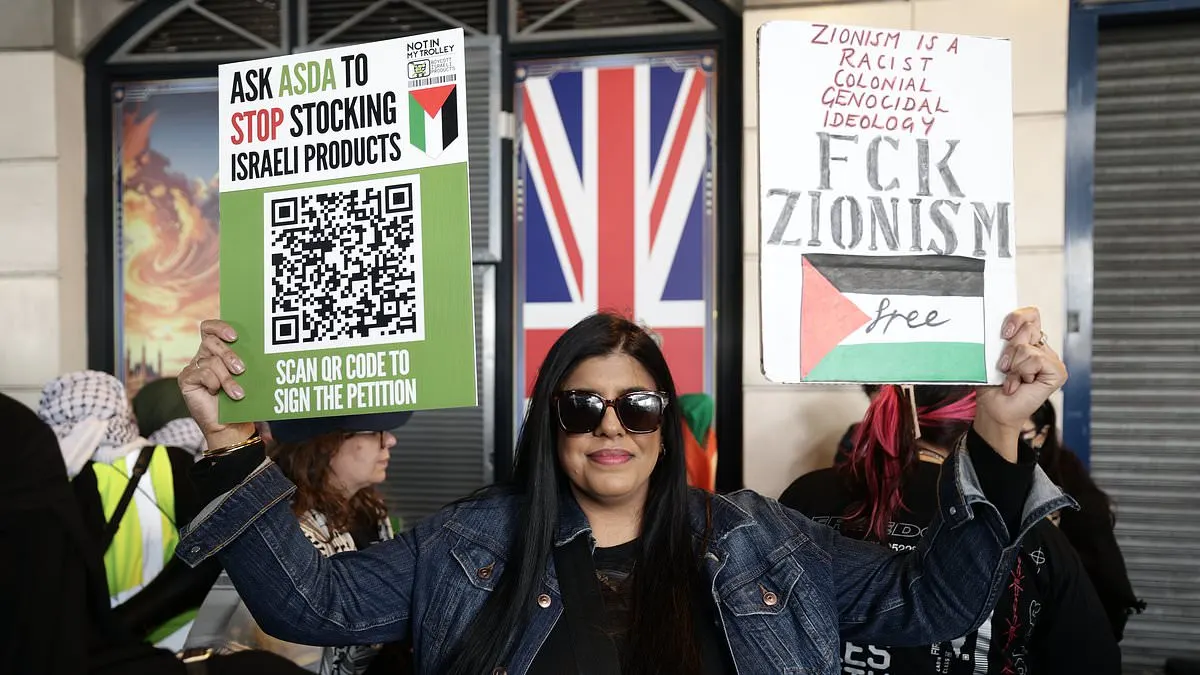
Thousands of pro-Palestinian demonstrators marched through central London on Saturday, just three days after the anniversary of October 7. The Metropolitan Police imposed strict conditions on the event, citing heightened concerns about community disruption given the proximity to the terror attack's anniversary. Deputy Assistant Commissioner Carl Galvin stated that the force's presence would be "significant" and warned that face coverings could result in arrest if deemed to be concealing identity with intent to intimidate.
The Palestine Coalition march, gathering around Embankment at midday, expected to draw between 7,000 and 10,000 participants. Police mandated a specific route through Westminster Bridge, York Road, Waterloo Bridge and the Strand, with speeches and music concluding by 5.30pm and the rally ending by 6.30pm. A counter-protest by Stop The Hate took place simultaneously outside New Scotland Yard, with its assembly limited to 2.30pm, whilst a similar march occurred in Edinburgh.
- Thousands of pro-Palestinian protesters marched in London days after October 7 anniversary
- Police warned demonstrators could be arrested for refusing to remove face masks
- Counter-protest and multiple conditions imposed to manage disruption
New here? Start with this
October 7, 2023 was when Hamas, a Palestinian group, attacked southern Israel, killing hundreds of people and capturing hostages. Israel responded with military operations in Gaza that have continued since then. This anniversary carries deep meaning for many people on both sides.
Pro-Palestinian demonstrators march regularly to express support for Palestinians, particularly since October 2023 when the attack led to conflict in Gaza. These marches take place frequently in the UK and are sometimes met with counter-protests or other forms of opposition.
The Saturday march came just three days after the October 7 anniversary, prompting police to take stricter precautions than usual. The Metropolitan Police required the march to follow a designated route and warned that face coverings could lead to arrest if worn to conceal identity with intent to intimidate. Officers said they were concerned about community tensions at this sensitive time, and a separate counter-protest was organised by another group at the same location.
Both sides, in good faith
The strongest fair case each way — we don't pick a winner.
The case for
Pro-Palestinian demonstrators are exercising a fundamental democratic right to peaceful assembly and free expression on a contentious political issue. Restricting face coverings can infringe on legitimate anonymity and may be used to suppress dissent. Whilst the October 7 anniversary is emotionally significant, using its proximity to discourage or restrict political speech about Palestinian rights risks creating a chilling effect on free expression. Democratic principles protect unpopular speech, particularly on matters of genuine public concern.
The case against
Police have a responsibility to maintain public order and community cohesion during highly sensitive periods. The October 7 anniversary marks a significant terror attack resulting in substantial loss of life, and a large pro-Palestinian march held just days later could reasonably be expected to inflame tensions and cause distress to affected communities. Face covering restrictions are established public order measures under existing legislation, designed to prevent intimidation and facilitate law enforcement. Police are balancing multiple competing rights—not only free expression, but also communities' rights to safety and peace.