Culture news and discussion on TalkFuse.
Justice Department probes networks’ joint suspension of White House TV pool duties
Developed over time first seen 2 months ago
The Justice Department is investigating whether five major US television networks broke antitrust law by jointly suspending their White House TV pool duties after CNN was barred from certain White House access. The inquiry raises questions about the limits of competition law and press freedom when news organisations coordinate coverage in response to government restrictions.
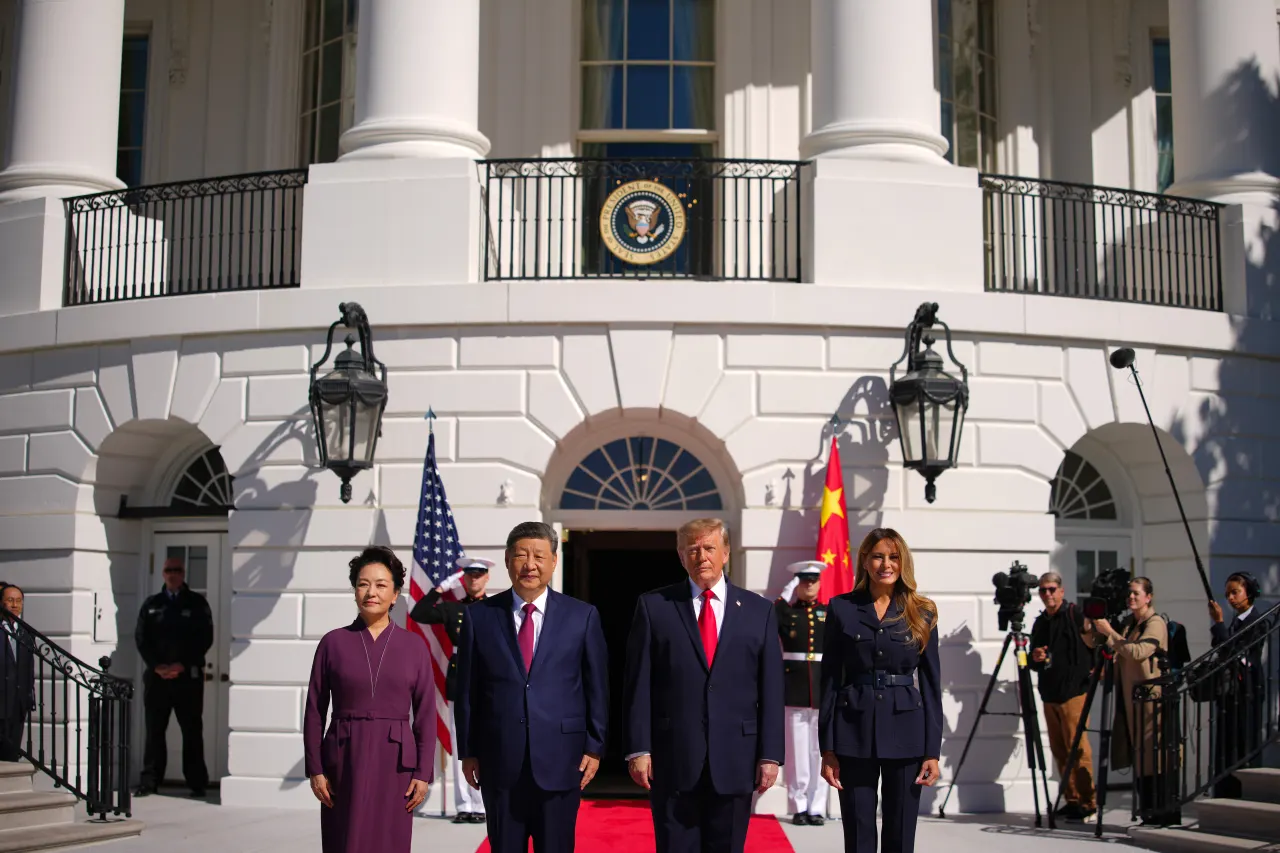
After President Donald Trump’s 18 September ban on CNN, Politico and MS NOW from White House grounds, the pool’s five members—CNN, CBS, ABC, NBC and Fox News—announced on 21 September that they would skip their rotation in protest. The suspension lasted about four days, overlapping with Chinese President Xi Jinping’s visit and reducing video coverage of events; the White House later continued to restrict CNN from some assignments. ABC said it had not received formal notice of the investigation but expected to, while the three outlets sued over the access restrictions and a judge’s temporary order restored access for dozens of reporters pending a ruling on a longer injunction.
- Sources
- 2
- Outlets
- 2
- Left · Centre · Right
- 0 · 1 · 0
In short
- DOJ is examining the networks’ joint pause in White House pool coverage.
- The four-day suspension followed CNN’s exclusion from White House access.
- Separate lawsuits challenge the administration’s restrictions on news outlets.
How this story developed
- 2 months ago Federal Judge Timothy Kelly is set to rule by Tuesday on a preliminary injunction in the case, as press freedom advocates have characterised the DOJ investigation as a pretext for gathering records about news coverage during the White House's media restrictions.
- 2 months ago CNN and other news organisations have filed First Amendment lawsuits challenging the media restrictions, and a federal court has issued a temporary restraining order that restored reporter access to the White House.
- 2 months ago The Justice Department has opened an antitrust investigation into five major US television networks after they jointly suspended White House coverage duties in protest of President Trump's ban on CNN from 18 September.
Full account
The United States Department of Justice has commenced an investigation into whether five major television networks breached federal antitrust regulations by collectively withdrawing from the White House television pool as a protest against the Trump administration's exclusion of CNN from White House premises. The Antitrust Division is examining whether the coordinated action constitutes an unlawful group boycott contrary to the Sherman Act, a statute that prohibits commercial competitors from engaging in anti-competitive practices.
The underlying dispute emerged in September when the Trump administration revoked media credentials for representatives of CNN, MS NOW and Politico. In response, the five networks comprising the television pool—ABC News, CBS News, CNN, NBC News and Fox News—jointly announced on 21 September that they would suspend their scheduled rotation of coverage duties. The networks stated that the public retained a legitimate interest in receiving accurate and independent government information, and asserted that administrations should not discriminate against news organisations based on editorial positions. The suspension lasted approximately four days, coinciding notably with a state visit by Chinese President Xi Jinping, at which point the absence of coordinated television coverage substantially limited documentation of official ceremonies and formal proceedings.
The television pool represents a practical necessity within the White House complex. Space limitations in restricted areas, including the Oval Office and aboard Air Force One, require a rotating system whereby the five major networks alternately supply technical infrastructure and coverage, with the resulting material disseminated to the broader news ecosystem. This arrangement had been managed by the White House Correspondents' Association for more than a century until the administration assumed direct control in February 2026.
The three initially excluded outlets initiated legal proceedings, claiming violations of First Amendment rights and due process protections. A federal judge issued a temporary restraining order requiring the White House to restore journalist access pending determination of a preliminary injunction request. Nevertheless, the Trump administration has sustained restrictions on certain CNN activities, notably excluding the network from flights aboard Air Force One. The Justice Department inquiry occurs within a wider pattern of confrontation between the administration and news organisations; in February, the administration attempted to bar Associated Press journalists and photographers from restricted areas due to their use of 'Gulf of Mexico' rather than the preferred terminology 'Gulf of America,' a dispute currently in litigation.
Where outlets differ
From the full account, which is AI-written from the sources:
Source 1 emphasises the antitrust investigation mechanics and includes a direct Department of Justice quote, whilst Source 2 foregrounds the First Amendment constitutional protections at issue
Source 1 provides specific court details including the judge's name and temporary restraining order mechanics; Source 2 focuses less on procedural specifics
Source 2 contextualises the pool system within its history of over a century under the White House Correspondents' Association management; Source 1 does not include this historical background
Source 1 reports Trump's complaint that CNN and MS NOW did not adequately cover Xi Jinping's visit; Source 2 omits this detail
Source 2 situates the incident within a wider pattern of Trump administration actions against news outlets, including the AP legal challenge; Source 1 does not establish these connections
Steelman: both sides, in good faith
The strongest fair case each way — we don't pick a winner.
The case for
The Department of Justice has a legitimate duty to enforce antitrust law without exception based on industry or sympathetic motives. Whilst the networks' concern about press freedom is understandable, antitrust law exists precisely to prevent dominant commercial competitors from coordinating to restrict commerce, and the coordinated suspension of coverage during significant state events represents the kind of concerted action the Sherman Act was designed to address. Even well-intentioned coordination amongst major market players warrants legal scrutiny to ensure that market competition and commercial dealings remain genuinely independent rather than subject to collective pressure.
The case against
The networks' coordinated action was fundamentally an exercise of editorial judgment and political speech in defence of press freedom against government censorship, not an anticompetitive boycott in the commercial sense contemplated by antitrust law. Subjecting news organisations' collective editorial decisions to antitrust investigation—particularly when motivated by protecting constitutional press rights—creates a chilling effect on journalism and threatens the First Amendment freedoms enabling the press to hold power to account. Applying antitrust scrutiny here would improperly subordinate press freedom protections to competition law, which was never designed to constrain the editorial prerogatives of news organisations defending their access to information.
Explained simply
The Trump administration has banned CNN from the White House press pool, the group of major networks normally allowed to film official state ceremonies and events. In response, the five networks in the pool—CNN, CBS News, ABC News, NBC News and Fox News—jointly suspended their coverage for several days in September, arguing that no administration should punish a news outlet because it objects to its reporting.
When large commercial competitors coordinate their actions, antitrust regulators examine whether this breaches laws protecting fair competition. The Sherman Act prohibits group boycotts and other coordinated behaviour that might harm competition or the public interest, which is why the Justice Department's focus has turned to the networks' protest strategy.
The broader dispute raises questions about the balance between government authority and press freedom. The networks argue that banning CNN violates the First Amendment right to free speech and a free press, whilst regulatory concerns focus on whether their joint response crossed legal lines.
Coverage · 2 sources
Read the full article at the source →
Originally published by Deadline as “DOJ Launches Investigation Of Networks For Suspending TV Pool Amid Trump’s Ban On CNN”.