Woman reportedly struck by vehicle near Melbourne Marathon prompting police to draw their weapons
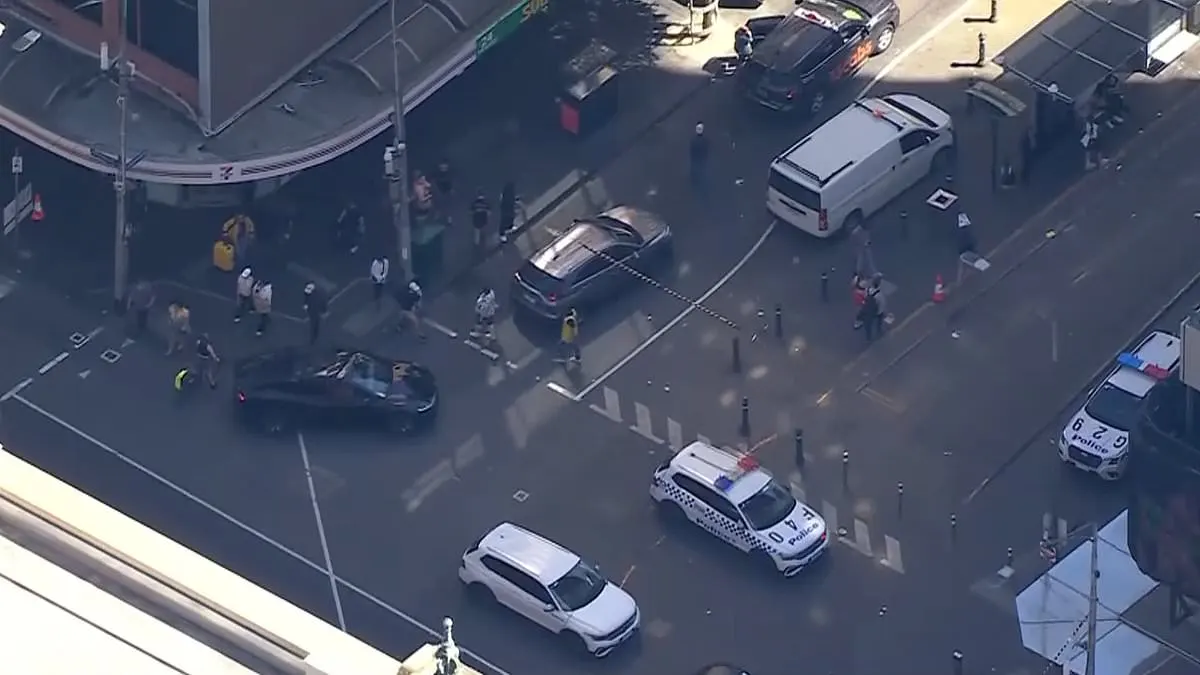
A woman was struck by a vehicle at Flinders Street Station during the Melbourne Marathon, after a driver reportedly accelerated towards crowds. Police drew their weapons at the scene, forcing the driver to perform a U-turn, though he then collided with a pedestrian at another location. The incident raised serious public safety concerns at the major public event.
One person was taken to Royal Melbourne Hospital, with paramedics responding at 11am. Witnesses reported the vehicle came within approximately 10 metres of hitting marathon spectators before police intervention. A traffic control vehicle positioned at Flinders Street/Swanston Street intersection prevented the driver from reaching the main crowd, though the incident resulted in a collision at the Elizabeth Street station entrance.
- Woman struck by vehicle during Melbourne Marathon event
- Vehicle came within 10 metres of marathon crowds before police intervention
- One person hospitalised after driver performed U-turn
New here? Start with this
The Melbourne Marathon is one of Australia's largest public sporting events, held annually with thousands of participants and spectators gathering throughout Melbourne's city centre. Flinders Street Station, where this incident occurred, is one of the busiest transport hubs in the city and a popular viewing point for race spectators.
A vehicle incident occurred at Flinders Street Station during the marathon on Sunday, with the driver reportedly accelerating towards spectators gathered to watch the event. At least one person was struck and taken to Royal Melbourne Hospital after police attended to manage the situation.
Major public events like the Melbourne Marathon require careful coordination between event organisers and authorities to manage vehicle access and pedestrian movements in busy central areas. Flinders Street Station is one such location where large numbers of people gather whilst remaining near active traffic routes.
Both sides, in good faith
The strongest fair case each way — we don't pick a winner.
The case for
When a driver is actively accelerating towards civilians at a major public event, armed police intervention is justified and necessary to prevent mass casualties. Drawing weapons clearly communicated that further advances would not be tolerated and achieved immediate compliance through the U-turn. The combination of the physical traffic control barrier and armed police response successfully protected thousands of spectators from potential tragedy, representing proportionate and effective crisis management.
The case against
Drawing armed weapons in a crowded venue during an active incident elevated overall risk to public safety. The panicked U-turn that resulted directly led to another collision at Elizabeth Street station, suggesting the aggressive response may have contributed to additional harm rather than prevented it. Vehicle interception in crowded urban environments should prioritise sustained physical barriers, controlled immobilisation techniques, and evacuation coordination over armed tactical responses that can trigger uncontrolled driver behaviour.