Anger over cash to create ‘propaganda’ as SNP minister to hire £11k personal artist… paid for by you
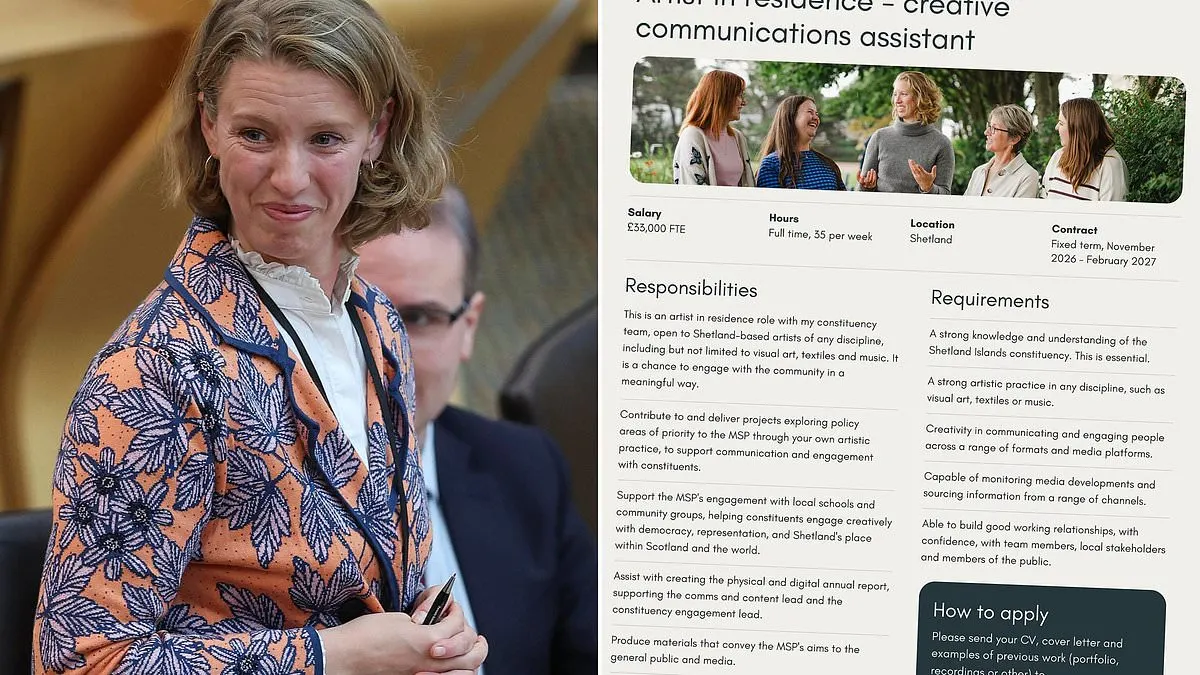
SNP minister Hannah Mary Goodlad is advertising a four-month artist-in-residence post for her Shetland constituency office, paying £11,000 from public funds. The artist would use their practice to explore her policy priorities and create material communicating her aims to the public, media and local schools. The recruitment has prompted criticism from political opponents and a taxpayers’ group, who describe it as an inappropriate use of public money.
The role is open to Shetland-based creators from disciplines including visual art, textiles and music, and requires knowledge of the constituency. Goodlad has also advertised a part-time post translating press releases into the Shetland dialect, with a stated annual salary of £12,800. She said arts, language and culture matter to her and that MSPs can communicate with constituents in ways beyond traditional expectations; the article also cites forecasts of a £5 billion Scottish budget shortfall and benefits spending rising to £9.2 billion by 2030.
- Goodlad is offering £11,000 for a four-month artist post.
- The artist would communicate her policy aims to the public and schools.
- Critics question the use of public money; Goodlad says communication matters.
New here? Start with this
Hannah Mary Goodlad is a Scottish National Party minister representing Shetland. She has advertised two positions to be filled from her constituency office budget: an artist-in-residence role worth £11,000 over four months, and a part-time post translating press releases into the Shetland dialect with an annual salary of £12,800.
The artist-in-residence would explore Goodlad's policy priorities and create material to communicate her aims to the public, media and schools, with the role open to Shetland-based creators in disciplines such as visual art, textiles and music. Goodlad argues that arts and language matter to her, and that MSPs should communicate with constituents in ways beyond traditional approaches.
The recruitment has prompted criticism from political opponents and a taxpayers' group, who describe it as inappropriate use of public money. This debate arises amid warnings of significant Scottish budget pressures, including a forecasted £5 billion budget shortfall and benefits spending projected to rise to £9.2 billion by 2030.
Both sides, in good faith
The strongest fair case each way — we don't pick a winner.
The case for
Those supporting the role argue that effective constituent communication is a legitimate democratic function, and that cultural engagement through art can meaningfully connect communities to policy in ways traditional channels cannot. Supporting local creative talent whilst exploring policy priorities through artistic practice represents genuine investment in both cultural vitality and democratic dialogue rather than mere self-promotion.
The case against
Critics contend that public funds should be directed toward essential services, particularly given forecasted Scottish budget shortfalls and rising welfare costs. They view the role as essentially funding a politician's self-promotion through state resources, which raises questions about whether this represents appropriate stewardship of limited public money during a period of fiscal constraint.