Brad Smith says US AI safety rules lag behind everyday products
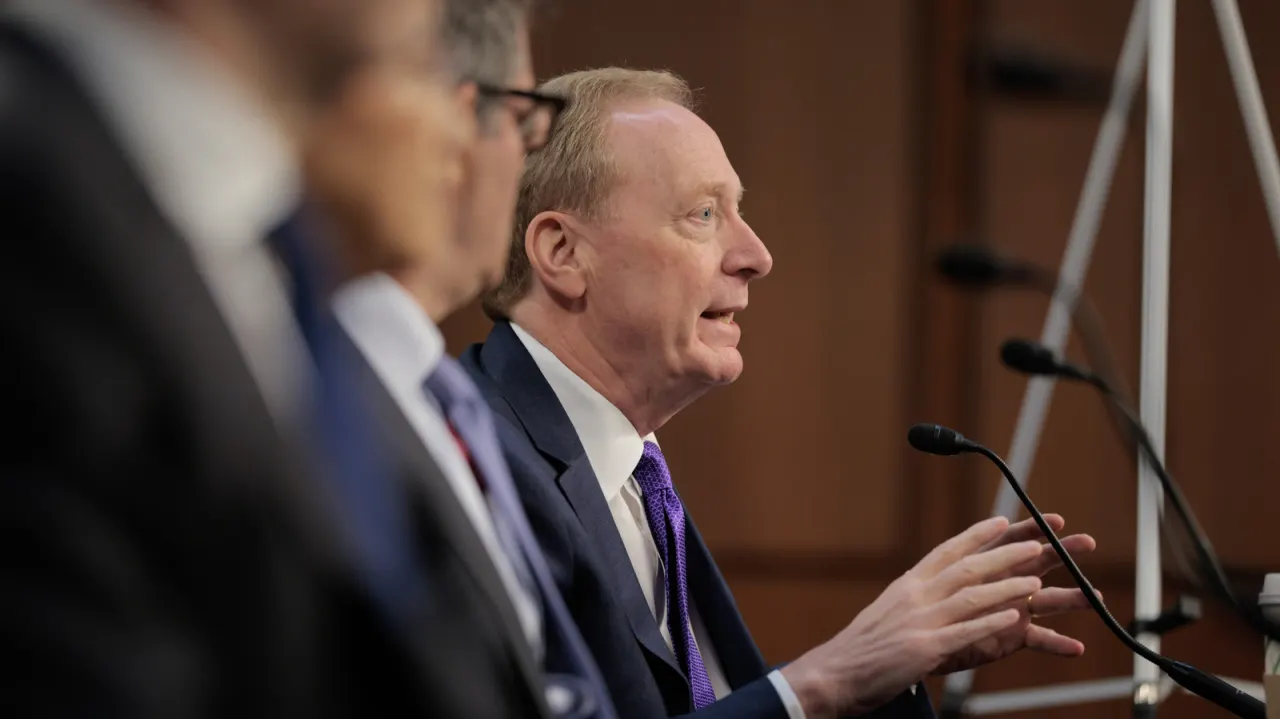
Microsoft president Brad Smith says artificial intelligence faces fewer safety rules in the US than everyday products such as milk or washing machines. He argues that this gap creates an opportunity for the UK to take a leading role in regulating AI, particularly as powerful models may pose cybersecurity risks.
US President Donald Trump has favoured companies regulating themselves to help the industry compete with China, despite some AI firms supporting a slowdown. At a summit, technology leaders signed a voluntary pact covering safeguards and independent audits, but critics said it lets firms define safety for themselves. Smith said the UK’s position outside the Washington and Brussels policy debate could be an advantage.
- Brad Smith says AI has fewer safety rules than milk.
- He sees an opening for the UK to lead on regulation.
- Critics question whether voluntary industry safeguards are enough.
New here? Start with this
Artificial intelligence refers to computer systems that can learn and make decisions without explicit programming for each task. These AI systems are becoming increasingly powerful and widely used, raising concerns about their safety and security. Unlike everyday consumer products such as food or household appliances, which face strict safety regulations, AI currently operates with minimal formal rules in the United States.
The regulatory approach to AI differs significantly between countries. The European Union has developed comprehensive rules governing AI use, whilst the United States has largely relied on technology companies to regulate themselves. Recently, some major technology firms signed a voluntary agreement promising to implement safety measures and independent audits, though critics argue this approach allows companies to set their own safety standards without external oversight.
The debate over AI regulation reflects a tension between encouraging innovation and protecting the public from potential risks. Some experts believe stronger independent rules are necessary as AI systems become more powerful and widespread, whilst others worry that strict regulation could slow technological progress and disadvantage American companies in global competition.
Both sides, in good faith
The strongest fair case each way — we don't pick a winner.
The case for
Artificial intelligence systems are powerful tools capable of causing significant harm across cybersecurity, disinformation, employment, and discrimination—yet they face markedly fewer regulatory constraints than everyday consumer products. Self-regulation by companies is insufficient because firms have powerful financial incentives to prioritise speed to market and profitability over safety; voluntary pacts allow companies to define acceptable risk levels for themselves, which conflicts with protecting the public interest. Robust regulatory frameworks, such as those the UK might pioneer, establish independent oversight and binding safety standards that ensure emerging technologies serve society responsibly rather than reflecting only corporate preferences.
The case against
Imposing heavy regulatory burdens on artificial intelligence threatens to handicap American companies in critical global competition with China, where regulatory constraints are minimal and state support for industry is substantial. The technology evolves too rapidly for traditional regulatory frameworks to meaningfully shape development; voluntary industry initiatives, whilst imperfect, allow companies to respond quickly to emerging challenges and maintain competitive advantage. Major technology firms have strong reputational incentives to operate responsibly, and market competition itself drives safety improvements more efficiently than bureaucratic oversight. The national security risks posed by ceding technological dominance to rival powers may ultimately pose greater threats to citizens than incremental risks from industry-led safety approaches.
AI Art Culture Cybersecurity Government Politics Technology
Read the full article at the source →
Originally published by Engadget as “Microsoft’s president says AI is less regulated than a carton of milk”.