Netflix’s Tyson Docuseries Criticized for Uncritical Approach and Limited New Content
Developed over time first seen 1 day ago
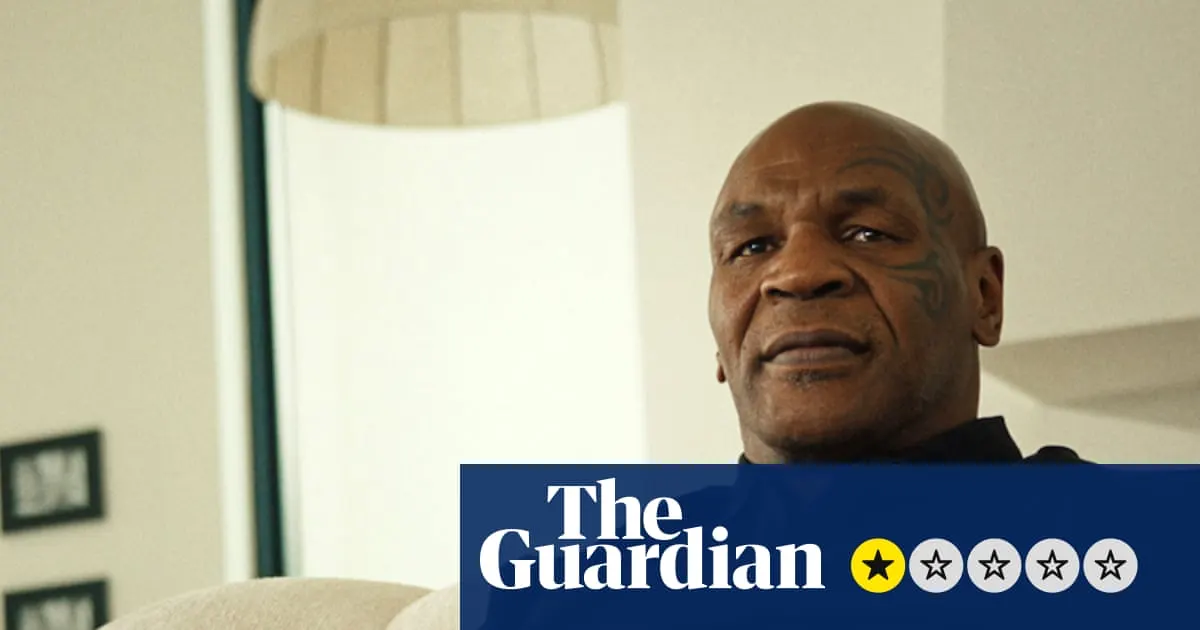
Netflix’s four-part *Tyson*, directed by Floyd Russ, revisits Mike Tyson’s life but is criticised for letting the boxer largely control how his story is told. The review argues that the series offers little new insight and rarely challenges Tyson directly, making it an uncritical platform for a public figure whose claims to disregard media attention sit uneasily with his repeated retellings of his own story.
The series follows Tyson from his difficult childhood in Brooklyn and early encounters with the law to boxing success under trainer Cus D’Amato, including his rise to become the youngest heavyweight champion. It also addresses his rape conviction, the Evander Holyfield fights, his daughter’s death, and his struggles with addiction and recovery; the review says these subjects are not wholly excluded, but their treatment depends on when Tyson chooses to speak openly.
- Netflix’s four-part Tyson offers little fresh perspective.
- The series lets Tyson set the terms for discussing his past.
- It revisits his boxing rise and major personal controversies.
New here? Start with this
Mike Tyson is one of the most famous boxers of all time, becoming heavyweight champion in the 1980s. His legacy is complicated by serious criminal convictions and controversial behaviour that made him a polarising public figure.
Netflix has released a four-part documentary series chronicling Tyson's life from his impoverished childhood in Brooklyn through his rise to boxing fame. The series also examines how he has maintained a significant public presence despite the serious controversies marking his past.
Critics argue the documentary provides little that is genuinely new, as Tyson has recounted his life extensively through previous interviews and memoirs. They contend the series presents events largely from Tyson's own perspective without sufficiently questioning serious allegations and troubling incidents, functioning more as a sympathetic account than rigorous journalism.
Both sides, in good faith
The strongest fair case each way — we don't pick a winner.
The case for
A documentary may legitimately centre its subject's own perspective and narrative arc without functioning as an adversarial investigation. There is editorial merit in allowing someone to tell their own story, particularly when exploring themes of redemption and how one rebuilds public standing over time. Sympathetic treatment does not necessarily constitute journalistic failure—it reflects a different documentary philosophy that values personal testimony and narrative introspection as valid ways of understanding a person's life.
The case against
Documentary journalism carries a responsibility to provide critical examination and contextual scrutiny rather than simply amplifying a subject's account, particularly when serious allegations and criminal convictions are at stake. There is a meaningful distinction between treating a subject fairly and treating them uncritically; genuine accountability journalism can present someone's perspective whilst still examining competing accounts and conducting independent analysis. An insufficiently critical approach to grave matters risks transforming documentary into a platform for narrative control rather than informed public discourse.
Full account
Netflix's recently released four-part documentary chronicling the life of former heavyweight boxing champion Mike Tyson has become the subject of significant critical commentary, with multiple observers questioning whether the series examines its subject with appropriate scrutiny or instead functions as an uncritical celebration of his life and career.
The documentary charts Tyson's trajectory from a childhood marked by poverty and petty crime in Brooklyn through his emergence as a boxing prodigy under mentors including Bobby Stewart and the renowned promoter Cus D'Amato. The series addresses controversial aspects of Tyson's history, including his tumultuous marriage to actress Robin Givens and allegations of domestic violence during that relationship—matters on which Givens herself disputes the characterisation. The programme also documents Tyson's experimentation with hallucinogenic drugs and includes an appearance by former US President Donald Trump, elements that analysts view as indicative of the series' lighter treatment of serious subject matter.
Critics have observed that beyond specific incidents covered, the documentary raises questions about Tyson's sustained control of his public narrative. Throughout his career, Tyson has repeatedly presented his own carefully curated version of events through various media projects. The Netflix series is characterised as offering limited fresh analysis or perspective, instead operating within familiar patterns viewers have encountered through Tyson's previous television ventures. The absence of probing questions about his motivations suggests a programme prioritising access over critical examination.
The documentary exemplifies broader patterns in how mainstream media platforms engage with controversial public figures. Despite serious convictions and notable transgressions, Tyson has remained integrated within mainstream cultural discourse without experiencing sustained consequences. The series functions less as critical biography and more as another vehicle for a carefully managed persona to reach audiences, raising questions about how such programming insulates high-profile individuals from meaningful accountability.
Where outlets differ
Source 1 emphasises the documentary's objectionable content choices—the Trump cameo, DMT sequence, and treatment of domestic violence allegations—characterising these as irresponsible and indicative of insufficient critical distance
Source 2 emphasises Tyson's broader pattern of controlling his narrative across multiple projects and criticises the documentary for lacking novelty and substantive analysis, serving instead as another platform for a managed persona
Coverage
- The Guardian — Tyson review – deeply icky … and that’s before Trump shows up
- The Hollywood Reporter — ‘Tyson’ Review: Netflix’s Docuseries Tells Mike Tyson’s Story as Only Mike Tyson Could Tell It, and Already Has Several Times
Americas Art Celebrity Culture Entertainment Government Offbeat Politics TV Weird & Viral World