Wuthering Heights horror film loses Brontë’s ambiguity in grim retelling
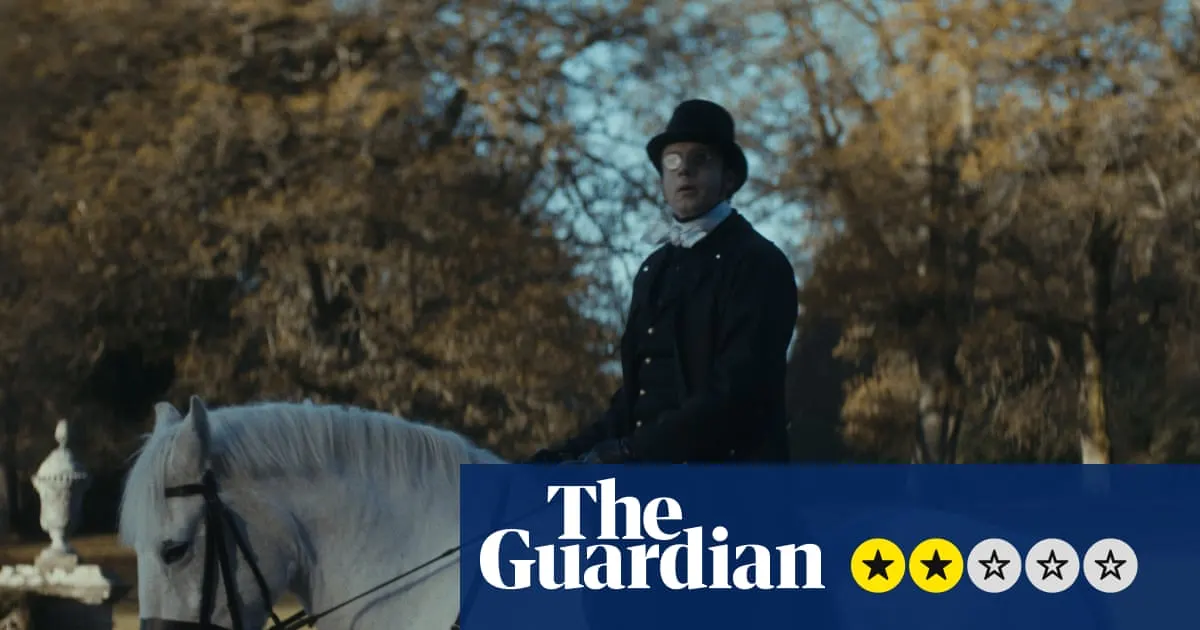
Becca Hirani’s *Wuthering Heights: The House of the Damned* recasts Emily Brontë’s novel as a horror film, adding supernatural visions and graphic killings. The review finds that making the story’s gothic undertones literal leaves little room for the original’s ambiguity, and that the grim approach feels laboured and short on fun.
Ross Townsend-Green plays Lockwood, who visits Heathcliff at Wuthering Heights and becomes trapped there by an illness, amid Catherine’s ghostly appearances and unsettling household secrets. The story follows Brontë’s plot in fragments, but the review says its backstory is garbled and Heathcliff’s turn to murder is unconvincing; the film arrives on digital platforms on 19 October.
- Hirani turns Brontë’s novel into a graphic supernatural horror.
- The review says the story feels dour and confusing.
- The film arrives on digital platforms on 19 October.
New here? Start with this
Emily Brontë’s 1847 novel Wuthering Heights is a tale of love, resentment and family conflict set on the Yorkshire moors. Its story is told through people recalling past events, leaving room for uncertainty about what happened and how to judge its characters.
The central figures are Heathcliff, an outsider taken into a wealthy family, and Catherine Earnshaw, whose bond with him is shaped by social expectations and family tensions. A later visitor, Lockwood, encounters Heathcliff at the isolated house called Wuthering Heights and hears about the troubled past.
The novel is often associated with Gothic fiction, which uses eerie settings and supernatural hints to create unease. Its ghosts and dark passions can be read in more than one way, so adaptations make choices about how literally to portray them.
Both sides, in good faith
The strongest fair case each way — we don't pick a winner.
The case for
A literal horror adaptation can make the novel’s gothic unease immediate, using visions and violence to give cinematic form to fears that Brontë leaves ambiguous. Reworking the plot may also help the story reach viewers who enjoy supernatural horror, even if it departs from the book’s subtler effects.
The case against
Making the supernatural explicit can narrow a novel whose power depends on uncertainty about what is real and on the tangled motives of its characters. If the backstory feels garbled and Heathcliff’s violence unearned, the added horror may weaken both the character drama and the suspense it aims to create.
Art Culture Entertainment Horror
Read the full article at the source →
Originally published by The Guardian as “Wuthering Heights: The House of the Damned review – Brontë horror do-over is part Dracula, part Jeeves and Wooster”.