KDE marks 30 years as Plasma 6.8 ends native X11 sessions
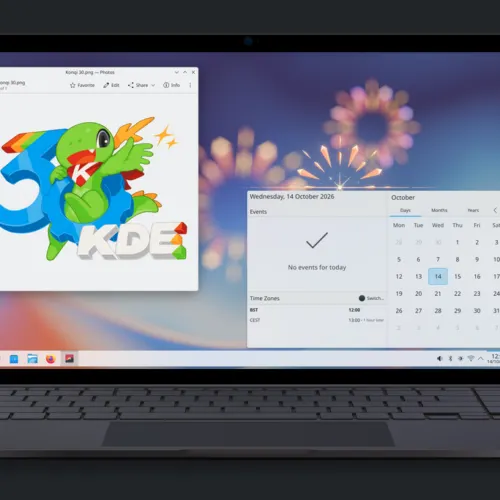
KDE marked its 30th anniversary on 14 October with Plasma 6.8, a documentary and the end of support for starting native X11 sessions in Plasma. The change moves the desktop fully to Wayland, while legacy X11 applications can still run through XWayland; users who stay on Plasma 6.7 retain their current sessions for now.
Plasma 6.8 adds improvements including Nvidia triple buffering enabled by default, integrated Kup backups, a display-configuration command-line tool and more controls in System Monitor. Its remote desktop server now supports clipboard synchronisation, virtual displays and adaptive streaming for slower networks. The release also expands window-decoration and theming options.
- KDE celebrated 30 years with Plasma 6.8 and a documentary.
- Plasma is ending native X11 sessions while retaining XWayland compatibility.
- Remote desktop gains virtual displays, clipboard sync and adaptive streaming.
New here? Start with this
KDE is a community-led project that makes free software, including Plasma, a desktop environment for Linux and other Unix-like systems. A desktop environment provides the menus, windows and settings people use to interact with a computer.
Plasma has supported both X11 and Wayland, two different systems for displaying windows and handling input. Wayland is taking the place of X11 for running desktop sessions, while XWayland lets many older applications built for X11 continue to work within a Wayland session.
The change matters to people who use KDE desktops, particularly those whose hardware or setup depends on X11. KDE develops Plasma as open-source software, so users and organisations can choose when to adopt new versions and maintain older setups where they remain supported.
Both sides, in good faith
The strongest fair case each way — we don't pick a winner.
The case for
Ending native X11 sessions lets KDE focus development and testing on Wayland, a modern display system that can improve security and support features such as adaptive remote streaming. Keeping legacy applications usable through XWayland, while allowing Plasma 6.7 users to retain their current sessions for now, offers a transition path rather than an immediate break for everyone.
The case against
Removing the option to start native X11 sessions may disrupt users who depend on X11-specific workflows, hardware or applications that do not behave reliably through XWayland. Even with Plasma 6.7 available for now, some users may see the change as narrowing their control over their own desktop and may face extra work to preserve a setup that already meets their needs.
Read the full article at the source →
Originally published by Ars Technica as “KDE turns 30 with Plasma 6.8, remote upgrades, and an X11 farewell”.