Supreme Court hands Trump midterm win in TV ad cash fight… as two liberal justices refuse to go along
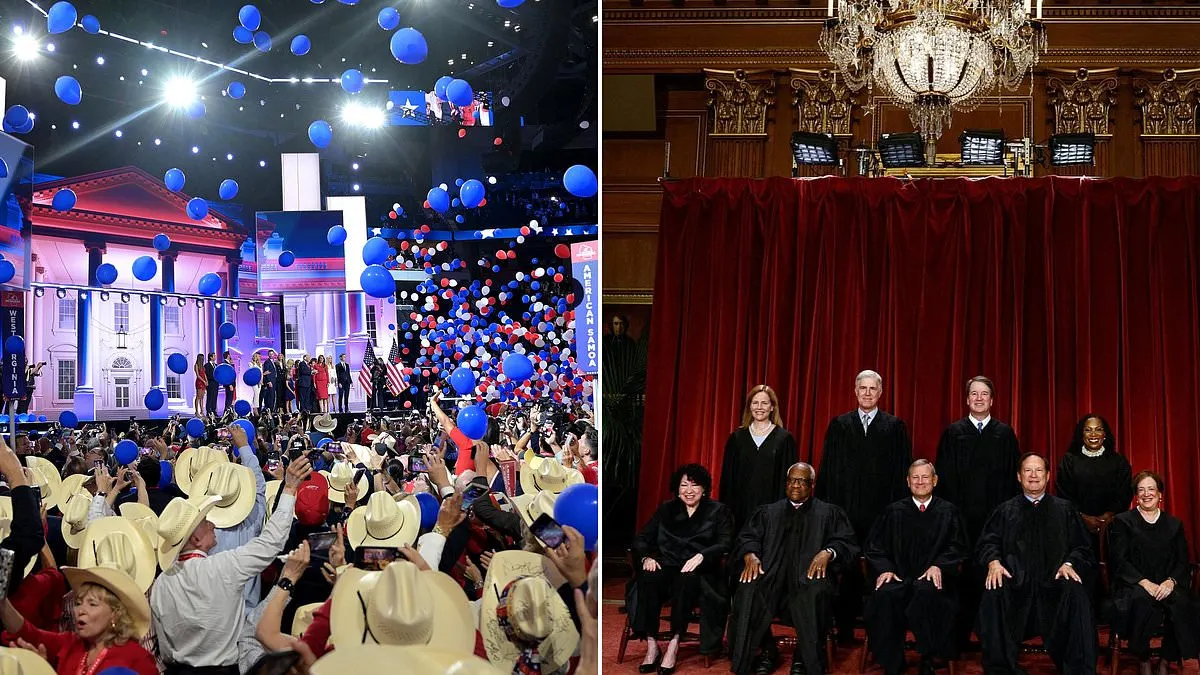
The Supreme Court ruled 7-2 for Republicans in a dispute over discounted political advertising, lifting a lower court’s 48-hour deadline for federal regulators to decide a Democratic challenge. The ruling matters because the Federal Communications Commission can continue reviewing its policy, which extends the lowest advertising rates to political parties and joint fundraising committees.
The FCC announced the change in March, and Democrats argue it conflicts with federal election law. The policy is seen as benefiting Republicans because their party committees have more money available, while Democrats have been stronger at raising funds directly for candidates. Justices Sonia Sotomayor and Ketanji Brown Jackson dissented; the court said the FCC must consider the challenge but need not meet a particular deadline.
- The Supreme Court removed a 48-hour deadline for the FCC.
- The dispute concerns discounted political advertising rates.
- The policy is seen as favouring Republican party committees.
New here? Start with this
In the US, television stations must offer candidates the lowest rates they charge for political adverts during certain periods before an election. The Federal Communications Commission (FCC), which regulates broadcasters, expanded that policy in March to cover political parties and joint fundraising groups as well as individual candidates.
Democrats say the change conflicts with federal election law, while Republicans have more money in party committees that could use the discounted rates. The dispute is about how campaign advertising is funded and regulated ahead of the midterm elections, when voters choose members of Congress. The Supreme Court ruling leaves the FCC free to consider the Democrats’ challenge without a fixed deadline.
Both sides, in good faith
The strongest fair case each way — we don't pick a winner.
The case for
Extending the lowest advertising rates to party committees and joint fundraising groups could help parties coordinate campaign spending and reach voters more efficiently. Supporters may argue that the FCC should have time to assess the policy and that courts should not impose an unusually short deadline on regulators absent a clear legal requirement.
The case against
Critics argue federal election law may not permit the FCC to extend these discounted rates to party committees and joint fundraising groups, so the policy should be scrutinised promptly. Because the change may advantage parties with more committee funding, a swift decision could help ensure the rules are lawful and applied fairly before the midterms.