Polanski’s popularity plummets to record low in wake of Green by-election loss and ‘Zionism’ motion
Developed over time first seen 4 hours ago
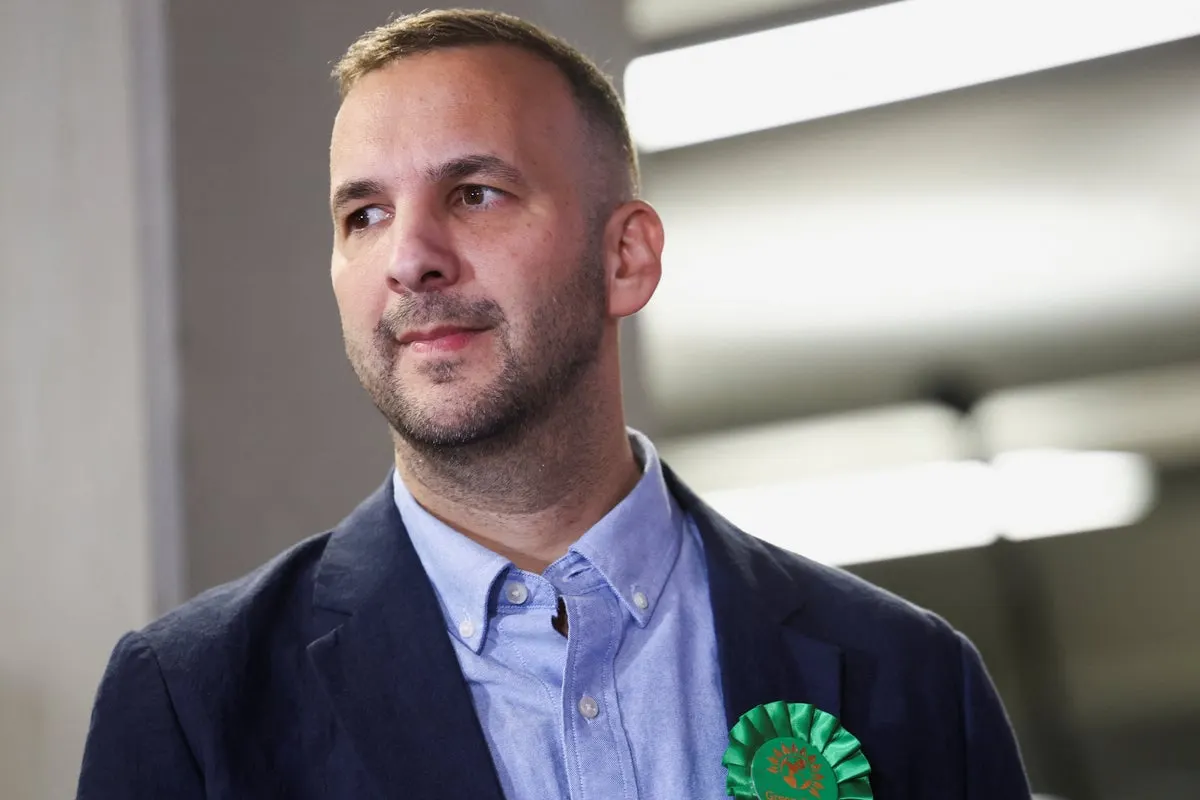
Zack Polanski’s popularity has fallen to a record low following criticism within the Green Party and its defeat in the Holborn and St Pancras by-election. The decline matters because it has intensified questions about his leadership and the party’s position after a conference motion describing Zionism as “racism”.
An Ipsos poll conducted in October found 52 per cent viewed Polanski unfavourably, up six points from September, while 16 per cent viewed him favourably, giving him a net rating of minus 36. His support has also weakened among under-35s, whose net rating of him fell from plus 16 in April to plus two. About 1,000 Green members backed the motion and 800 opposed it; senior party figures have criticised Polanski, while Labour has warned Green groups in coalition with it to disown the motion or lose its support.
- Polanski’s net favourability fell to minus 36.
- 52 per cent viewed him unfavourably in October.
- Party criticism followed the motion and by-election defeat.
Both sides, in good faith
The strongest fair case each way — we don't pick a winner.
The case for
Supporters may argue that the poll decline and by-election defeat are setbacks, but not by themselves proof that Polanski’s leadership or the party’s direction is unsound. They may see the conference motion as a legitimate criticism of Zionism as a political ideology, while stressing that opposition to Zionism need not mean hostility towards Jewish people, and argue that Labour’s demand risks constraining debate within Green-led coalitions.
The case against
Critics may argue that the record-low rating, lost by-election and weaker support among younger voters show that Polanski’s leadership and political judgement are damaging the party’s credibility. They may regard the motion’s wording as liable to blur criticism of Zionism with hostility towards Jews, and say party leaders should reject it clearly, particularly when coalition partners and voters are concerned.
Full account
Zack Polanski’s public standing has fallen to its lowest level in an Ipsos survey conducted after the Greens lost the Holborn and St Pancras by-election and party members adopted a motion describing Zionism as racism. In the October poll, 52 per cent of respondents viewed the Green Party leader unfavourably, up six points from September, while 16 per cent viewed him favourably. His net favourability rating was minus 36, the lowest among the leaders compared in the report. It was the first time the survey had recorded an unfavourable view of Polanski from more than half of respondents.
The decline was most pronounced among older respondents, according to the polling report, but Polanski also lost ground with younger people. His net rating among under-35s fell from plus 16 in April to plus two in October. The figures capture opinion shortly after the by-election and the Green Party conference; they do not establish how much each event contributed to the change.
At the conference in Brighton, roughly 1,000 members voted for the Zionism motion and about 800 opposed it. The decision exposed divisions within the party. Vivien Lichtenstein, who leads the Jewish Greens, called for Polanski to resign and criticised his absence from the debate. Former Green leader Caroline Lucas also criticised his leadership. Polanski said he would have supported an amended version of the motion, but the changes he sought were rejected before the vote. Labour has since told local Green groups with which it shares power to reject the motion or lose Labour’s support.
In a subsequent BBC interview, Polanski defended the members’ right to make the decision and said he would not try to overturn it. He disputed the suggestion that the motion itself was controversial, directing attention instead to Palestinian deaths and injuries. He said he wanted the policy amended at the first opportunity so that Israelis and Palestinians would determine their own future, but argued that party rules kept a conference decision in place for two years, until 2028. His position leaves him defending the party’s decision-making process while seeking a change to the policy that process produced.
Where outlets differ
Both supplied reports are from The Independent. The first concentrates on the Ipsos results, the by-election defeat and criticism of Polanski’s leadership. The second gives more space to Polanski’s response, including his defence of the conference vote and his explanation of when the policy could be amended.
The first report says Polanski sought to distance himself from the motion. The second adds that he does not regard the motion itself as controversial. Taken together, the reports show that he objected to aspects of its wording while accepting the members’ vote.