Reporter’s umbrella turns inside out as Storm Austen batters Britain with 80mph winds
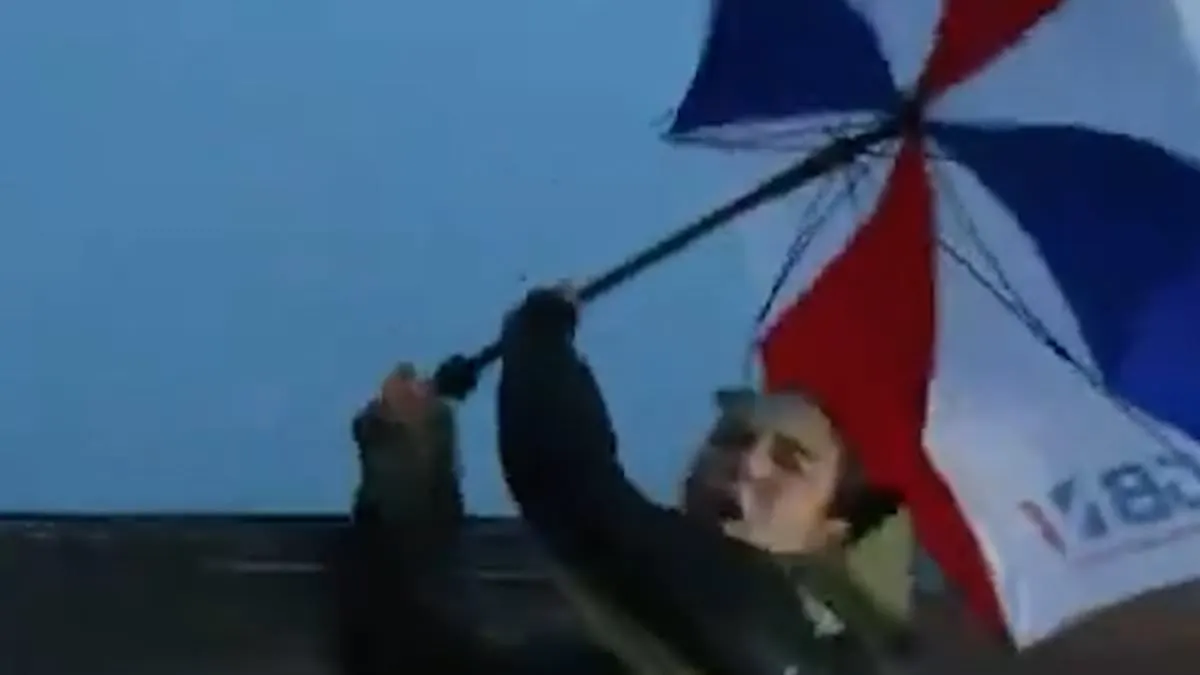
Storm Austen brought winds of up to 80mph and torrential rain to Britain, disrupting travel and daily life. A television reporter’s umbrella inverted in a gust during a live report, as broadcasters warned viewers about dangerous conditions near the coast.
More than 16,000 homes in the South West lost power, while flooding and fallen trees caused road closures and difficult journeys. Schools closed and trains and flights were cancelled; the coverage also drew criticism from some viewers who said reporters were being sent out in unsafe conditions. Further wet and windy weather was forecast from Storm Boelo.
In short
- Storm Austen brought gusts of up to 80mph and heavy rain.
- More than 16,000 homes in the South West lost power.
- Travel disruption and criticism of live storm coverage followed.
Steelman: both sides, in good faith
The strongest fair case each way — we don't pick a winner.
The case for
Sending reporters to cover a severe storm can show viewers conditions as they unfold and provide timely warnings about travel, flooding and other hazards. With appropriate safety precautions and the ability to stop or move, on-the-ground reporting may help people make informed decisions.
The case against
A live report can expose journalists and crews to needless danger when strong winds and flying debris make conditions unpredictable. Critics may argue that forecasts, footage from safer locations and updates from emergency services can inform the public without asking reporters to work in hazardous places.
Explained simply
Named storms are powerful areas of low pressure that can bring strong winds and heavy rain. In the UK, the Met Office names a storm when it is expected to have a significant impact, helping people recognise warnings and prepare for disruption.
High winds can damage buildings, bring down trees and make travel dangerous, while heavy rain can cause flooding. Power networks, roads, railways, schools and airports may all be affected, particularly in exposed coastal areas.
Broadcasters report on conditions to help the public understand local risks, but reporting outdoors during severe weather can raise questions about the safety of journalists and camera crews. Forecasts of further storms matter because saturated ground and damaged infrastructure can leave communities more vulnerable to additional rain and wind.
Read the full article at the source →
Originally published by Daily Mail as “Moment umbrella-wielding TV news reporter is nearly blown away by Storm Austen as presenters are battered by 80mph winds”.