Apple iPhone Duo review: Two screens, two experiences, two thousand dollars
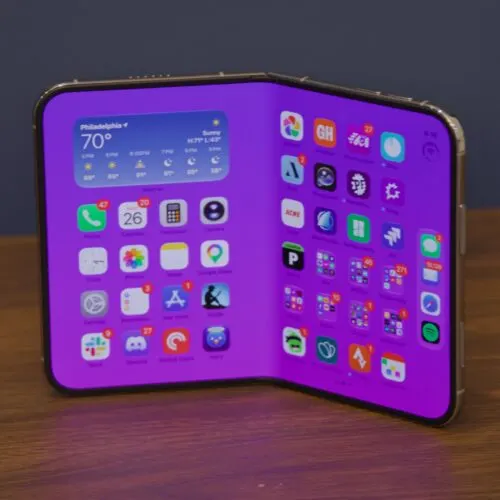
Apple’s first foldable iPhone, the iPhone Duo, is an ambitious redesign that works well as a small tablet but is less convincing as a phone. The review praises its solid build and nearly invisible screen crease, while finding its high price and awkward design choices make it difficult to recommend.
At $1,999 and up, the Duo introduces a learning curve: its unfolded screen works in either orientation, while its folded form must be held the right way up. It replaces Face ID with Touch ID in the power button and has unusual button placement. The reviewer says it took a few days to adjust and prefers a regular iPhone for everyday phone use.
In short
- The $1,999 foldable iPhone is impressive but costly.
- Its screen crease is barely noticeable.
- It works better as a small iPad than an iPhone.
Steelman: both sides, in good faith
The strongest fair case each way — we don't pick a winner.
The case for
The iPhone Duo offers a useful new form: a well-built foldable that can serve as a small tablet, with a nearly invisible crease and a screen that works in either orientation when open. For people who value a larger display in a device they can still carry as a phone, its design may justify the learning curve and premium price.
The case against
At $1,999 and up, the Duo asks buyers to pay a great deal for a device whose phone form is less convenient than a regular iPhone. Its orientation limits when folded, changed biometric control and unusual button placement take time to adjust to, and buyers who mainly want an everyday phone may find the trade-offs hard to justify.
Explained simply
Foldable phones use a flexible screen that opens to provide a larger display and folds down to a more compact shape. Apple’s iPhone Duo is its first model of this kind, combining the functions of a phone and a small tablet.
The key trade-off is between the larger screen when open and the size, controls and handling when folded. Its price also places it at the high end of the phone market, where buyers may weigh the extra screen space against the familiarity and lower cost of a standard smartphone.