World news and discussion on TalkFuse.
Israel Election: Slender Lead For Benjamin Netanyahu Means He Could Be Asked To Form Next Government
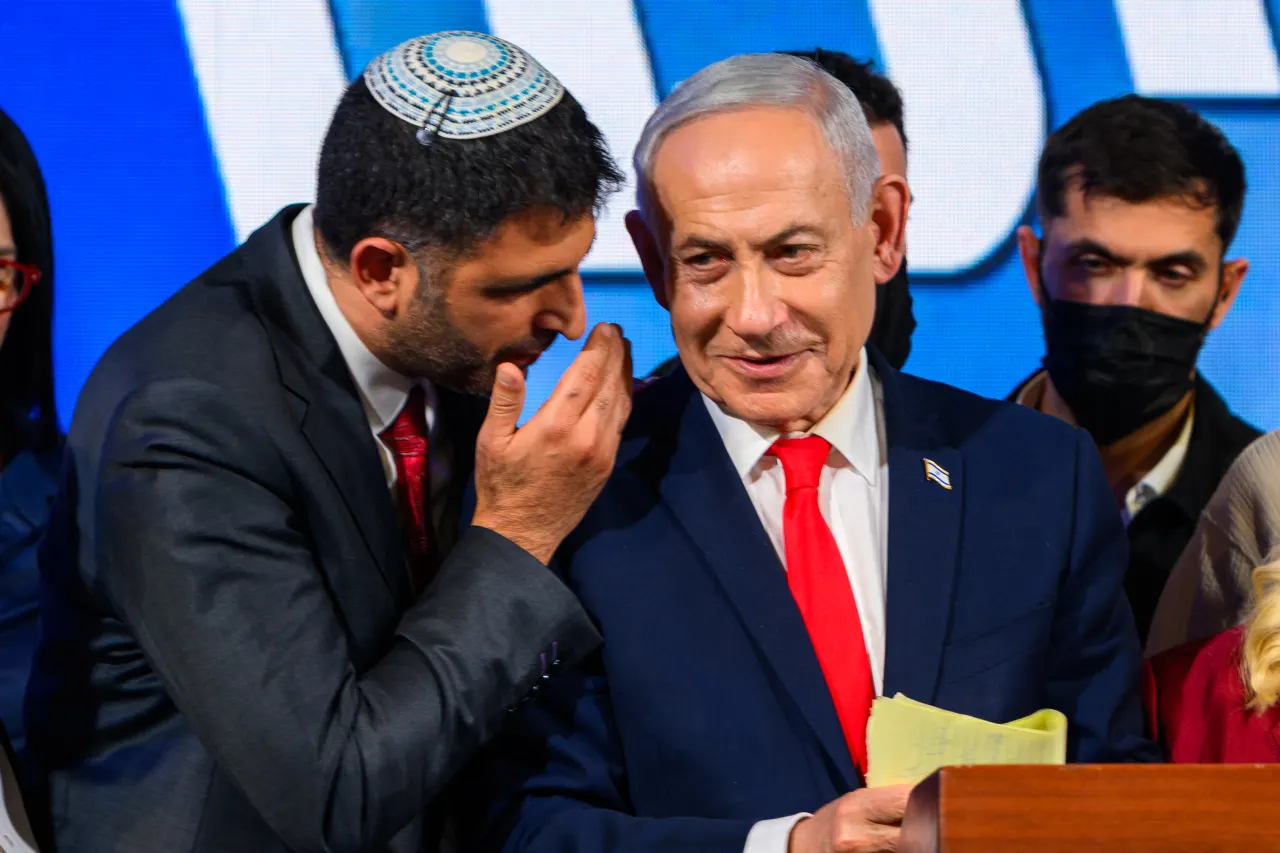
Israel’s election appears to have left no bloc with enough seats to govern alone, putting the country’s next government in doubt. Although early projections gave Benjamin Netanyahu’s right-wing bloc a narrow lead, later counts showed opposition parties ahead, making coalition negotiations and the role of Arab parties central to the outcome.
With about 85% of votes counted, opposition parties had 67 seats, including 19 for Arab parties, while Netanyahu’s coalition had 53. Gadi Eisenkot’s bloc had 48 seats, including 21 for his Yashar Party; Likud remained the largest single party, with 26. Around 600,000 absentee ballots were still to be counted, and turnout reached 77.7%, the highest since 1999. Any candidate asked by President Isaac Herzog to form a government would have 28 days, with a possible 14-day extension, to assemble a coalition.
In short
- No bloc has secured a governing majority.
- Arab parties could influence coalition talks.
- Absentee ballots and negotiations remain pivotal.
Steelman: both sides, in good faith
The strongest fair case each way — we don't pick a winner.
The case for
Supporters of Netanyahu could argue that his bloc’s early narrow lead and Likud’s position as the largest single party give him a credible claim to try to form a government. The election left no bloc with a clear governing majority, so coalition talks and the remaining ballots could still change the picture; giving him the chance to negotiate would respect voters who backed his parties.
The case against
Opposition supporters could argue that the later count put their parties ahead with 67 seats, making their side better placed to assemble a government. With 19 of those seats held by Arab parties, they could also say that including those representatives in coalition negotiations reflects the votes cast and offers a legitimate route to a majority, while the early projection alone should not determine who governs.
Explained simply
Israel elects its parliament, the Knesset, using proportional representation: parties win seats broadly in line with their share of the vote. No party has won enough seats to govern alone, so a government usually depends on several parties agreeing to work together. These agreements can be difficult when parties have different priorities.
Benjamin Netanyahu leads Likud, a right-wing party, and has served several terms as prime minister. His rivals include Gadi Eisenkot and other opposition leaders, while Arab parties represent many Arab citizens of Israel and can be important in parliament. The president, Isaac Herzog, asks a lawmaker to try to form a government; that person must build a coalition with enough support in the Knesset to govern.
Americas Art Culture Elections Government Middle East Politics World