World news and discussion on TalkFuse.
South Yorkshire campaigners target Number 10 North in fight for better bus services
Developed over time first seen 2 weeks ago
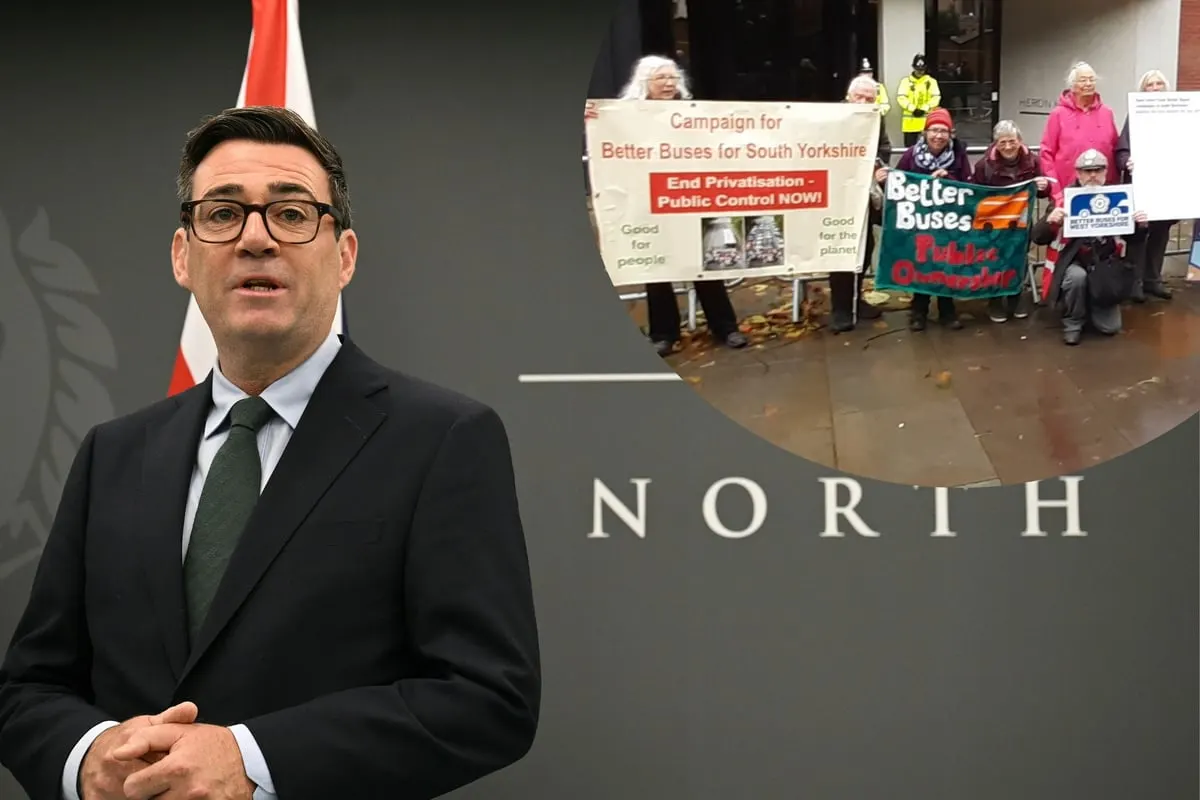
Campaigners from South Yorkshire joined groups from West Yorkshire and Derbyshire at Number 10 North in Manchester on 26 October 2026. They delivered a letter to Prime Minister Andy Burnham’s office calling for buses to be brought into public ownership. Signed by 23 campaign groups, the letter marked 40 years since bus deregulation took effect in England. Better Buses for South Yorkshire says deregulation has contributed to lost routes, higher fares and unreliable services; those are the campaigners’ claims, rather than findings established by the demonstration itself.
South Yorkshire Mayor Oliver Coppard has already approved bus franchising, with the first services due to come under local public control in Doncaster and most of Sheffield in September 2027. The wider rollout is planned to finish in 2029. Under franchising, the mayoral authority will decide routes, timetables, tickets and service standards, while contracted operators will run the buses. Campaigners welcome that change but want full municipal ownership, arguing that profits under franchising could still go to private shareholders instead of being reinvested in services.
- Sources
- 2
- Outlets
- 2
- Left · Centre · Right
- 0 · 0 · 0
In short
- Campaigners delivered a public ownership appeal to Number 10 North.
- The letter was signed by 23 groups on the 40th anniversary of bus deregulation.
- South Yorkshire plans bus franchising from 2027, but campaigners want municipal ownership.
How this story developed
- 2 weeks ago Campaigners from South Yorkshire joined groups from West Yorkshire and Derbyshire at Number 10 North in Manchester on 26 October 2026. They delivered a letter to Prime Minister Andy Burnham’s office calling for buses to be brought into public ownership.
- The Star (Sheffield) South Yorkshire campaigners target Number 10 North in fight for better bus services
- South Yorkshire Mayoral Combined Authority Bus franchising
Steelman: both sides, in good faith
The strongest fair case each way — we don't pick a winner.
The case for
Public ownership could let councils retain operating surpluses and direct them back into routes, fares and reliability, while giving communities greater control over a service they depend on. Campaigners may argue that franchising improves public oversight but leaves private operators and shareholders involved, limiting how far the system’s benefits are shared.
The case against
Franchising gives the mayoral authority control over routes, timetables, tickets and service standards while allowing contracted operators to run the buses, offering public direction without requiring councils to own and manage the fleet. Supporters of this approach could argue that it is a practical way to improve accountability and services while retaining private operating capacity, and that public ownership would bring extra costs and responsibilities whose benefits are uncertain.
Explained simply
Bus deregulation in England began in 1986, allowing private companies to run most local bus services and set routes and fares. In South Yorkshire, campaign groups say this has contributed to routes being lost, fares rising and services becoming unreliable.
South Yorkshire Mayor Oliver Coppard has approved franchising, under which the mayoral authority will set routes, timetables, fares and service standards, while operators run the buses under contract. The first franchised services are planned for Doncaster and most of Sheffield in September 2027, with the rollout due to finish in 2029.
Some campaigners want the buses to be owned by public bodies as well as controlled through franchising. They argue that full public ownership could keep any profits within the transport system, while franchising can still involve private operators and shareholders.
Coverage · 2 sources
Americas Elections Government Politics Sheffield World