Israel election stalemate leaves four possible paths to government
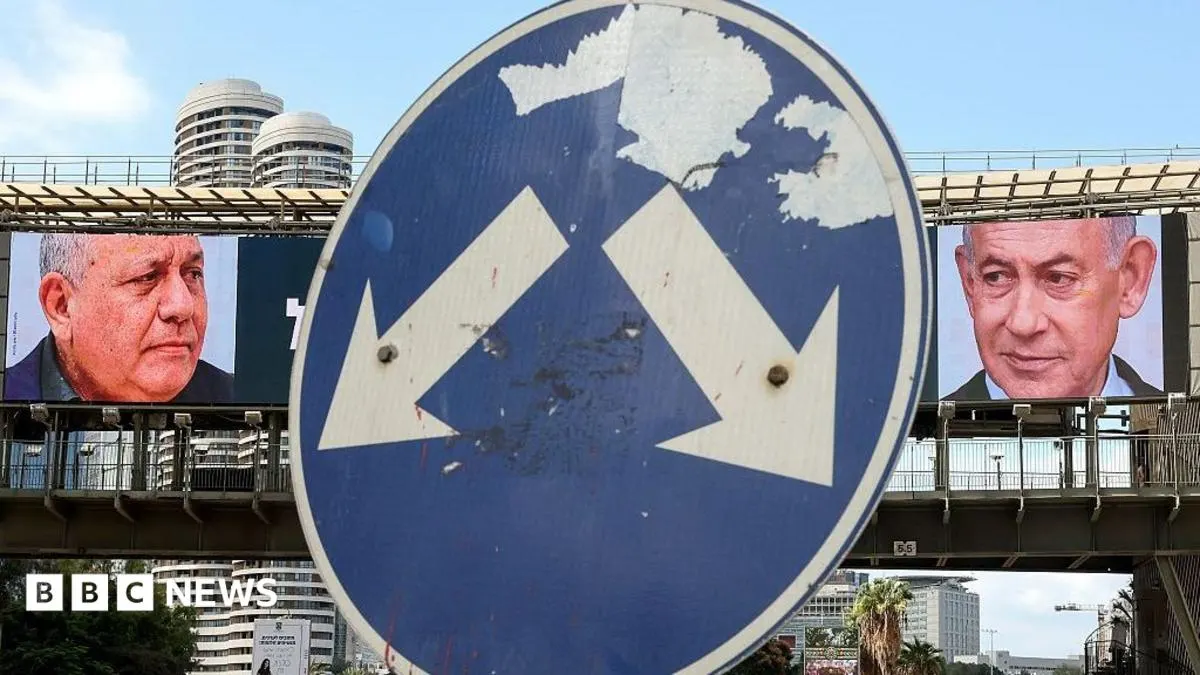
With 85% of votes counted, neither Benjamin Netanyahu’s governing coalition nor challenger Gadi Eisenkot’s bloc appeared likely to win a majority in Israel’s election. That leaves political deadlock, with any route to a government requiring leaders to reconsider campaign pledges and fresh elections a likely outcome.
Four scenarios could break the impasse: a unity government between Netanyahu and Eisenkot; an opposition coalition supported by Arab parties; right-wing politicians in Eisenkot’s bloc joining Netanyahu; or another election. Arab parties could win a record 19 seats after unusually high turnout among Arab citizens, but the opposition remains divided over including them, and any such coalition would be fragile. Netanyahu has praised his existing right-wing partners, while Eisenkot and other challengers campaigned on removing him.
In short
- Neither leading bloc appears able to form a majority.
- Arab parties could win a record 19 seats.
- Another election may be the likeliest outcome.
Steelman: both sides, in good faith
The strongest fair case each way — we don't pick a winner.
The case for
A unity government or a coalition supported by Arab parties could offer a practical way to end deadlock and give voters a functioning government without another costly election. Supporters may argue that cooperation across political lines, including with Arab parties backed by strong turnout, would recognise the electorate’s diversity and make room for compromise on urgent national issues.
The case against
A government assembled from blocs with sharply different positions could be fragile and struggle to act, especially if it depends on parties whose inclusion other coalition members reject. Supporters of another election or a government built around clearer ideological commitments may argue that leaders should not set aside their campaign promises simply to secure office, and that voters should be asked to resolve the impasse.
Explained simply
Israel has a parliamentary system, so a government needs the support of a majority of members of the Knesset, the country’s parliament. Voters elect parties, and their leaders negotiate with one another to assemble a governing coalition.
Benjamin Netanyahu leads Likud and has long relied on right-wing and religious parties as partners. Gadi Eisenkot is a former military chief who leads a rival bloc; Arab citizens of Israel vote in the same elections, and Arab-led parties can also hold seats in parliament.
Coalition talks can bring together parties with different priorities, while divisions over possible partners can limit the options. If leaders cannot secure enough support, Israel may hold another election.
Elections Middle East Politics World
Read the full article at the source →
Originally published by BBC World as “How could Israel break election deadlock? Here are four scenarios”.