Apple’s PROLED XDR Display has a cringy name but incredible specs
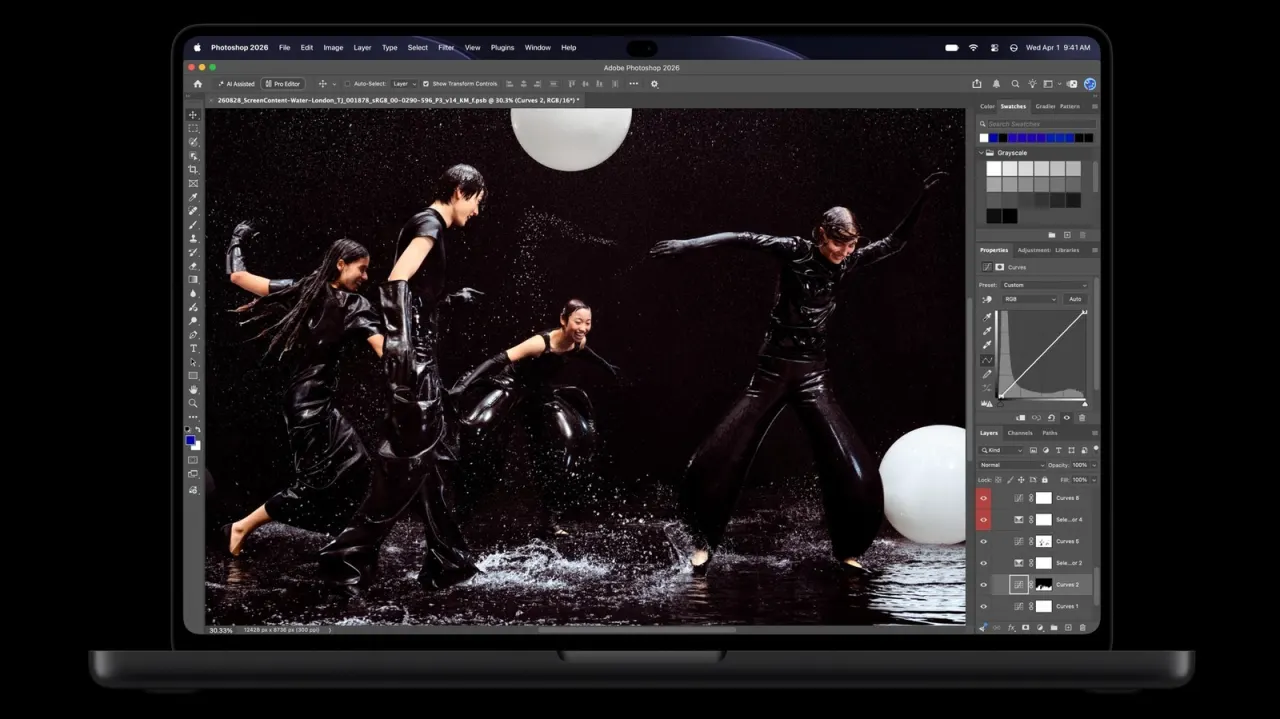
Apple’s new MacBook Pro uses a tandem OLED display branded “PROLED XDR”, combining touch support with features aimed at photographers, artists and video editors. Its claimed brightness, contrast and colour performance could make it a strong option for professional work, though the higher price is unlikely to suit most buyers.
Apple says the screen reaches 2,000 nits peak HDR brightness and a 10,000,000:1 contrast ratio, and covers 80 per cent of the Rec.2020 colour gamut. It also supports 120Hz ProMotion and optional nano-texture glass, while a display engine adjusts pixels for their age and use to address OLED degradation. The article notes that the pixel layout remains unconfirmed and that Apple’s performance claims have not been independently verified.
In short
- Apple’s new MacBook Pro pairs touch with tandem OLED.
- Apple claims 2,000 nits peak HDR brightness and 10,000,000:1 contrast.
- The higher price may be worthwhile for content professionals.
Steelman: both sides, in good faith
The strongest fair case each way — we don't pick a winner.
The case for
The display could justify its premium for professionals who need bright, high-contrast, colour-rich images and smooth motion for demanding creative work. Touch support, nano-texture glass and measures intended to limit OLED degradation may also make it more versatile and durable in daily use.
The case against
The premium may be difficult to justify when Apple’s performance claims have not been independently verified and key details, such as the pixel layout, remain unknown. Most buyers may not need these capabilities, and the higher price could make the laptop poor value compared with less costly options.
Explained simply
OLED is a screen technology in which each pixel produces its own light, allowing dark areas to look very black and bright areas to stand out. A tandem OLED uses two layers of OLED pixels, while HDR is designed to show a wider range of brightness and colour in suitable content.
Photographers, artists and video editors often rely on accurate colour and clear detail when working on images and video. Rec.2020 is a standard that defines a broad range of colours; refresh rate, measured in hertz, describes how often a screen updates, and higher rates can make movement look smoother.
OLED pixels can change over time, so manufacturers use different methods to manage wear. Screen specifications are based on particular measurements and conditions, and independent tests can help show how a display performs in everyday use.