EU backs direct Greenland internet cable to diversify Europe’s Arctic links
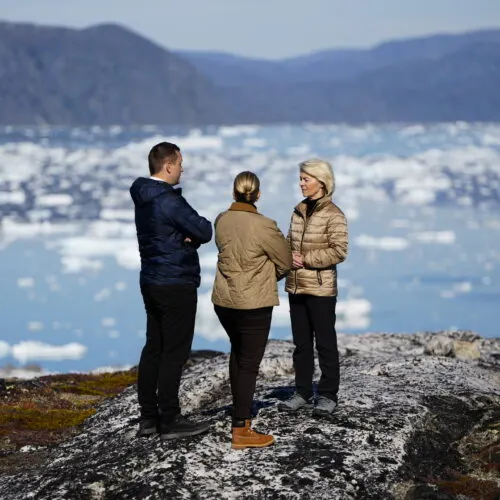
The European Union plans to build the first subsea internet cable directly linking Europe and Greenland, with a possible extension through Canada to Japan and South Korea. The route would bypass the United States and could give Europe more secure, diverse connections as relations with some allies have become strained and existing routes face greater risks.
The project received EU backing in an Arctic strategy published on 20 October 2026, following an agreement to develop it signed by European organisations and a Greenlandic telecoms operator in 2025. The EU has invested $119 million (€107 million) to improve Greenland’s secure connectivity. Extending the cable across the Arctic would be technically demanding and require more European icebreakers; meanwhile, more than 90 per cent of Europe–Asia communications currently pass through undersea cables in the Red Sea.
In short
- The EU plans a direct internet cable link to Greenland.
- A future route could continue through Canada to Asia.
- Arctic conditions and installation needs pose major challenges.
Steelman: both sides, in good faith
The strongest fair case each way — we don't pick a winner.
The case for
A direct cable could make Europe’s communications more resilient by adding a route that avoids existing chokepoints and reduces dependence on infrastructure passing through the United States. Supporters could also argue that reliable connectivity benefits Greenland and that European investment in Arctic capacity is prudent as geopolitical and physical risks to current routes grow.
The case against
The project’s strategic benefits may be uncertain relative to its cost and technical difficulty, particularly if extending the route across the Arctic requires substantial investment in icebreakers and maintenance. Critics could argue that Europe should first strengthen existing networks and other alternatives, since a new cable would add resilience but could not eliminate the risks of disruption or guarantee a commercially viable route.
Explained simply
Undersea cables carry most international internet traffic, including communications, financial transactions and data between businesses. Europe’s links to Asia rely heavily on routes through the Red Sea, while Greenland has no direct subsea cable connection to Europe.
The EU is the political and economic union of European countries, and Greenland is a self-governing territory within the Kingdom of Denmark. Greenland’s telecoms operator and European organisations agreed in 2025 to develop a direct cable, and the EU has funded improvements to the island’s secure connections.
A route across the Arctic could add another path between Europe and Asia, potentially through Canada to Japan and South Korea. Laying and maintaining cables in icy waters is difficult and would require more European icebreakers, so the proposed extension faces significant technical challenges.
Read the full article at the source →
Originally published by Ars Technica as “As US ties fray, Europe plans first undersea cable link to Greenland”.