Politics news and discussion on TalkFuse.
Trump’s anti-Muslim attacks dominate Michigan’s election homestretch
Developed over time first seen 3 weeks ago
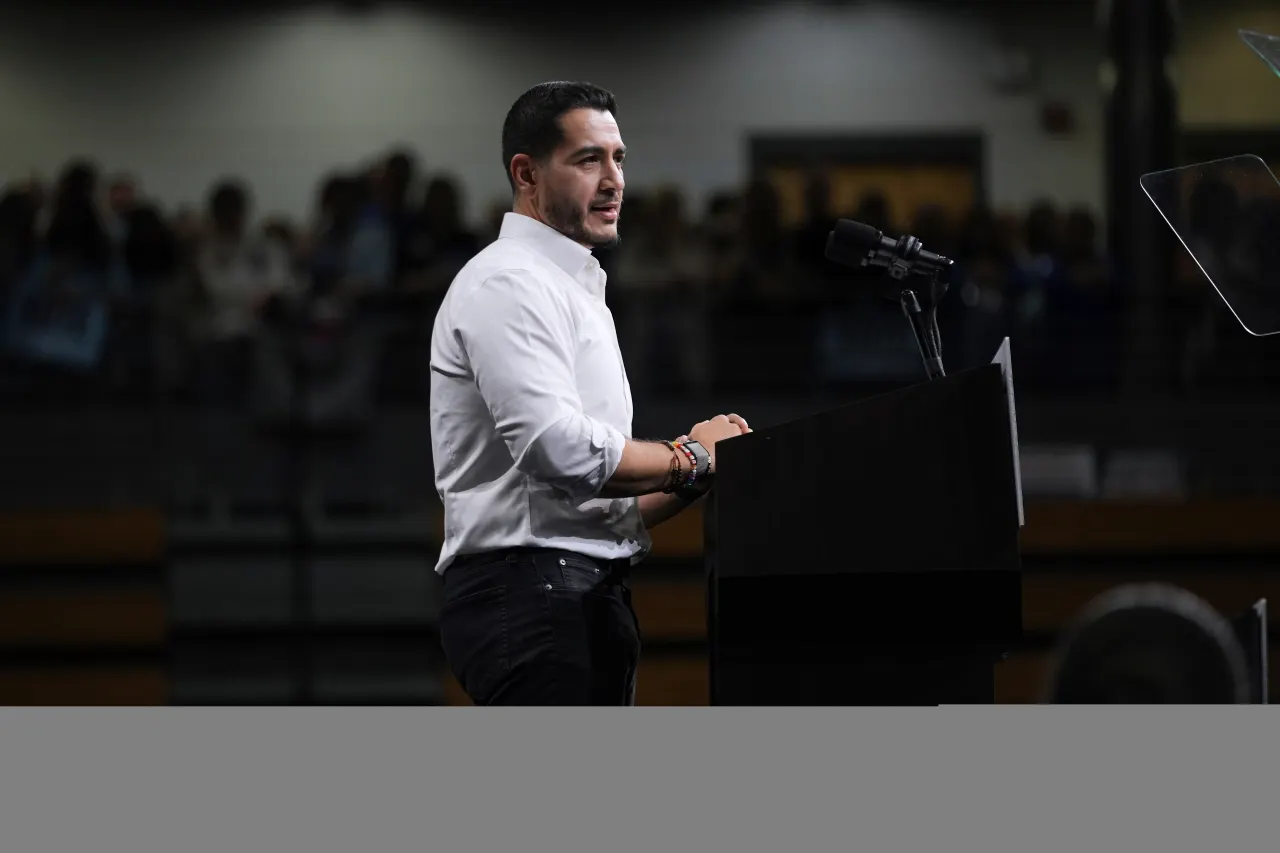
In the final days of Michigan’s closely contested Senate race, President Donald Trump and other Republicans intensified attacks on Democratic candidate Abdul El-Sayed, who is Muslim. At a rally for Republican candidate Mike Rogers, Trump called El-Sayed a “jihadist” and linked him to the Muslim Brotherhood. Rogers has questioned El-Sayed’s associations and loyalty to the United States. El-Sayed has denied ties to extremist groups, and fact-checkers found no evidence for Trump’s claim that he belongs to the Muslim Brotherhood. Rogers says his criticism concerns El-Sayed’s political views, not his faith.
The attacks have become a central issue in the campaign to replace retiring Democratic senator Gary Peters. Some of El-Sayed’s supporters worry the allegations could influence undecided voters; his campaign has responded with adverts and a focus on living costs. Bishara Bahbah, who helped organise Arab American support for Trump in 2024, condemned the president’s remarks, while a Michigan Republican involved in that outreach said they had alienated former allies. The dispute carries particular weight in a state where Arab American voters helped Trump in 2024 and where the Senate contest could affect control of the chamber.
- Sources
- 3
- Outlets
- 3
- Left · Centre · Right
- 0 · 2 · 0
In short
- Trump escalated attacks on El-Sayed’s faith and alleged extremist ties.
- El-Sayed denies the allegations; fact-checkers found no evidence for Trump’s Muslim Brotherhood claim.
- Former Arab American allies of Trump say his remarks may cost Republicans support.
How this story developed
- 2 weeks ago In the final days of Michigan’s closely contested Senate race, President Donald Trump and other Republicans intensified attacks on Democratic candidate Abdul El-Sayed, who is Muslim.
Full account
President Donald Trump made attacks on Abdul El-Sayed a central feature of a Michigan rally as the state’s closely watched Senate contest entered its final stretch. He called the Democratic candidate a “jihadist”, questioned his loyalty and suggested he posed a security risk if elected. El-Sayed, a former Detroit health official, would be the first Muslim senator if he wins.
Trump repeatedly linked El-Sayed to the Muslim Brotherhood and invoked the 11 September 2001 attacks. He told the crowd that Michigan needed to fight to stop a “jihadist” entering the Capitol, drawing a comparison with passengers who resisted the hijackers aboard United Flight 93. He also said El-Sayed could not be trusted with state secrets and would need to pass through a metal detector to enter the Senate. Trump’s rally included the father of Todd Beamer, a passenger who died on Flight 93.
El-Sayed has denied links to extremist groups and rejected claims that he seeks to impose Islamic law in the United States. At a later campaign event, he said Trump’s attacks on his patriotism were shameful and responded to the president’s mockery of his name with a joke that he could call him “senator” after the election. A religious studies professor quoted by PolitiFact said there was no credible basis for applying the term “jihadist” to El-Sayed. The White House did not provide evidence for Trump’s allegation when asked, according to that outlet.
The rhetoric comes as Republicans face political pressure over inflation, high fuel costs and the war with Iran. The race against Republican Mike Rogers could help decide control of the Senate. Trump’s Port Huron rally was near communities where he made gains among Arab American voters in 2024, including Dearborn. His remarks drew criticism from Bishara Bahbah, a founder of Arab Americans for Trump, who called them racist and said they crossed a red line. Trump also attacked Democratic Representative Ilhan Omar at the rally.
Where outlets differ
From the full account, which is AI-written from the sources:
The Associated Press foregrounds the political stakes, Trump’s effort to mobilise voters, his history of anti-Muslim rhetoric and the rebuke from Bahbah, a former ally. PolitiFact focuses more closely on whether the claims about El-Sayed are supported: it describes the Brotherhood association as baseless, explains its fact-checking of Trump’s Sharia-law claim and includes an expert assessment of the term “jihadist”.
The AP account places El-Sayed’s response at a Grand Rapids rally later on Sunday, while PolitiFact reports his comments at a Detroit news conference on 26 October. The reports also describe the Flight 93 comparison with different emphasis: the AP recounts Trump repeatedly invoking the attacks, while PolitiFact highlights his introduction of Beamer’s father and the appeal to follow his example.
Steelman: both sides, in good faith
The strongest fair case each way — we don't pick a winner.
The case for
Critics of the attacks argue that calling El-Sayed a “jihadist” and alleging Muslim Brotherhood ties without evidence risks spreading a false and damaging association. They say questioning a candidate’s loyalty in terms linked to his Muslim identity can stigmatise Muslim and Arab American voters, distract from policy debate and undermine trust in the campaign.
The case against
Rogers and his supporters can argue that voters have a legitimate interest in scrutinising a candidate’s political views, associations and judgement, particularly in a closely contested race with national consequences. They say criticism should be assessed on its stated political grounds rather than dismissed as anti-Muslim, while recognising that unsupported claims about extremist ties are a separate matter.
Explained simply
Michigan is choosing a senator to replace Democrat Gary Peters, who is retiring. The main candidates include Democrat Abdul El-Sayed and Republican Mike Rogers; the result could help determine which party controls the Senate.
El-Sayed is Muslim, and Trump and Rogers have questioned his associations and loyalty. El-Sayed denies links to extremist groups, and fact-checkers found no evidence for Trump’s claim that he belongs to the Muslim Brotherhood. Rogers says his criticism is about El-Sayed’s political views, not his faith.
The dispute has drawn attention in Michigan, which has a significant Arab American electorate. Some Arab American voters supported Trump in 2024, and reactions to the remarks may matter in a closely contested race.
Coverage · 3 sources
Bias meters
From 2 rated sources, 1 unrated.